Brain
Found 29 recent publications
Beyond Muscle: How Creatine Boosts Brain Function and Cognitive Health
Recent studies show that creatine, a popular fitness supplement, also acts as a vital brain energy source, supporting cognitive function, focus, and mental endurance. Experts outline its benefits alongside potential side effects like water retention and kidney test impacts.
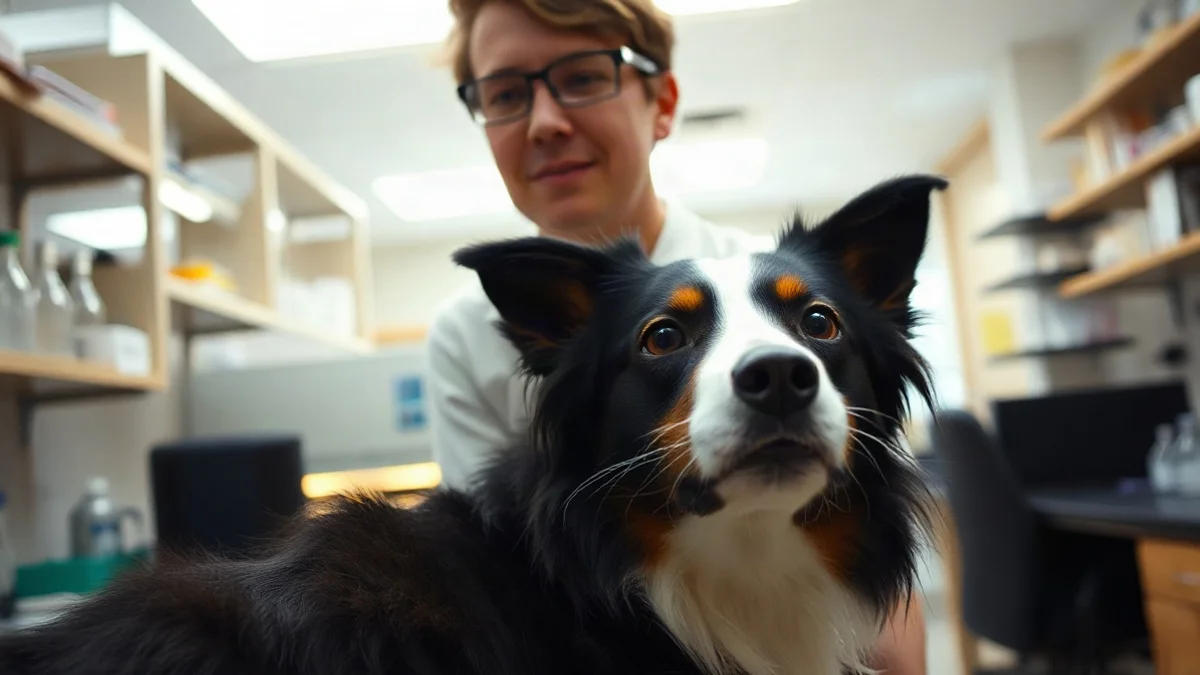
What Happens in Your Dog's Brain When They Look Into Your Face?
A new neuroscience study reveals that dogs decode human emotions and moods with remarkable precision, activating distinct neural reward centers when viewing happy or fearful faces.

From Coma to Clinical Psychology: The Miraculous Recovery of Yakov Barmatz
Dr. Yakov Barmatz survived a catastrophic paratrooper injury in 1980, waking from a coma to become a renowned clinical psychologist treating trauma victims and soldiers.
The Mind After Midnight: Why Brain Activity Changes Late at Night
A scientific look at the "mind after midnight" phenomenon, explaining how late-night wakefulness alters brain chemistry, increases impulsivity, and elevates risks of extreme behaviors.
UCL Researchers Discover Brain's Hidden Drainage Network for Waste Proteins
Researchers at University College London have discovered a novel network of microscopic drainage channels in the brain that clear waste proteins like amyloid-beta and tau, offering new insights into Alzheimer's disease.
Why Returning to Routine After Holidays Is Hard on the Brain
Returning to a routine after the holidays can feel overwhelming. Neuroscience explains how the brain adapts to freedom and how small steps help rebuild stability.
Novel mRNA Nanoparticles Successfully Target and Slow Glioblastoma Growth in Mice
Researchers have developed an innovative mRNA nanoparticle therapy utilizing mannose coatings to cross the blood-brain barrier and precisely target aggressive glioblastoma brain tumors in mice.
Researchers Map Millions of Brain Cells to Decode Alzheimer's Symptoms
NIH-supported researchers mapped 6.3 million brain cell nuclei from 1,494 donors to uncover molecular processes linked to Alzheimer's and behavioral symptoms.
The Science Behind Gut Feelings: How the Second Brain Influences Decision-Making
Scientific research confirms that the gut-brain axis connects our digestive system to cognitive processes, though experts warn against relying entirely on gut feelings for decisions.
Cambridge Study Shows Daily Five-Minute Reading Protects Brain Health
A comprehensive Cambridge study reveals that reading for five minutes daily reduces Alzheimer's risk by 33%, lowers stress by 20%, and physically alters brain tissue, offering profound cognitive benefits across all ages.
Teenager with Rare Memory Syndrome Can Recall Life from Three Months Old
A 16-year-old boy with highly superior autobiographical memory can recall events from when he was three months old, outperforming 99.9% of people in a new study.
Mount Sinai Researchers Identify Mechanism Linking APOE4 to Alzheimer's Damage
Researchers at Mount Sinai have identified a biological mechanism linking the APOE4 genetic risk factor to brain blood vessel damage and amyloid accumulation, offering new insights for Alzheimer's research.
New Study Reveals Long COVID Damages Dopamine-Producing Brain Neurons
A new brain-imaging study reveals that long COVID damages dopamine-producing neurons in the brain, explaining persistent symptoms like fatigue, memory issues, and loss of motivation.
How the Smell of Coffee Affects the Brain Before the First Sip
A new Japanese study reveals that smelling fresh coffee for five minutes improves mood and brain relaxation metrics without altering heart rate.
New Study Links ERBB4 Receptor to Alzheimer's Disease Progression
A study published in Nature reveals that the ERBB4 receptor plays a crucial role in Alzheimer's progression, offering potential new targets for early drug intervention and cognitive recovery.
Top Fruits Backed by Science to Protect Brain Health and Memory
Discover which fruits, from berries to citrus and avocados, are backed by science to help boost memory, reduce brain inflammation, and support cognitive health.
Woman lost the ability to speak: diagnosis revealed an unusual process in the brain
A 60-year-old woman from China gradually lost her ability to communicate with her surroundings after suffering for about two months from deteriorating thinking and behavioral changes, until she stopped speaking completely. At the Qilu Hospital in Jinan, doctors tried to understand what was behind her condition, and after a series of tests, it turned out that her immune system had begun to...
Does anger come out of nowhere? It might not be your fault at all
We all know that moment: a small comment from a partner sets us off, or a routine traffic jam causes a sudden wave of rage. Sometimes it feels like anger comes out of nowhere, and it can be very exhausting and confusing.
Not just in the mind: what happens to brain cells during depression?
Depression is often perceived as a mood disorder, but a new study adds evidence that associated changes may reach the level of brain cells. Researchers found that in people suffering from depression, there are disruptions in the process of creating new nerve cells in the hippocampus, a brain region linked to memory and emotion.
End of the mystery: Why do we all get tired at the end of the day?
Have you always wondered why after a long day it is simply impossible to keep your eyes open? A new study has identified groups of cells in the brain that measure the time we are awake - creating pressure - and forcing us to sleep. The researchers: "May reveal ways to provide resistance to sleep deprivation and other physiological challenges."
Scientists discovered a new organ in the skull that protects the brain
Researchers have identified previously unknown immune structures within the skull bone marrow that act as a local brain defense center. The study, published in Nature, could lead to new treatments for brain tumors and neurological conditions.
An event that already happened or an illusion of consciousness? The truth behind déjà vu
You are sitting in a place you have never been, having a conversation you have never had, and suddenly it happens: a strong and strange feeling takes hold of you — "I have been here before." "I have already heard this sentence." "I know this moment." But when you try to remember when it happened, you have no answer. You know the moment is new, yet the brain sends you a completely opposite feeling...
Do you have a gut feeling? This is what your brain is really trying to say
There are moments when something just feels wrong. We have no explanation, no clear fact to point to, and yet something inside signals us to stop. Sometimes the feeling turns out to be surprisingly accurate, and sometimes we realize it misled us completely.
"A capability that was unknown": The discovery that changes our understanding of the brain
The adult brain may possess a greater capacity for repair than previously thought. In a new study published Wednesday, researchers from the University of Zurich identified special cells in mice that mobilize following brain injury to restore damaged tissue.
Contaminated water leads to brain parasite infection
An unusual medical case in the Philippines highlights the environmental risks following natural disasters: a 52-year-old woman was hospitalized with severe neurological symptoms. Scans revealed pork tapeworm larvae in her brain tissue, contracted due to poor sanitary conditions.
A 15-minute test: The Israeli development that will decode the brain?
A test lasting about a quarter of an hour may in the future provide doctors with objective information about brain activity and assist in the diagnosis of a long list of neurological and psychiatric disorders. The Israeli NeuroAI company Hemispheric is developing an artificial intelligence system designed to "decode" the brain's electrical signals—a field where diagnosis still relies in many cases...
Where do our memories disappear to, and how can they be retrieved?
We tend to think that a forgotten memory is like a file permanently deleted from a computer, but scientists have discovered that reality is much more complex. A new study published in the scientific journal Nature Neuroscience shows that in fruit flies, memories we thought had disappeared completely actually remain hidden deep in the brain, ready to come to life as soon as we receive the right...
Sudoku probably won't save your brain. So what will?
A large study recently published reached an optimistic conclusion: 70 and 80-year-olds can improve their cognitive abilities just like young people. However, the promise is controversial: do brain training exercises really improve overall brain function, or does the key lie elsewhere? On one thing everyone agrees: the perception that the brain necessarily deteriorates over time is no longer...
White, Pink, or Green? Why the Brain Needs Noise to Fall Asleep
For millions of people, preparing for sleep involves using white noise. We explore why the brain needs background sounds to mask disturbances and how different noise colors affect sleep.