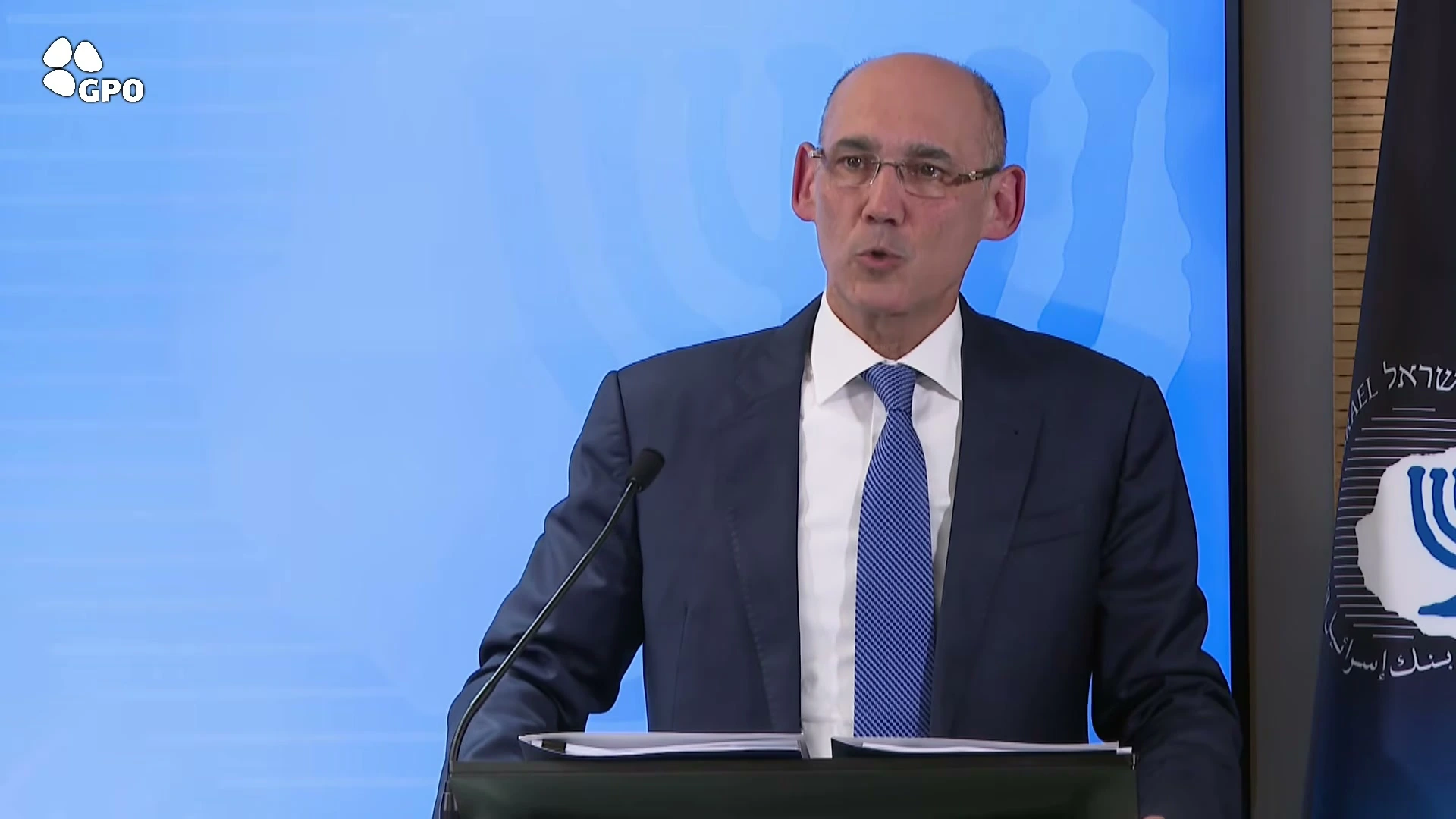
Dr. Ilan Gildin Explains Shekel Resilience and Outlines Market Opportunities
Chief Economist Dr. Ilan Gildin analyzes the resilience of the Israeli shekel amid interest rate cuts, highlighting institutional hedging flows and identifying key opportunities in dollar-revenue equities.
The Interest Rate and Shekel Paradox
Conventional market wisdom suggests that cutting interest rates inevitably leads to the weakening of the local currency. However, since the Bank of Israel initiated its rate-cutting cycle (a cumulative reduction of 1.5%), the Israeli shekel has demonstrated remarkable resilience.
Chief Economist Dr. Ilan Gildin explains this market anomaly:
"The dominant force driving the shekel today is not the interest rate differential, but rather the capital flows of institutional investors. Israeli institutions hold unprecedented exposure to foreign equity markets. Consequently, any rally in global stock indices triggers a mechanical need for them to sell US dollars and rehedge. The sheer scale of these flows completely dwarfs any quarter-percent interest rate differential."
According to Gildin, when a rate cut is perceived by the market as a sign of normalization—proving that inflation is converging toward its target and the geopolitical risk premium is narrowing—it supports shekel appreciation rather than depreciation.
What Could Halt the Rate Cuts?
Monitoring the Bank of Israel's reaction function—which comprises core inflation, labor market dynamics, wage pressures, the fiscal deficit path, defense spending, and the exchange rate—Dr. Ilan Gildin identifies only two factors capable of blocking further rate cuts:
-
A resurgence in service-sector inflation.
-
A major fiscal blowout.
In the absence of these shocks, the prevailing direction for the coming year remains a continued reduction in interest rates.
Global Bond Yield Surge
Regarding the sharp rise in long-term government bond yields worldwide, Gildin emphasizes that this is not a purely inflationary event:
"Inflation expectations remain relatively well-anchored. The surge in yields is driven by three main engines: unprecedented government debt supply in the US, UK, France, and Japan; policy normalization by the Bank of Japan, which is drawing Japanese investors back home; and the absence of central banks acting as buyers of last resort."
For investors, holding long-duration assets brings high volatility without adequate compensation. Gildin prefers positioning in the short-to-medium segment of the yield curve, advising caution regarding assets highly sensitive to discounting, particularly long-term growth stocks and leveraged infrastructure.
Elections and Risk Premium
Contrary to market anxieties regarding potential early Knesset elections, Dr. Ilan Gildin deconstructs the underlying assumption. Israel went through five election cycles within four years, and the market barely reacted. Elections in Israel are not a macroeconomic event in themselves, as the market has adapted to the state functioning without a stable coalition.
According to him, the true source of the risk premium in 2023 did not stem from elections, but from the institutional clash surrounding the judicial system, which broke the historical correlation between the shekel and global stock indices.
Three Key Metrics to Watch
-
Bank of Israel Independence and Fiscal Rules — the only risk capable of triggering a significant widening of spreads.
-
Budgetary Commitments in Campaigns — which dictate the credibility of the fiscal deficit path.
-
Duration of Government Formation — a component that impacts the economy far more than election day itself.
Gildin highlights a fiscal paradox: a delay in budget approval forces the government to operate under an interim budget (1/12), which acts as a safety net that restrains spending and yields a better short-term fiscal outcome.
Market Asset Reaction Hierarchy
Dr. Ilan Gildin argues that the shekel is the primary hedging tool and expression of local political risk, reacting first and most intensely. Bonds react second through spread widening, while equities—excluding sectors directly exposed to local regulation like banks, food retail, insurance, and telecom—are the least sensitive asset class.
This hierarchy creates a unique opportunity for sharp investors. When foreign investors dump the Israeli market as a whole due to political headlines, they also sell off companies with dollar-denominated revenues that have no connection to local election outcomes. This is precisely where the most attractive market opportunities emerge.