Clearing the strategic ridge, and fears of Iranian escalation during the holidays: "We have not heard of such an intention"
While Iran threatened a "powerful response" to an Israeli attack on the Ali-Tahar ridge, and despite Defense Minister Israel Katz's warnings about potential holiday attacks, senior Israeli officials clarify there is no intelligence suggesting an imminent Iranian strike. Prime Minister Benjamin Netanyahu stated that regime change is within reach, while US Vice President JD Vance reiterated that the US will not negotiate with Iran until they cease attacks on commercial shipping.
Defense Minister Israel Katz stated that Iran "likes to attack on Jewish holidays," while Tehran threatened that any comprehensive Israeli attack on the Ali-Tahar ridge would be met with a "powerful response." Despite these warnings and media reports, senior sources in Israel clarify: there is no intelligence regarding an Iranian intention to act against Israel in the near term.
Reuters reported today that last month, Iran conveyed a message to the United States that any "comprehensive Israeli attack" on the strategic ridge in Lebanon—where Iranian military personnel were allegedly present alongside Hezbollah terrorists—would be met with an Iranian response. This evening, the IDF announced it had achieved operational control over the ridge, finished clearing it, and was preparing to neutralize the infrastructure, noting that "some of the terrorists were eliminated, and some fled."
The message from Tehran reflects Iran's direct and ongoing involvement in southern Lebanon and its connection to Hezbollah. However, neither the IDF's announcement regarding the clearing of underground infrastructure at Ali-Tahar nor the video published by Prime Minister Benjamin Netanyahu mentioned the Iranians. According to a senior Israeli official, US President Donald Trump is raising the tone regarding potential escalation, but this is primarily a general concern.
Nevertheless, recent events have created a sense that "something is happening." Yesterday, at the "Time for Decision" conference, Katz noted: "As US pressure on Iran increases and economic strangulation intensifies, there is a probability they will attack. They like to attack on Jewish holidays because they are Jew-haters." Today, at a Ministry of Defense ceremony, Katz added that heavy economic pressure and fear of an uprising could push Tehran to desperate measures, threatening that an Iranian attack would "release Israel from any limitations" and lead to strikes on all infrastructure, including energy.
However, a source familiar with the matter suggested that "Katz wants to be relevant and grab headlines." The IDF clarified that no special preparations are underway, although defense forces remain constantly prepared for various scenarios. Israel believes Iran has no real interest in drawing Israel into a campaign, and the Trump administration aims to prevent a regional conflict.
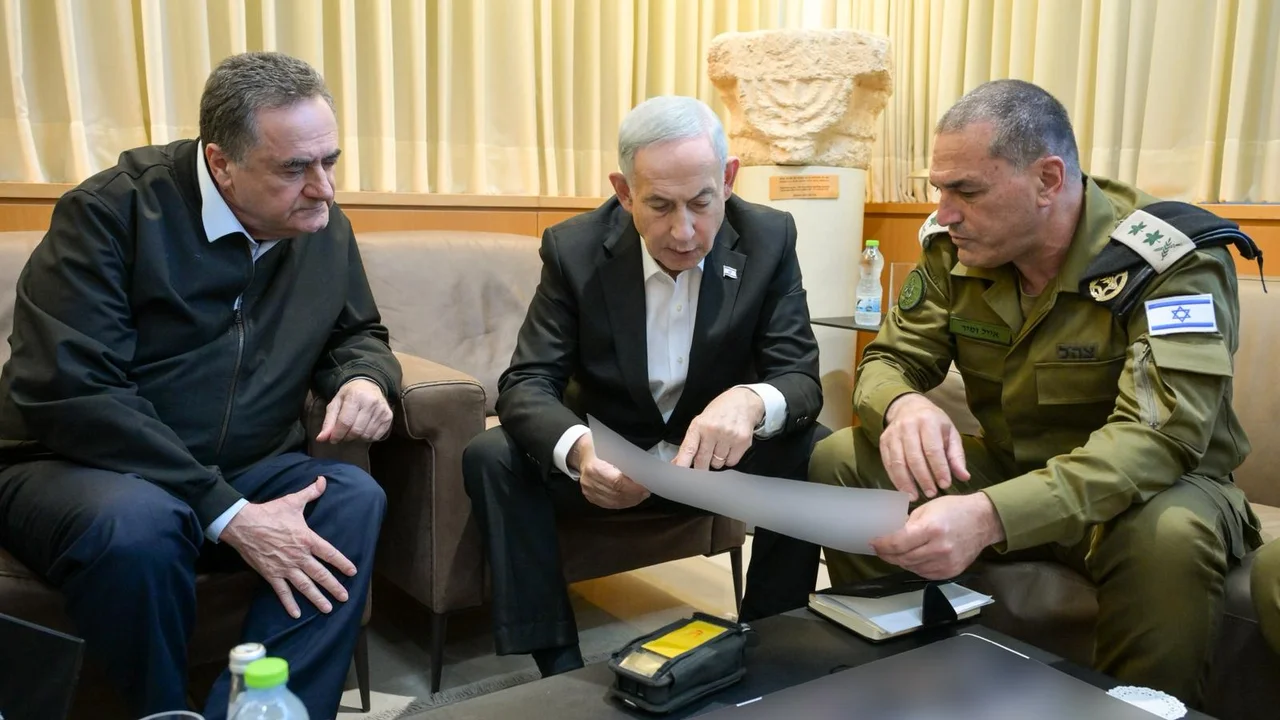
At a ceremony at the Kirya, Benjamin Netanyahu stated that the Iranian regime is "stumbling and weaker than ever." He added: "I am convinced of our ability to remove this threat once and for all. Toppling this regime is the central task before us, and it is close. It is within reach. They know our power and our determination. Do not mess with us." Given the sensitivity of the holiday period in Israel, Katz felt it necessary to establish deterrence against Iran.
Meanwhile, US Vice President JD Vance again blamed Europe for high fuel prices: "They are so high because the Iranians are shooting at commercial shipping. This illustrates the ridiculous degeneration of our European allies and their inability to help maintain supplies to global energy markets." Despite this week's exchange of fire, Vance stated, "I wouldn't call it a war; there is no active shooting right now." He emphasized that the US is using economic, military, diplomatic, and covert pressure to force Iran to stop the attacks. "We are not talking to them, and we will not talk to them unless they stop shooting at the ships," the Vice President concluded.