Mamaliga Versus Polenta: The Ultimate Cornmeal Showdown
Discover the differences between Romanian mamaliga and Italian polenta, featuring classic recipes, cooking secrets with baking soda, and rich accompaniments.
When it comes to cornmeal, two distinct culinary schools emerge from a simple base of water and grain. The rustic Romanian mamaliga and the creamy Italian polenta offer completely different textures and dining experiences. While both start with ground corn, their preparation and final character set them apart entirely.
Rustic Mamaliga Versus Creamy Polenta
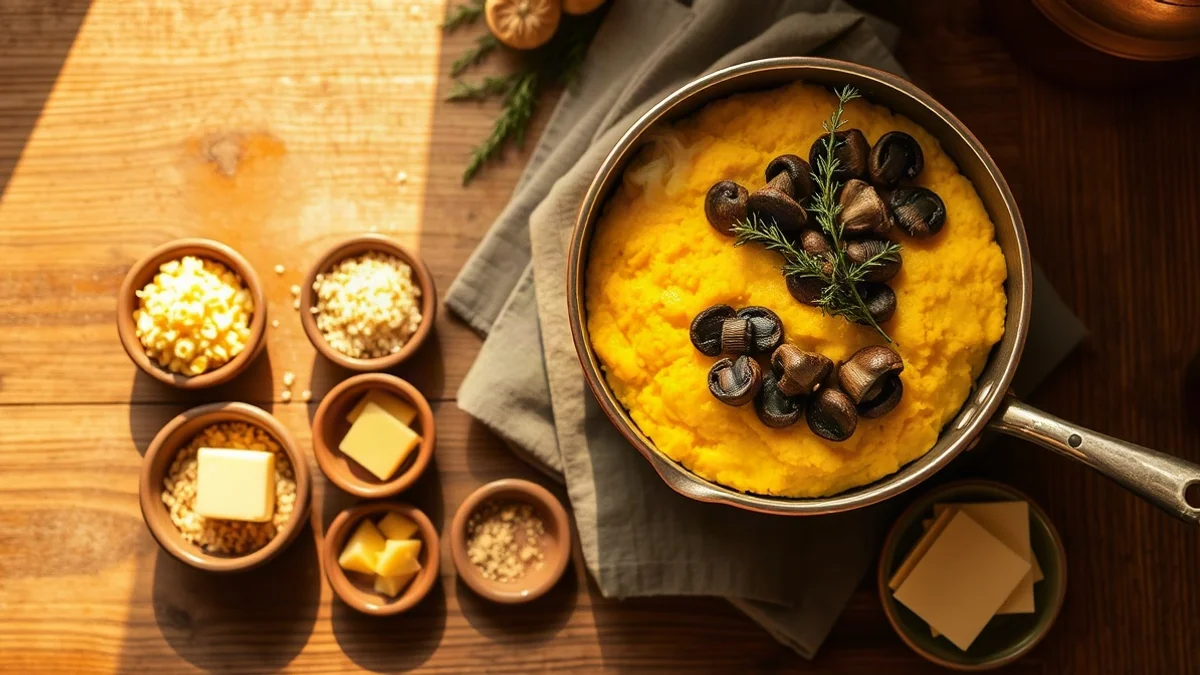
The Romanian mamaliga relies on coarse-ground cornmeal cooked strictly in water. It is hearty, thick, and designed to soak up rich meat sauces or act as a polenta alternative for heavy stews. On the other hand, Italian polenta utilizes fine-ground cornmeal cooked in a luxurious mixture of milk, cream, butter, and Parmesan cheese. Topped with pan-seared wild mushrooms and thyme, it transforms into an elegant appetizer.
A clever trick to speed up the cooking process is adding a tiny pinch of baking soda to the boiling liquid. This raises the pH level, breaking down the tough fibrous hulls of the corn kernels much faster and releasing starches with ease.
Classic Recipes for Home Cooks
To prepare the Romanian mamaliga with beef stew, simmer coarse cornmeal with water, salt, and a pinch of baking soda until thick, then finish with olive oil. Serve it hot alongside a slow-cooked beef stew seasoned with paprika, sauerkraut, and bay leaves.
For the Italian version, whisk fine cornmeal into warm milk and cream with a touch of white miso and baking soda. Once smooth and creamy, stir in butter and Parmesan, and top with garlic-butter wild mushrooms.