Israeli Hi-Tech Week Launches Nationwide to Showcase Innovation and Overcome Sector Challenges
Israeli Hi-Tech Week launches nationwide to showcase technology, address sector challenges, and highlight industry impact amid AI adoption, economic pressures, and regulatory demands.
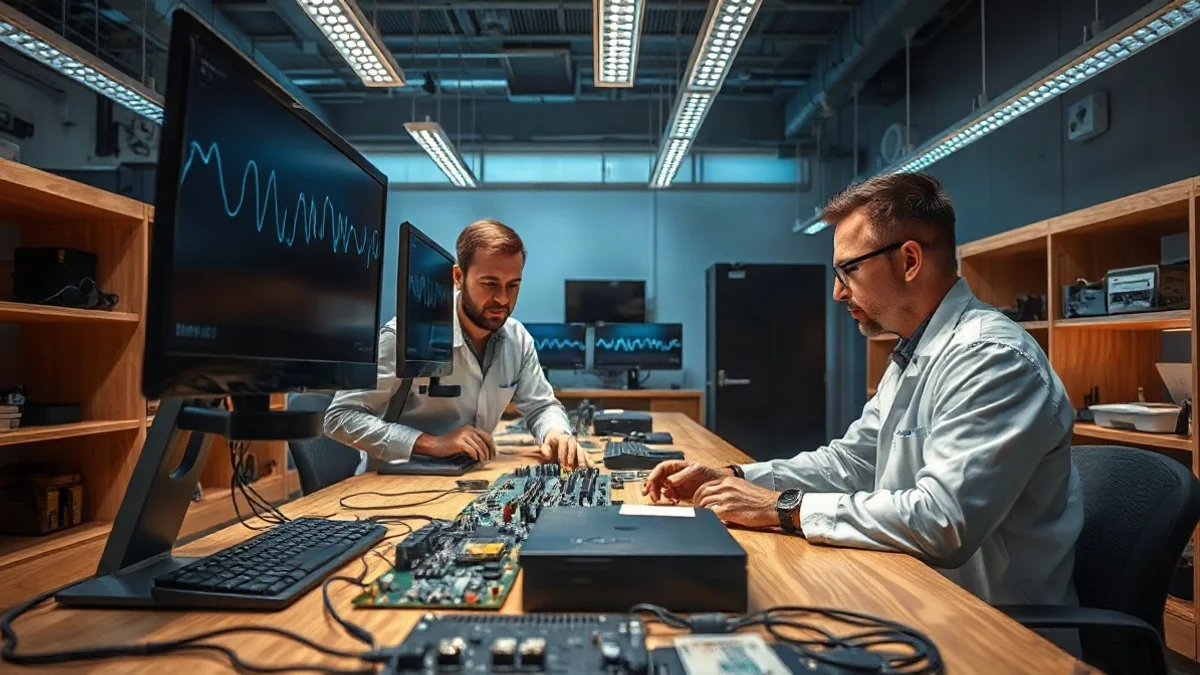
Next week, the Israeli high-tech industry will step out of computer screens, boardrooms, and development centers to reach hundreds of locations across the country. Israeli Hi-Tech Week, a first-of-its-kind initiative by the Israel Advanced Technology Industries (IATI) and the Manufacturers Association of Israel, will feature hundreds of companies and dozens of events from north to south. The initiative aims to showcase not only the technologies developed by local firms, but also the industry's vital role in Israel's economic and social fabric. The program includes events focused on cybersecurity, artificial intelligence, semiconductors, and entrepreneurship, alongside youth engagement, technical education initiatives, and discussions on women's leadership in the tech sector.
Behind the grand showcase lies a pressing question: what is required to ensure Israel's technological edge endures in the coming years? "The idea is to strengthen the positioning of technology in Israel, connect all parts of the ecosystem, academia, industry, and corporations, and demonstrate its contribution to the economy and society," explains Avi Traub, director of the Israel High-Tech Association at the Manufacturers Association. "We are doing this now, after a very difficult year for this sector, largely due to the exchange rate and the war. Tech companies have taken quite a beating over the past year."
According to Traub, Hi-Tech Week is also designed to remind the public that the industry extends far beyond software firms and Tel Aviv-based startups. Alongside professional events showcasing cutting-edge technologies, organizers have planned meetings with students, career exposure sessions, and networking activities meant to bridge companies, investors, academic institutions, and the next generation of workers. The underlying message is that high tech is not an isolated bubble, but an integral part of a broader economic ecosystem that requires human, business, and educational infrastructure to continue thriving.
Navigating Diversity and AI Transformation
Assessing the current state of the sector requires looking beyond generalized trends. "There is a huge difference between a software company and a hardware company, and an immense difference between a startup and a global giant like Microsoft or HP," Traub notes. "Their mindset is different, their maturity is different, and their capital needs vary. When trying to monitor this entire market, one must understand that it is a highly diverse ecosystem."
This complexity is reflected in recent employment figures. According to data published last June by the Israel High-Tech Association, approximately 362,200 salaried employees worked in high-tech sectors during the first quarter of 2026, compared to 361,200 in 2024 and 360,100 in 2025. These figures point to stabilization following years of rapid growth. However, beneath this numerical stability, the industry is transforming rapidly under the influence of artificial intelligence, shifting business models, and intensifying competition for investments and talent.
Artificial intelligence remains a primary catalyst for change. Traub emphasizes that AI is actively reshaping corporate strategies and operational efficiency. Data from association surveys indicate that among tech and advanced manufacturing businesses utilizing AI tools over the preceding six months, 73% deployed them for research, development, and innovation, while 66% integrated them into managerial and business processes. While automation alters job requirements, Traub argues that human labor remains essential, shifting towards supervision, deployment, and specialized operational roles rather than pure elimination of positions.
Government Strategy and Infrastructure
To maintain momentum, Traub calls for a unified governmental approach, advocating for a dedicated minister of high-tech or a centralized coordinating body capable of formulating a national strategy across education, academia, industry, and defense. He also highlights the severe pressure exporters face due to the strengthening shekel against the dollar, alongside ongoing efforts like the collaboration with the Ministry of Finance to inject 1.6 billion shekels into the Israel Innovation Authority.
Ultimately, Traub remains optimistic about the resilience of Israeli innovation, provided that regulatory burdens are eased, educational curricula are updated to reflect technological shifts, and foreign investments continue to be actively encouraged.