U.S. Naval Blockade Pushes Iran's Oil Revenue Lifeline to Breaking Point
A U.S. Navy blockade has halted Iranian crude oil exports since mid-July, depleting Tehran's offshore reserves from 90 million to 29 million barrels. Experts warn the regime's cash flow will dry up by December, threatening its military funding.
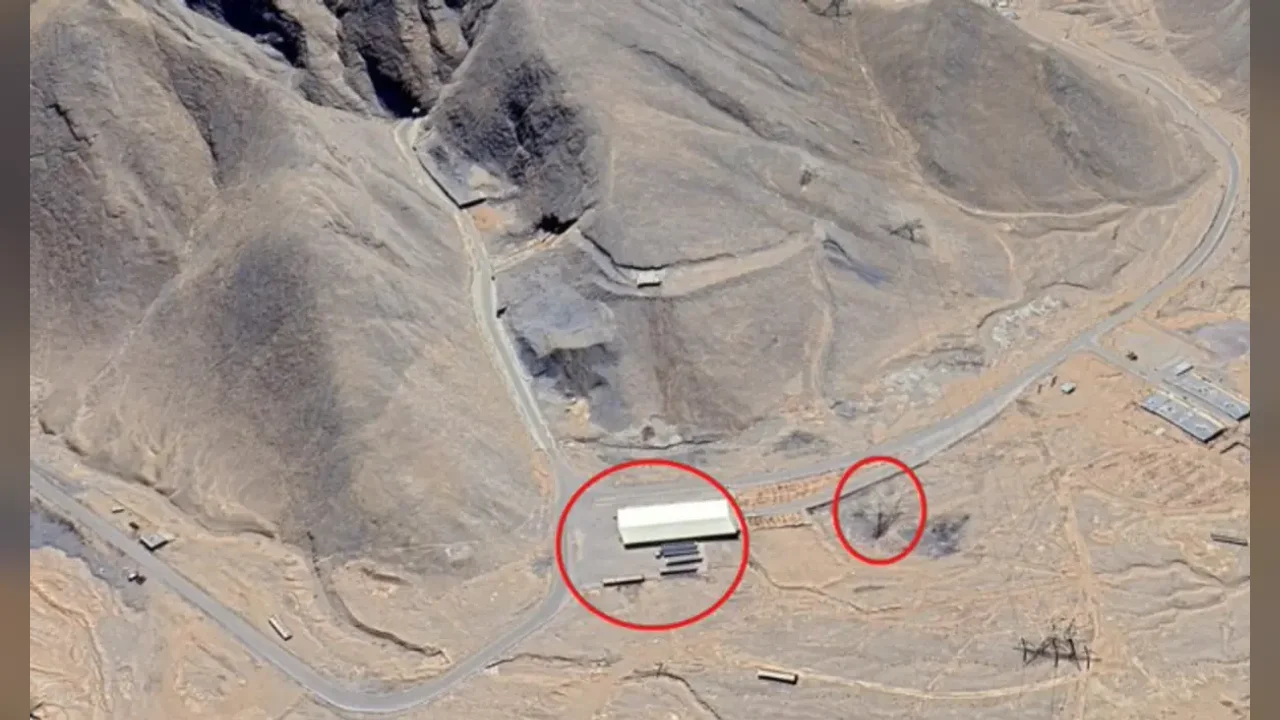
The naval blockade imposed by the U.S. Navy on Iran since mid-July is taking a devastating toll on the regime's primary economic lifeline. According to data from shipping tracking firm Kpler, not a single barrel of Iranian crude oil has managed to cross the blockade line toward destination markets since the enforcement began. While Tehran continues to load limited quantities of oil onto tankers within the Persian Gulf, these vessels remain trapped without any ability to move. Concurrently, the massive oil reserve that Iran managed to smuggle past the blockade line during a previous temporary lull is depleting at a rapid pace, threatening to completely sever the country's most critical source of foreign currency within weeks, as reported by The Wall Street Journal.
The Depleting Floating Reserve
The depth of the economic impact is most clearly reflected outside the Persian Gulf. In mid-July, the volume of Iranian oil aboard tankers at sea, outside the blockade line, stood at approximately 90 million barrels. This floating inventory allowed the regime to continue supplying its customers—primarily refineries in China—and maintain a vital cash flow.
However, according to Kpler, this reserve has now shrunk to just 29 million barrels. At the current sales rate of approximately one million barrels per day, the entire inventory is projected to hit zero by mid-October. Consequently, cash receipts for cargoes already delivered are expected to halt completely by mid-December. Iranian Oil Minister Mohsen Paknejad attempted to project business as usual, claiming that "the process of selling oil and delivering it to customers was carried out thousands of kilometers away from the Persian Gulf and the Gulf of Oman." Yet, reality indicates that this distant inventory is rapidly running dry, while alternative supplies fail to exit the Gulf.
August data reveals a dramatic collapse in Iranian export capabilities. Tehran loaded only about 255,000 barrels per day within the Gulf—an 85% plunge compared to the daily average recorded between February and April. Furthermore, these barrels are not reaching their destinations, remaining blocked behind U.S. Navy forces. Prior to the outbreak of the war, Iran exported nearly two million barrels daily.
Attempts to compensate for the loss of maritime routes via land do not offer a viable solution. Homayoun Falakshahi, lead crude oil analyst at Kpler, clarified that Iran is capable of transporting a maximum of 40,000 barrels per day by truck. The railway infrastructure is also unable to serve as an alternative, primarily due to a severe shortage of specialized tank cars for transporting crude oil and refined products.
Production Halts and Petrochemical Decline
The naval blockade is not only hurting sales but has also begun to impact actual production at drilling sites. Although oil exports have ground to a near-total halt, land-based storage facilities in Iran have not shown significant growth. According to Falakshahi, this indicates that the regime has been forced to cut oil production to a level close to domestic consumption. This represents the realization of warnings issued by energy experts: without export capabilities, and once storage facilities are full, there is no choice but to shut down oil wells.
In parallel, the damage has spread to the petrochemical sector, which constitutes the regime's second most important source of foreign currency after oil. According to Kpler estimates, petrochemical loading volumes in August plummeted by about two-thirds compared to early 2026 figures.
Another strategic blow to Tehran comes from international markets. China, which had been the primary and almost exclusive buyer of Iranian oil, is turning to alternatives. Gulf energy sources report that Chinese refineries have begun purchasing oil from Saudi Arabia, Iraq, and the United Arab Emirates. Due to the shortage of immediate Iranian supply, Tehran's oil—which was previously sold at rock-bottom prices—has in some cases become more expensive than parallel alternatives. Other producers are capitalizing on this: Iraq, for instance, is now offering aggressive discounts of nearly $30 per barrel for certain oil grades to capture Iran's market share.
Economic Collapse and Military Funding
The consequences of the blockade extend far beyond the energy sector. Oil revenues traditionally fund about one-third of the Iranian state budget and serve as the main anchor for foreign currency inflows. Furthermore, oil sales directly fund the regime's security apparatus. According to the U.S. Department of the Treasury, the Islamic Revolutionary Guard Corps (IRGC) and the armed forces rely on designated companies and "shadow fleet" networks to sell oil and finance their military operations.
The blockade of these routes is designed to simultaneously target the state budget, the Iranian rial, and military financing mechanisms. U.S. Treasury Secretary Scott Bessent highlighted the achievements of the move on social media platform X, publishing an illustration inspired by the movie Jaws, showing a shark devouring a graph of Iranian oil exports and currency.
This pressure hits an already fragile Iranian economy. Official inflation figures have crossed the 80% annual threshold, and the International Monetary Fund (IMF) forecasts a 5.4% annual contraction in GDP—the worst figure since the 1980s. The acute shortage of dollars makes it difficult for the central bank to support the value of the rial and finance imports of essential raw materials for factories, driving up prices and fueling inflation. Hamad Hussain of Capital Economics noted that since President Donald Trump announced the new pressure campaign in August, the rial has lost nearly 15% of its value against the dollar:
"Much will depend on how much economic pain the regime is willing to absorb for the sake of its military goals."
While Iran's total non-oil trade continued to operate, recording exports of nearly $15 billion between March and August—a figure lower than last year's—a major trade route has been blocked. The United Arab Emirates suspended most financial and economic transactions with Tehran last month. Although a small portion of activity continues through shell companies, Iran is forced to route its trade lines through Turkey, Iraq, Oman, and Pakistan—routes that are cumbersome, longer, and far more expensive.
Military Escalation Risks
At the core of Washington's strategy is the assumption that crippling economic damage will force Iran's leadership to compromise and reach a diplomatic agreement. Conversely, experts and security officials in the Gulf warn of the opposite outcome: a broader military escalation.
The link between the economic campaign and armed conflict was illustrated last Saturday when the U.S. military struck three Iranian oil tankers following ballistic missile launches from Iran toward U.S. vessels, including an aircraft carrier. Meanwhile, Saudi sources report that Tehran has increased its supply of missiles, intelligence, and personnel to the Houthi rebels in Yemen to target additional shipping lanes and Saudi infrastructure.
Ellie Geranmayeh, an Iran expert at the European Council on Foreign Relations, doubted the regime would back down:
"The move severely harms the ordinary citizen, but evidence shows that the regime will choose resistance and fighting over surrender in negotiations."
Iran's ability to survive the past few weeks stemmed from a temporary lull in the naval blockade in mid-June, which resulted from a memorandum of understanding during diplomatic contacts. Iran utilized the break to quickly move tens of millions of barrels of oil out of the Gulf and store them on tankers at sea. This created the 90-million-barrel reserve that ensured payment continuity even after the U.S. Navy resumed the blockade in July.
However, this mechanism is reaching its limit. Mid-October is marked as the turning point when the floating oil inventory will run out, and by mid-December, payments for old transactions will cease entirely. The U.S. blockade has proven its tactical effectiveness in halting oil exports, and now the international community waits to see how Tehran will react once the cash tap is completely shut off.