US and European Allies Push IAEA Resolution to Refer Iran to UN Security Council
The US and its European allies are pushing an IAEA resolution to refer Iran's nuclear file to the UN Security Council. This follows Tehran's refusal to provide data or allow inspectors access to its facilities, leaving the status of 440.9 kg of 60% enriched uranium unknown.
The United States and its three key European allies—Great Britain, France, and Germany—are intensifying diplomatic pressure on Iran today (Tuesday). The powers are working to advance a resolution in the International Atomic Energy Agency (IAEA) Board of Governors that would refer the Iranian nuclear file back to the United Nations Security Council. This move follows an unusual official announcement by the IAEA stating that Tehran refuses to provide any information regarding the status of its declared nuclear facilities and materials, and is preventing UN inspectors from conducting on-site verification checks. Conversely, Iran rejects these accusations and warns that the approval of the resolution will be met with immediate retaliatory measures.
According to the draft resolution proposed by the four powers, Iran is required to "urgently remedy its non-compliance" with its international obligations and allow, without delay, the necessary inspections to verify that nuclear materials are not being diverted for military purposes. The proposal is being brought to a vote during the IAEA Board of Governors meeting in Vienna. However, alongside the hardening of tone and increased pressure, the draft text explicitly leaves the door open for negotiations, emphasizing support for a "diplomatic solution" and calling on all involved parties to act constructively through diplomatic channels.
Tehran Warns of Retaliation
Tehran has signaled clearly that it will not accept the move. Iranian Foreign Ministry spokesperson Esmaeil Baghaei warned during his weekly press conference that if the Board of Governors approves the resolution, Iran will take "necessary steps" in response. Baghaei sharply criticized the European nations, claiming that the West is once again using the IAEA as a political tool:
"Whenever they run out of options, they turn to the Agency and Grossi."
He further argued that there is no logic in demanding access to facilities damaged during the war, explaining that the restrictions on inspectors are a direct result of American and Israeli strikes against nuclear sites.
Loss of Verification and Missing Uranium
At the heart of the crisis lies a professional and intelligence blind spot for the international community: the IAEA is currently unable to determine with certainty the status of a critical and central part of the Iranian nuclear program. IAEA Director General Rafael Grossi reported to the Board of Governors that throughout the recent reporting period, Iran refrained from transmitting any data on the status of its declared materials and sites, and blocked inspectors from physical access to perform verifications.
Grossi warned that the Agency has lost continuity of knowledge regarding Iran's known uranium stockpile, primarily concerning material enriched to the highly sensitive and dangerous level of up to 60%. This situation, Grossi emphasized, raises grave nuclear proliferation concerns and requires urgent correction.
Data provided before the loss of access highlights the severity of the situation: Iran had accumulated 440.9 kilograms of uranium enriched to 60%—a threshold significantly close to the level required to produce a nuclear weapon. Since access was blocked, the IAEA has had no updated, verified, or reliable picture regarding the location and status of this stockpile.
The core issue is not only the existence of the material, but the inability to perform continuous monitoring. Under its safeguards agreement in accordance with the Treaty on the Non-Proliferation of Nuclear Weapons (NPT), Tehran is obligated to report all nuclear materials and activities and allow the Agency to verify that they are not diverted to non-civilian uses.
Escalation and Damaged Facilities
The current crisis is another link in an escalation that intensified in June 2025. At that time, the IAEA Board of Governors determined that Iran was not complying with its non-proliferation obligations—an unprecedented determination not seen in about 20 years.
Shortly thereafter, during the war against Israel and the United States, a series of nuclear facilities in Iran were struck. Following the damage, on-site verification checks were halted for safety reasons, and at the end of June 2025, the IAEA decided to withdraw its inspectors from the country. In response, Tehran enacted a law in early July 2025 that officially suspended cooperation with the international agency.
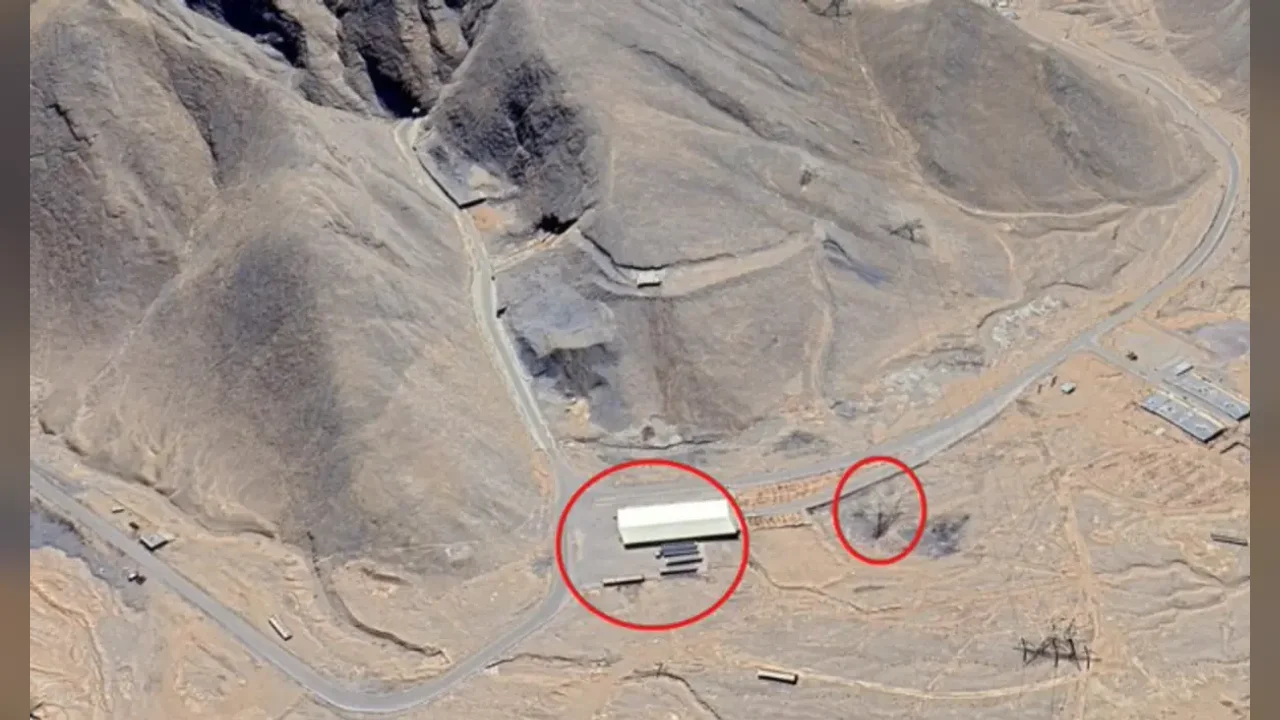
Among the sites damaged in the strikes were key enrichment and processing facilities, including Fordow and Natanz. Since those strikes, the Agency has struggled to restore the access necessary to build a reliable picture, with very limited exceptions. In the absence of ground access and full reports, UN inspectors are forced to rely on commercial satellite imagery and open sources to monitor developments from afar.
The Security Council Route
For many months, Western powers avoided returning the issue to the UN Security Council in order to give the diplomatic channel breathing room. However, according to Western officials, the absolute lack of cooperation from Tehran and the deterioration of communication channels led to the understanding that patience has run out and international pressure must be escalated.
Returning the debate to the UN Security Council is not merely a symbolic step. While the IAEA Board of Governors is a technical-political body limited to technical oversight, the Security Council possesses broad enforcement and punitive powers under international law.
The draft resolution instructs Rafael Grossi to transmit the new resolution, previous Board decisions, and his latest report directly to the UN Security Council and the General Assembly. Through this, the United States, Great Britain, France, and Germany seek to re-anchor the Iranian nuclear crisis at the center of the UN's political-security arena.
Nevertheless, approval of the resolution in Vienna will not automatically trigger sanctions. Any practical, punitive, or operational step within the Security Council is expected to face a wall in the form of the veto power held by Russia and China, two permanent members of the Council.
The Western strategy is built on a dual message: on one hand, extracting a heavy political price from Tehran for blocking inspectors; and on the other, carefully keeping the door open for political negotiations that would allow the restoration of monitoring mechanisms and recreate a reliable picture of activities at the facilities. Tehran maintains that anyone demanding it reopen its facilities for inspections must first demand that the United States and Israel cease strikes and threats against its monitored nuclear sites.