IDF Rapid Response Unit Drills Counter-Infiltration Scenarios in Tirat Zvi
The Jordan Valley rapid response unit conducted a comprehensive counter-terrorism drill in Tirat Zvi, testing mobilization speed, tactical coordination, and multi-agency response readiness.
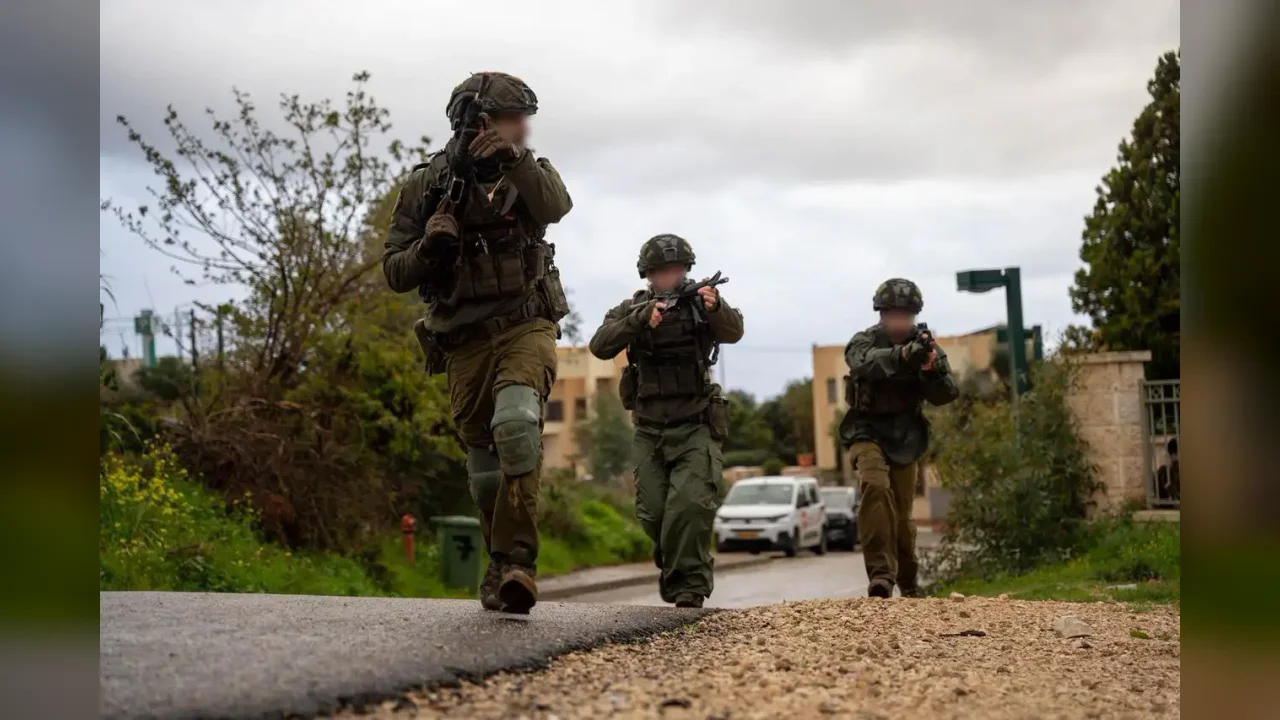
The rapid response unit (Yetam) of the Jordan Valley and Valleys Brigade recently conducted a comprehensive counter-terrorism drill in the cooperative settlement of Tirat Zvi, testing response times, coordination, and readiness for sudden infiltration scenarios.
According to the exercise scenario, hostile elements infiltrated the community, seizing the main gate, taking hostages in several residential homes, and staging a mass-casualty and hostage situation at the local school. Local teenagers participated as role-playing hostages, while reservists arrived independently from various locations without prior notice to test real-time mobilization and tactical integration with local security squads.
Major (res.) Y., operations officer for the brigade, emphasized that every soldier is trained to act as an independent vanguard during the critical opening moments of an emergency. "I may find myself alone facing an attacked community, with partial information while my comrades are still on the road," he noted, highlighting the necessity of clear radio communication and immediate tactical assessment.
Unlike the initial hours of the October 7, 2023 attacks, where many reservists had to retrieve gear from distant bases, members of this specialized unit keep their full combat equipment at home, enabling immediate deployment. The unit relies on reservists living and working directly within the sector, ensuring that a trained armed force can reach any potential flashpoint within 20 minutes.
The exercise also evaluated joint command structures, integrating the Israel Defense Forces, the Israel Police, Border Police, and local security teams within a unified forward operations center. Officials utilized dedicated digital applications to monitor real-time personnel arrivals and coordinate tactical assignments dynamically as forces assembled.