US Imposes Sanctions on Turkish Banks and Strikes Iranian Tankers
The US sanctioned Turkey's Golden Global bank for funding the IRGC, while CENTCOM targeted Iranian oil tankers in the Strait of Hormuz amid the expiration of Donald Trump's 60-day unilateral military window.
This coming Wednesday marks the expiration of the 60-day window allowing the US President to conduct independent military operations without congressional approval. This legal constraint places the White House at a complex political and legal crossroads regarding the continuation of the campaign.
One potential solution involves utilizing military force strictly to protect US service members stationed in the region without seeking prior approval, limiting actions to defensive and preemptive strikes rather than full-scale war. This approach aligns with the policy pursued by President Donald Trump in recent weeks, focusing on securing shipping lanes in the southern passage of the Strait of Hormuz, tightening economic sanctions, and targeting financial institutions aiding the Iranian regime in bypassing restrictions.
Consequently, the US imposed heavy sanctions on branches of an Egyptian bank in the UAE that assisted Iran in converting Chinese yuan into US dollars. China pays Iran for crude oil in its own currency, forcing Tehran to convert it through offshore financial institutions. While the UAE has moved to align with Washington, officially announcing a financial decoupling from Iran, Turkey continues to facilitate these transactions.
Turkey as Iran's Financial Pipeline
US Ambassador to Turkey Tom Barrack announced sanctions against the Turkish bank Golden Global and two of its subsidiaries. The institutions not only facilitated sanctions evasion and converted funds for Islamic Revolutionary Guard Corps (IRGC) companies but also assisted in covert money transfers during the ongoing war. The US State Department accused the bank of encouraging and financing terrorist activities across the Middle East.
Barrack, in a post on X, defended Turkey, arguing that this incident should not reflect on the integrity of the entire Turkish financial system. However, financial sources closely monitoring US efforts to track illicit Iranian funding state that Turkey has become the primary hub through which the IRGC, Hezbollah, and Hamas manage their financial affairs.
According to these sources, a network of Turkish front companies established by the IRGC under the guise of legitimate international trading firms constitutes a core pillar of the Guard's financial apparatus. This network, a primary target of the US economic campaign against Iran, serves as a vital lifeline for the regime, transferring assets to sustain Iran's security forces, including the IRGC and the Basij militia, which prevent the regime's collapse.
While the Turkish Treasury maintains ongoing communication with US officials, sources report a lack of enforcement and bureaucratic delays that hinder the identification of these illicit entities.
A financial source stated:
"The financial institution in question was exposed through external intelligence. Only after this data was presented to the Turkish government did they cooperate. There are dozens of other such institutions, and Erdogan's administration does not seem eager to assist in locating them."
Hamas and Hezbollah relocated their financial operations to Turkey over the last decade with the tacit approval of local authorities. According to intelligence held by both Israel and the US, Hezbollah manages global criminal networks from Turkey, including drug trafficking, stolen vehicle smuggling, and money laundering.
Hamas utilizes Turkish-registered companies to run its "Dawah" fundraising networks across Europe. While presented as charitable organizations, these funds maintain the group's military infrastructure and support its reconstruction efforts in the Gaza Strip. Additionally, several senior commanders of Hamas's military wing reside in Turkey, directing operations in the West Bank.
Escalation in the Strait of Hormuz
Meanwhile, a significant escalation in the Strait of Hormuz signals a shift in US military posture. According to regional reports and CENTCOM statements, US forces targeted three Iranian oil tankers alongside reported strikes on facilities on the strategic Kharg Island, Iran's primary oil export terminal.
One tanker near Oman was destroyed, while two others sustained severe damage and were disabled. CENTCOM stated the strikes were executed in response to Iranian missile fire directed at US warships.
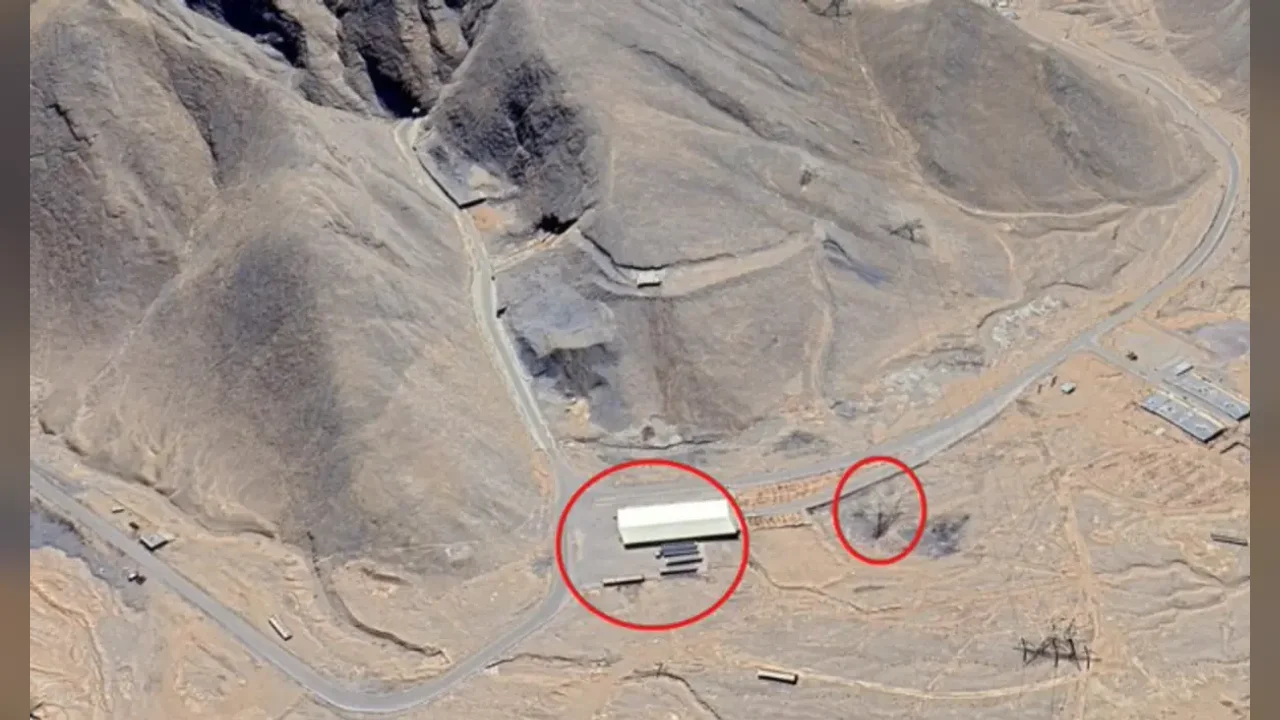
The developments follow a public warning from President Donald Trump, who stated that the US is closely monitoring all movements at the underground nuclear facility in Isfahan and across Iran, promising a severe response to any violations.
Having effectively halted Iranian oil exports, the US is now targeting Iran's shadow fleet in the Indian Ocean to prevent attempts to resume shipments. The administration is currently evaluating options to seize these tankers and confiscate their crude oil cargo, which represents the regime's final source of revenue.