Senior political source: "The attempt at a security agreement with Syria - failed"
Despite the failure to reach an agreement with Damascus, communication channels remain open. At the same time, Israel identifies a decrease in settler violence and an increase in enforcement: "We definitely see the damage caused as a result of this"
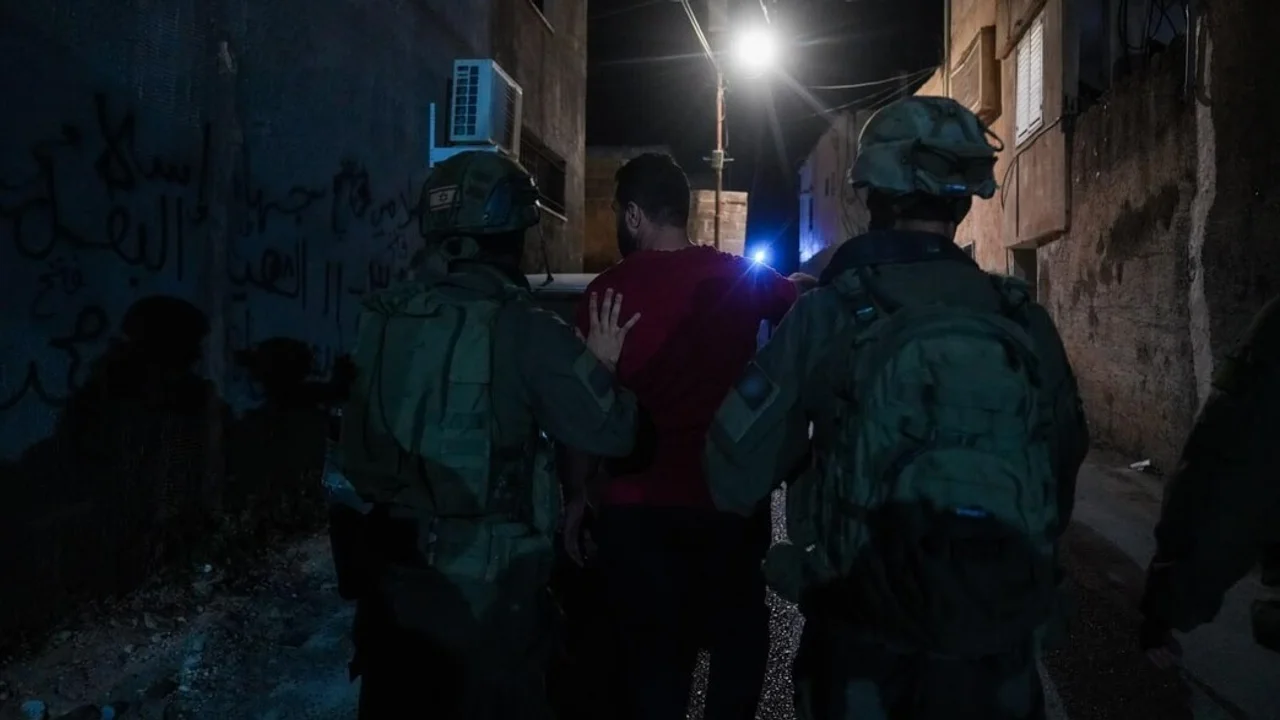
A senior political source addressed on Wednesday a series of regional issues, including settler violence in Judea and Samaria, contacts with Syria, and the future of the Gaza Strip. According to him, in recent months there has been a decrease in the number of violent incidents by settlers and in the number of serious events, alongside an increase in enforcement actions and the number of arrests.
According to the source, March was a "peak month," and from then until July there was a decrease in the number of incidents. "The phenomenon still exists. It must be dealt with. We definitely see the damage caused as a result of this," he said.
The source stated that Israel is acting on several levels, from reinforcing forces and enforcement in the field to additional steps intended to deal with the factors behind it. He added that in light of international criticism, the Ministry of Foreign Affairs is working to present more clearly the actions of the authorities against Israelis involved in violent incidents.
"We sought to show, not just to say, the enforcement actions," the source said. According to him, this is why documentation of arrests and legal proceedings has been published. The goal is to show on the international arena that the authorities in Israel are acting against those involved in violence.
The source asked to distinguish between the issue of violence and the fundamental dispute between Israel and European countries regarding the settlement in Judea and Samaria. Israel rejects the European position, but continues to act against Israelis involved in violence. He also noted that Finance Minister Bezalel Smotrich published an article against the phenomenon and addressed the relevant public on the subject.
On the Syrian arena, the source confirmed that the attempt to reach a security agreement between Israel and the regime in Damascus did not succeed. "We tried to reach a security agreement. It did not succeed in the end," he said. According to him, one of the developments that made the contacts difficult was the easing of sanctions imposed on Syria, which reduced Syrian motivation to move toward such an agreement.
Another central issue was the buffer zone. Israel was not prepared for an agreement that would require a withdrawal from it. "We did not think that within the framework of a security agreement we should withdraw from the buffer zone, which is a security asset," the source said. Despite the failure, communication channels with Damascus continue to operate. "The State of Israel has communication channels with the Syrian regime," he said.
The discourse is taking place on several levels and deals, among other things, with security arrangements in southern Syria. "I cannot go into all the contents, but we try to maintain in this discourse the security interests of the State of Israel."
Regarding Gaza, the source said that on the central issue from Israel's perspective, the disarmament of Hamas, no breakthrough has been recorded. "Unfortunately, there is no progress on the issue of disarmament," he said. Israel is not interested in the collapse of the political track being promoted with the Americans, but insists that it include the conditions set in the original plan. "Our basic argument was that the 15-point plan does not match the 20-point plan. We have an interest in the existence of the plan, but from our perspective, it requires the fulfillment of all its conditions."
The source said that two working groups are operating between Israel and the Peace Council, one on Hamas disarmament and the second on humanitarian issues. Israel continues to link the disarmament of Hamas to the rehabilitation of the Gaza Strip. Also, the international stabilization force (ISF) is not yet at the implementation stage, with Morocco and Uganda among the countries in the picture.
On the Lebanese arena, the source said that Israel opposes the establishment of a "new UNIFIL," as the mission did not fulfill its role. Jerusalem does not rule out other mechanisms, including training units in the Lebanese army or establishing a verification mechanism. Regarding Turkey, the source said that Israel does not define it as an "enemy state," but it can be seen as a rival. There is no intensive exchange of opinions, but he added that he does not believe that Israel or Turkey has a desire to reach a direct exchange of fire.