Reflecting on Operation Kadesh: The 1956 Sinai Campaign at 70
Seventy years after Operation Kadesh, retired Colonel Shaia Charsit recalls piloting Dakota transport planes in the daring 1956 Sinai campaign. The swift military victory reopened the Straits of Tiran before international pressure forced a withdrawal.
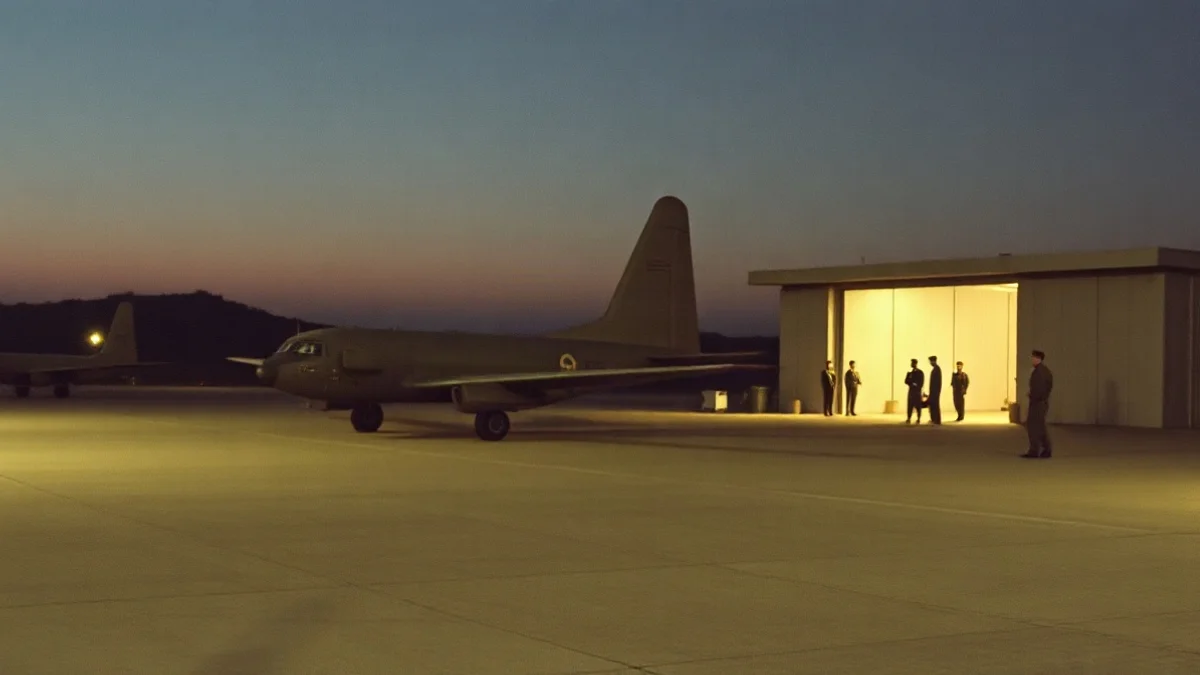
Seventy years have passed since Operation Kadesh, Israel's 1956 Sinai Campaign. In the autumn of 1956, following escalating regional tensions, the blockade of the Straits of Tiran, and secret coordination with Britain and France, Israel launched a military offensive into the Sinai Peninsula. The operation concluded within days with a swift military victory, though heavy international pressure ultimately compelled Israel to withdraw from the captured territories. Retired Colonel Shaia Charsit, who served as a young navigator in a Dakota squadron at the time, recalls the historic moments when the operation commenced.
On the evening of October 29, 1956, Israeli Air Force Dakota transport planes took off from the Tel Nof Airbase bound for the Sinai Peninsula. Aboard the aircraft were paratroopers from the 890th Battalion of the Paratroopers Brigade, commanded by Rafael Eitan, who later served as IDF Chief of Staff. Their designated objective was the Mitla Pass. Charsit, then a young navigator in 103 Squadron and a graduate of flight course 19, led the second quartet of transport aircraft participating in the drop, marking the opening salvo of Operation Kadesh—one of the foundational military campaigns in the early years of the State of Israel, which was then only eight years old.
Looking back seven decades later, Charsit reflects on the meticulous preparations preceding the operation, the complex flight paths assigned to the aircrews, and the emotions experienced by those who partook in one of the IDF's most daring early missions.
The Straits of Tiran and the Egyptian Threat
Israel in the mid-1950s was a fledgling nation whose borders faced persistent security threats, including infiltrations, sabotage acts, and cross-border raids by armed fedayeen groups. Simultaneously, Egypt under the leadership of Gamal Abdel Nasser was rapidly expanding its military capabilities, acquiring large quantities of Soviet weaponry, including tanks, aircraft, and artillery systems.
A primary friction point was freedom of navigation. Egypt blocked the Suez Canal to Israeli shipping and subsequently closed the Straits of Tiran, the southern gateway to the Gulf of Eilat, severely harming Israel's maritime trade ties with East Africa and Asia. The crisis escalated sharply in July 1956 when Nasser nationalized the Suez Canal, a move that drew fierce opposition from Britain and France, which viewed the strategic waterway as a vital economic asset.
The strategic interests of the three nations converged. In late October, secret talks held in the French town of Sèvres yielded a joint military plan: Israel would initiate an offensive in the Sinai, followed by a joint Anglo-French ultimatum demanding both sides cease fire, allowing London and Paris to intervene militarily under the guise of protecting the canal and separating the forces. For Israel, the core objectives were reopening the Straits of Tiran, degrading the Egyptian military apparatus, and transforming the security reality along its southern border.
The Opening Paradrop
As the IDF mobilized reserves and prepared for large-scale troop movements, planners finalized the operation to drop the 890th Battalion near the Mitla Pass. Retired Colonel Shaia Charsit recalled the operational parameters designed to confuse Egyptian intelligence regarding the source and destination of the assault. "The plan was to fly first southeast toward a point known as Al-Raml police station in southern Jordan, and only from there execute a westward turn to deceive the Egyptians," Charsit explained.
Following briefings at Tel Nof, 16 Dakota transport planes carrying Eitan's paratroopers took off into the night. Operating basic navigation equipment vastly different from modern avionics, the transport crews successfully guided the formations to the drop zone. The airborne operation served as the opening trigger for a broad ground offensive. Heavy fighting subsequently erupted at the Mitla Pass, where paratroopers encountered entrenched Egyptian forces in the rugged terrain. Concurrently, Israeli infantry and armored units advanced across multiple Sinai axes, capturing key objectives within days, including Tamed, Nakhl, and Abu Ageila.
From Military Victory to Strategic Withdrawal
Militarily, Operation Kadesh achieved its objectives with exceptional speed. Charsit fondly remembers the prevailing sense of triumph: "We conquered the entire region. From our perspective, it was a massive success." The seizure of Sharm el-Sheikh enabled the reopening of the Straits of Tiran, fulfilling a paramount national goal.
However, battlefield success triggered immense international diplomatic pressure. The United States, led by President Dwight Eisenhower, strongly opposed the military action and demanded an immediate withdrawal by Israel, Britain, and France. The Soviet Union also issued stern warnings, making it clear to Jerusalem that holding the territory indefinitely was untenable. "After we succeeded and controlled the entire area, the American demand to withdraw arrived," Charsit noted. "Ben-Gurion ultimately decided that we must pull back, and the withdrawal was executed in stages."
Israel completed its withdrawal from the Sinai and the Gaza Strip throughout 1957 following the establishment of international guarantees and the deployment of a United Nations Emergency Force. While Israel relinquished territorial gains, the Straits of Tiran remained open, securing relative tranquility along the southern border for years to come. Operation Kadesh cemented the young nation's defense doctrine emphasizing preemptive action and swift deterrence, while underscoring the enduring constraints of geopolitical realities.