Sahara Meteorite Reveals Mars Was Warm and Wet 4.1 Billion Years Ago
A Martian meteorite discovered in the Sahara Desert has been dated to at least 4.1 billion years ago, providing new evidence of ancient liquid water on Mars and its potential to support early life.
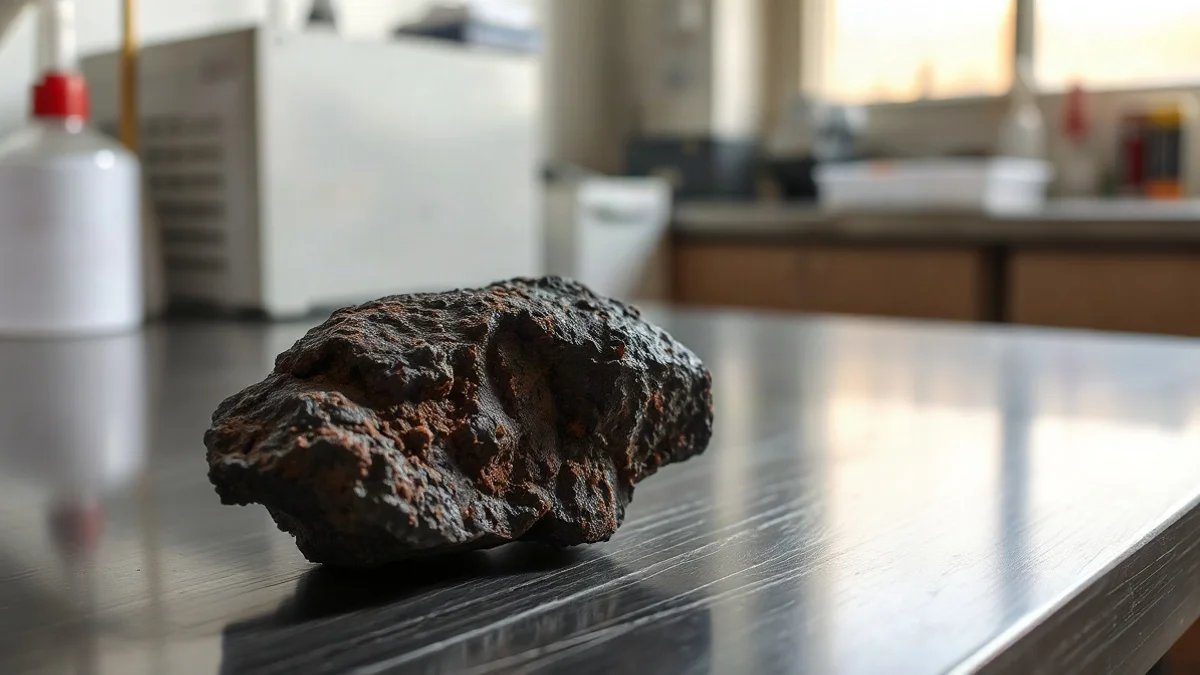
A new study reveals that a meteorite discovered in the Sahara Desert in 2022 originated in the Martian crust at least 4.1 billion years ago, making it potentially the oldest among the 435 known Martian meteorites on Earth. Named Teghaza 001, the reddish volcanic rock was found in Mali and offers crucial insights into the early history of the neighboring planet.
Evidence of Ancient Water
According to the researchers, the composition of Teghaza 001 provides fresh evidence of liquid water on Mars, reinforcing the hypothesis that the ancient planet may have supported microbial life. Planetary scientist Yang Liu of NASA's Jet Propulsion Laboratory (JPL) described the meteorite as testimony to a time when Mars was likely warmer and wetter than it has been for most of its history.
Chemical analysis indicates that the rock, a coarse-grained gabbro, came into contact with water as it slowly cooled and crystallized beneath the Martian surface. Hydrogen and oxygen isotopes found within the meteorite confirm that water percolated deep into the Martian crust, mixing with molten rock originating from the mantle.
Clues to Planetary Evolution
Researchers determined the meteorite's age using uranium-lead radiometric dating of zircon crystals. Out of hundreds of Martian meteorites, only three date back to the planet's earliest epoch. Co-author Lee Cipher of NASA Ames Research Center and the BAER Institute noted that while the rock demonstrates conditions suitable for life, those environments vanished rapidly during the planet's first billion years, turning Mars into the dry and barren world known today.