The end of private tutors? The AI platform revolutionizing the world of education
What started a year and a half ago as a pilot in one high school has quickly become one of the most intriguing systems to enter the Israeli education system: an AI platform that knows every student, knows where they are struggling, and offers personal help — not just in the classroom, but at home as well. After reaching tens of thousands of students, Ohad Raveh, founder of Libri, is setting his next goals and admits: "The goal is that there will be no need for private tutors anymore."
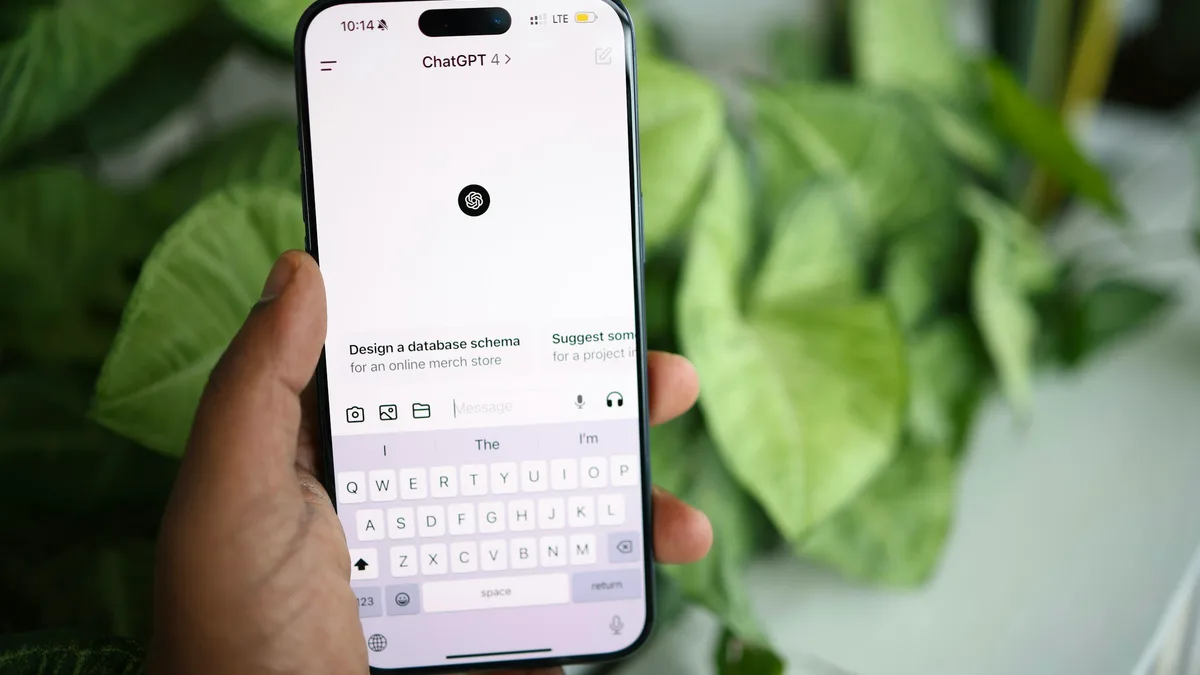
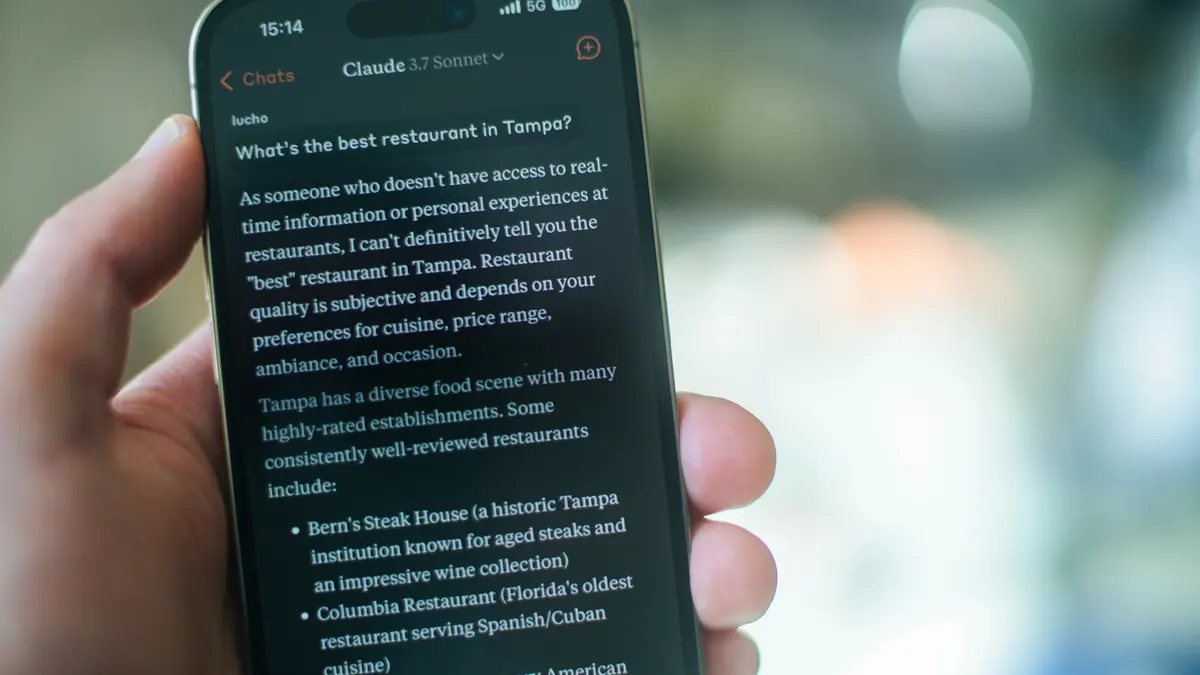
While artificial intelligence technology is developing at a dizzying pace, many students naturally turn to tools like ChatGPT to help them with their studies. However, according to research, using them produces the opposite result: it harms the learning process, creates dependency, and provides inaccurate answers. Libri, an Israeli platform founded a year and a half ago that has already managed to conquer the education system, proves that it is possible to do it completely differently — and harness artificial intelligence for the benefit of students instead of harming them.
Behind Libri stands founder and CEO Ohad Raveh (27), who started his path as an entrepreneur back in high school. He completed his degree in computer science at the Open University with Dean's honors while still in the army, and immediately upon his release, he founded Unibeli, his first company in the field of educational technology. "I really love to teach. I was a private tutor, and as a student, I lectured to other students," he says in a conversation with mako. The path to combining a love for education with technology was natural: "I wanted to scale education — not to influence one class or one school, but thousands of students, and my way of doing that was through the technological tools I know."
Shortly after founding Unibeli, he had the opportunity to meet with the principal of the high school where he studied. "He told me that there is a lot of talk about technology and AI, students are experimenting with all the tools outside of studies, but in education, it's not reaching the field." Out of a desire to bridge the gap between the most significant technology in the world today and the field of education, the Libri app was born — an AI-based learning platform that started its journey with an initial pilot in the high school where Raveh himself studied.
Libri, which got its name from the Latin word for books, is actually an AI platform that provides a comprehensive solution for students and teachers. "We took all the study materials in middle and high schools, turned them into digital ones, and added a personal teaching assistant and tools for teachers," explains Raveh. "The platform is fully based on the Ministry of Education's content, and it is actually the first to receive the Ministry of Education's approval for the use of AI, and the only one that has access to all its content."
How did you approach all these materials?
"It was very difficult. The system is based on books and additional content — videos, tutorials, etc. There are 50 publishing houses approved by the Ministry of Education, so we signed a distribution agreement with every publishing house. That's also why it's hard to copy us — an AI app can't just come now and replace Libri in a second, both because doing such a thing takes a lot of time, and because we have copyrights on the distribution, we are their main distributors."
The reactions from the field were fast. Within three months of the pilot's start, another school asked to use Libri, and so the company began to expand to more and more schools. As part of its expansion, the company was chosen to lead the Ministry of Education's 720 project and became the largest provider of digital learning in the system. "Last year we reached 10,000 students across the country, and in the coming school year we will already have one hundred thousand students," says Raveh. "Israel has become a country that teaches with AI at the highest percentages in the world thanks to Libri."
We took digital learning to the next level
The Libri platform allows for a broad response for students and teachers, and seeks to change the way of learning in the classroom and also in the afternoon. "Many schools already learned digitally before, we just took it to the next level," he says. "Until today, a teacher taught a class of 35 students a certain subject, and then everyone practiced together, or each student continued at their own pace with the physical textbook. Libri changed that completely."
Students receive all the tools for practice in one place — on a digital platform that centralizes all their books and study notebooks. The system allows them to write and draw freely on the books, solve questions, and also use learning agents that guide them, give them hints, and turn the study material into a game, all within the textbook itself. Alongside all these, Maayan operates in Libri — an AI character that serves as a private tutor, which students can use for questions without having to turn to the teacher.
The system learns each student personally and accompanies them in learning. At first, it receives the student's basic data — in which group or how many units they are in, what they have already learned, and then slowly builds a profile for them consisting of their level in each subject and skill, what they have already practiced, how they feel that day, and how it is best to approach them.
At the same time, teachers receive a comprehensive tracking, management, and insight envelope. "Every teacher can view on the platform the profiles of all their classes and students, see their progress, which of the students requires special attention, receive teaching recommendations and lesson plans, and all in one place and in an accessible way," says Raveh.
The system also allows teachers to enter their insights directly into the student's profile, based on their acquaintance with them. They can give the system a prompt that tells it how to relate to each of the students separately — for example, to instruct it to explain to a certain student much slower and with examples.
Another significant gap that the platform manages to bridge is the disconnect between school hours and learning at home. "The principal told me — we don't even know what students do at home. Teachers don't really check homework in students' physical notebooks today. We are making this continuous connection."
Whoever wants the benefits of AI, must also accept the disadvantages
The system is based on known AI platforms, including Claude and Gemini, but adapts them so that they help students. But between the AI platforms we all use and Libri, explains Raveh, there is a significant and important difference: "Unlike ChatGPT, Libri is built in a way that develops students' thinking," he says. "ChatGPT is not adapted for learning. If you ask it a question, it just gives the answer, and research today shows that this harms students very much, because then they don't have to think for themselves. The goal is not to give the student the answer, but to teach them. When a student sits with a private tutor and struggles with a certain exercise, the private tutor won't solve it for them, but will ask them — what do you think about this? How would you solve it? What do you say about this data? That's exactly how Maayan behaves, she makes them think."
And yet, anyone who has used the various AI tools knows that they can make mistakes and even lie, and the concern arises that students will be exposed to incorrect information. "There is never one hundred percent in artificial intelligence. Whoever wants the benefits of AI, must also accept its disadvantages, and a teacher can also make a mistake, but we managed to significantly reduce AI hallucinations because the system is based on the Ministry of Education's content, and knows not to drift to other content," says Raveh. "Not long ago, a civics teacher asked me — how can I know that Libri won't tell a student that all Arabs should be transferred? This cannot happen, because we do this filtering of what is approved and what is not, and what I put into the school. The system is based on what is written in the Ministry of Education's content."
At the same time, the system knows how to use materials from outside to teach students efficiently. "We don't bring the content from outside, but it can bring from outside other ways to explain them. It knows every student and knows how to explain to each one in a personalized way. When it learns the student, it knows, this student, if I give him this example, he will understand immediately."
Also, the issue of privacy, which becomes especially sensitive when it comes to children, is strictly supervised. "The Ministry of Education has organized regulation on the subject, with rules that detail what information is allowed to be kept and how, and we of course comply with them," explains Raveh. "We don't keep the students' questions, but only analyze them using AI to extract insights for teachers both at the student level and at the class level — for example, if a student doesn't understand a certain type of question, or there is a certain subject that the whole class is weak in."
At first, there was a huge fear
Like any new technology, the integration of the new system aroused diverse reactions. The students, not surprisingly, adopted it with joy. "As soon as you tell children that they have ChatGPT inside the textbook that knows the book and also them, they are very excited. They no longer have to go out to another app, photograph it, explain to it what they want, what they have already learned, and also risk that it might make mistakes."
According to him, the system helps even more students who struggle more compared to their friends. "Until today, in a large class, weak students wouldn't ask questions. They were embarrassed to ask forty questions in front of the whole class, but they can ask Maayan endless questions, and she will continue to answer them patiently."
Teachers, on the other hand, were less enthusiastic. "The first thing a teacher thinks is — that's it, they're taking my job," says Raveh. "In every training we do in schools, teachers ask us, half-jokingly, half-seriously, what they will be needed for from now on. So we explain to them that the goal of AI is actually to empower them. I want a teacher to look a student in the eye and understand what is difficult for them, to guide the class and manage a dialogue. Today, artificial intelligence cannot manage a class well, and that is the teacher's place. At first, there was a huge fear, but as soon as teachers started working with Libri, they saw that this system frees them up for students who need their help more or for more advanced students they can move forward with. In a class of 35 students, the teacher cannot look at each one individually, but the AI looks at each one separately, and that promotes everyone."
According to him, one of the uses teachers love in Libri is as an interactive teaching aid in the classroom itself. "Suddenly, the teacher has a video they can show on the board, an exercise they can solve in front of everyone and get a hint from the AI. It's another huge technological tool that helps them in teaching."
And indeed, according to Raveh, Libri is not intended to replace teachers in schools. "The most important thing today in schools, in my opinion, is not the studies themselves, but the interaction between students and teachers in the classroom — to teach how to learn, to teach all the thematic interaction, this dialogue, the discussions. These are the important things in the classroom, not how to solve a specific exercise, and that we won't replace, and we also don't want to replace," he reassures. "We want to give teachers tools so they can do these things. The teacher is a very important part in knowing the student, their background from home, seeing with their eyes what they need, which AI cannot do. We call it a mentor."
On the other hand, he is not ashamed to admit that the app is destined to eliminate the institution of private tutors. "As soon as we added Maayan to the platform, private tutors said — wait, there's a private tutor here, she's replacing me. So yes, the goal is that there will be no need for private tutors anymore. We are not there yet, but very soon there will be no private tutors in Israel."
According to him, replacing private tutors will solve one of the biggest gaps that exist in education in Israel today. "Education in Israel is in collapse, so what do you do? Private lessons. Students in the center whose parents have money invest a lot in private lessons, over a thousand shekels a month on average, compared to 40 shekels a month on the periphery. With Libri, they can get for 30 shekels a month, or for free if they get it from the school, an unlimited private tutor who can always help them. And then there is no longer a difference between a student whose parents can afford three private lessons a week, and a student who has none at all. The student in central Tel Aviv and in Kiryat Shmona get the same thing."
Meanwhile, he surprises, private tutors are actually buying Libri themselves quite a bit. "It provides them with a digital version of textbooks for their lessons and helps them know what the students learned at school," he explains. "Today there are many private tutors in AI, but they are not connected to what is learned in schools. This is also the problem of a human private tutor, that he continues with the students at home, but doesn't know what the teacher taught at school. We provide a whole infrastructure that continues at home."
We are at a critical point
After Raveh conquered the institutional market in Israel with Libri, he is now planning the next steps, and is first marking the private market — that is, also for students whose schools have not yet implemented Libri. "We want to make Libri accessible to everyone," he explains, and he doesn't just mean in Israel: "We are starting to expand to the rest of the world as well, and we have started to create contact with education systems and publishing houses all over America, to teach there in English and Spanish."
At Libri, they are also working these days on the next technological step — integrating interactive videos into the platform. Today, working with Libri is only in chat — you can read and write or record and listen, but it cannot create a video for the student through which it teaches them. "What is missing in Libri today is live reactions in video," explains Raveh. "I imagine in the future an AI teacher who explains things to students in a video that changes live according to the student's reactions and questions — for example, drawing a parabola for them and showing them things on it. Like a private lesson on Zoom."
"The State of Israel is creating a precedent here — it is among the first to introduce AI into education in a controlled manner," says Raveh. "This is a critical matter, because you can't wait with this. Today 36% of students learn through AI. The question is whether we make it accessible to them efficiently and in a controlled manner inside the textbooks, or they just open ChatGPT on the side for everything, and that only harms them. If we don't integrate AI into education today in a controlled manner, we will lose this generation to ChatGPT and Gemini. This is a critical point in time."