IDF Officers Expect Hebron Withdrawal After Elections Amid Strategic Dispute
IDF Central Command officers project a withdrawal from Hebron after elections, citing diminishing operational returns and rising friction. High-level disagreements persist between military leadership and political figures over the ongoing campaign.

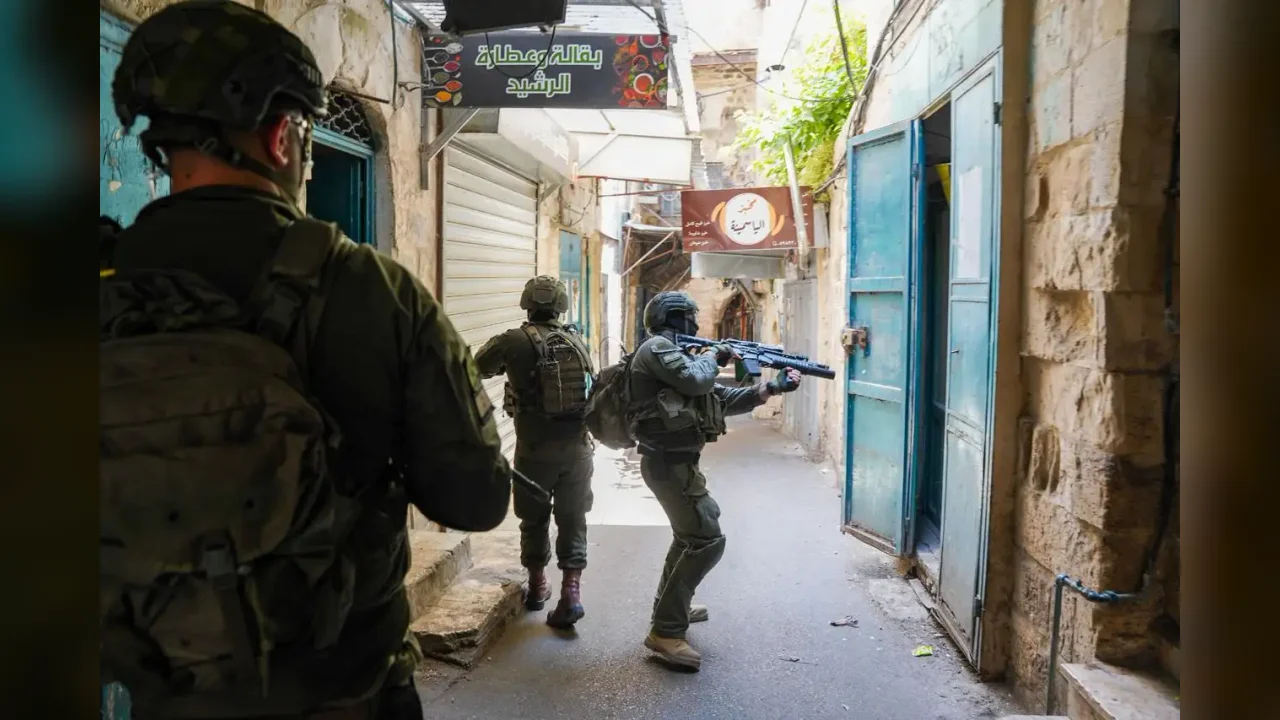
IDF Central Command officers estimate that military forces will withdraw from Hebron following the elections, as the current operation has run its course and generated friction that fuels incitement and copycat terror attacks. According to military sources, operations over the past 24 hours have proven ineffective and undermined operational legitimacy in the area, particularly given the failure to locate weapons or terrorists in the targeted neighborhoods.
This assessment follows recent reports of a disagreement between top military brass—including Chief of Staff Eyal Zamir, Central Command Chief Avi Bluth, and Division 98 Commander Brigadier General Meni Liberty—and Prime Minister Benjamin Netanyahu and Defense Minister Israel Katz regarding the continuation of the military campaign in Hebron.
As part of the operation, IDF forces evacuated hundreds of Palestinian families from the neighborhood where the terrorists originated prior to last Friday's deadly attack at a temporary military checkpoint in Hebron. Troops subsequently seized buildings and searched hundreds of structures, yet failed to uncover weaponry, military equipment, ammunition, or explosives laboratories.
Consequently, the military leadership insisted on withdrawing from the neighborhood once the tactical phase had concluded, while the prime minister and defense minister demanded that forces remain on the ground.
Security officials explained that the Roaring Judah operation in Hebron represents the fundamental divergence between strategic security thinking and routine military execution. Similar debates preceded operations in the Jenin, Tulkarm, and Nur Shams refugee camps, which ultimately featured civilian evacuations, targeted counter-terror strikes, and extensive infrastructure clearance.
Meanwhile, investigators revealed that the Hebron operation uncovered an extensive local Hamas network, while authorities are investigating potential external direction, including from Hamas operatives based in Turkey.