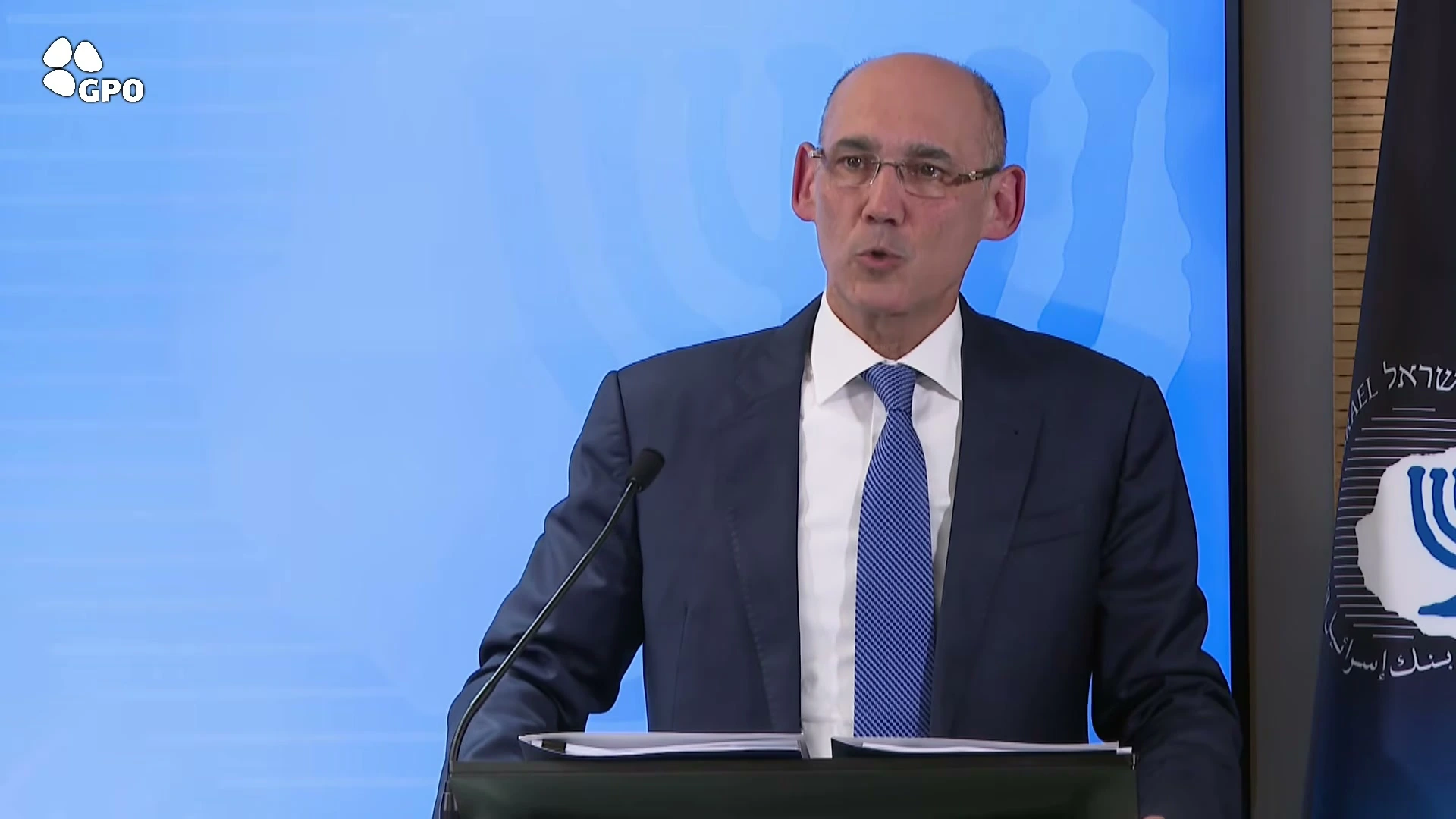
Harel reveals: Is the interest rate in Israel heading for a U-turn?
The market assigns a probability of about 50% to an imminent cut, but an in-depth analysis of the global economy reveals why the Bank of Israel may wait and presents a surprising forecast for the dollar exchange rate.
The weekly research review of the Harel Group presents a complex picture of the local and global economy, especially at a time when investors are trying to understand where interest rates are headed. At the center of the review is the Bank of Israel's interest rate decision, but alongside it, Harel points to developments in the USA, Europe, South Korea, and the energy market, which illustrate how interconnected economic decisions are.
In Israel, the inflation environment apparently allows the Bank of Israel to lower the interest rate. However, Harel estimates that the bank may wait, mainly due to a tight labor market, fiscal and geopolitical risks, and the global monetary environment. The market assigns about a 50% probability to a cut, but Harel emphasizes that the timing is still uncertain. The interesting implication is that the general direction of the interest rate may be downward, but local and global reality may delay the move.
In the USA, the picture is even more complex. Federal Reserve Governor Kevin Warsh sent a firm message regarding inflation and clarified that the 2% target remains binding. Following his remarks, the probability of an interest rate hike in September rose to more than 50%. Here, a significant gap is created between the markets' expectation of monetary easing and the possibility that the Fed will choose to tighten policy instead. The upcoming employment report may be a key factor in the decision.
In Europe, the data is also not unequivocal. Economic activity shows signs of recovery, bank credit is growing, and Germany is returning to lead, but high energy prices continue to fuel inflation. Therefore, it is precisely the strengthening of economic activity that could lead the European Central Bank to another interest rate hike.
In South Korea, another interest rate hike to 3% was recorded, partly against the backdrop of the strength of the technology and chip sectors, alongside concerns about inflation and housing prices. In contrast, Harel estimates that after two consecutive hikes, the central bank may move to a waiting period.
The energy market also demonstrates the same trend. Oil prices may have temporarily fallen below $90 per barrel, but tensions with Iran and the risk to shipping routes continue to create a risk premium that makes a significant price drop difficult. At the same time, the American agreement with Venezuela may increase production in the future, but Harel emphasizes that this is a long-term solution that will require huge investments and years of infrastructure development.
Harel's forecasts illustrate the picture. While the market and Harel expect an interest rate of 3% in Israel in six months, Harel forecasts a dollar at a rate of 2.95 shekels, compared to 3 shekels in the market pricing. Regarding inflation, Harel forecasts 1.9% over the next 12 months, compared to 1.8% according to the market.
The reason the review is particularly interesting is that the data does not tell a single story. Inflation apparently allows for interest rate cuts, but geopolitics and the policy of central banks around the world dictate caution. Activity in Europe is improving, but it is precisely the recovery that could sustain inflation. In South Korea, the strength of the chip industry is already affecting monetary policy, and in the energy market, geopolitical risks continue to dictate prices.
For investors, Harel's main message is that the road ahead is not linear. Markets are required to deal simultaneously with interest rates, inflation, growth, energy, and geopolitics, where any change in one of the factors can quickly affect the others.