From a 20 million loss to profit: What drove the turnaround of Rav-Bariach?
The second-quarter results of the security door manufacturer surprised the market: sales rose by 19%, operating profit more than doubled, and the company is showing a profit again. What is behind the growth, and why are investors excited right now?
Rav-Bariach shares jumped in trading after the door manufacturer published its second-quarter results for 2026.
The group's sales for the quarter rose by about 19% to about 212.9 million shekels, gross profit jumped by about 39% to about 54.6 million shekels, and the gross profit margin improved to about 25.6% compared to about 22% last year. Operating profit more than doubled and surged by about 120% to about 20.5 million shekels, and the EBITDA from continuing operations rose by about 38.5% to about 36.5 million shekels.
But the line that catches the eye is the bottom one: from a negligible loss of about 21 thousand shekels in the corresponding quarter, the company moved to a net profit of about 7.1 million shekels, this after a profit of about 9.2 million shekels in the first quarter.
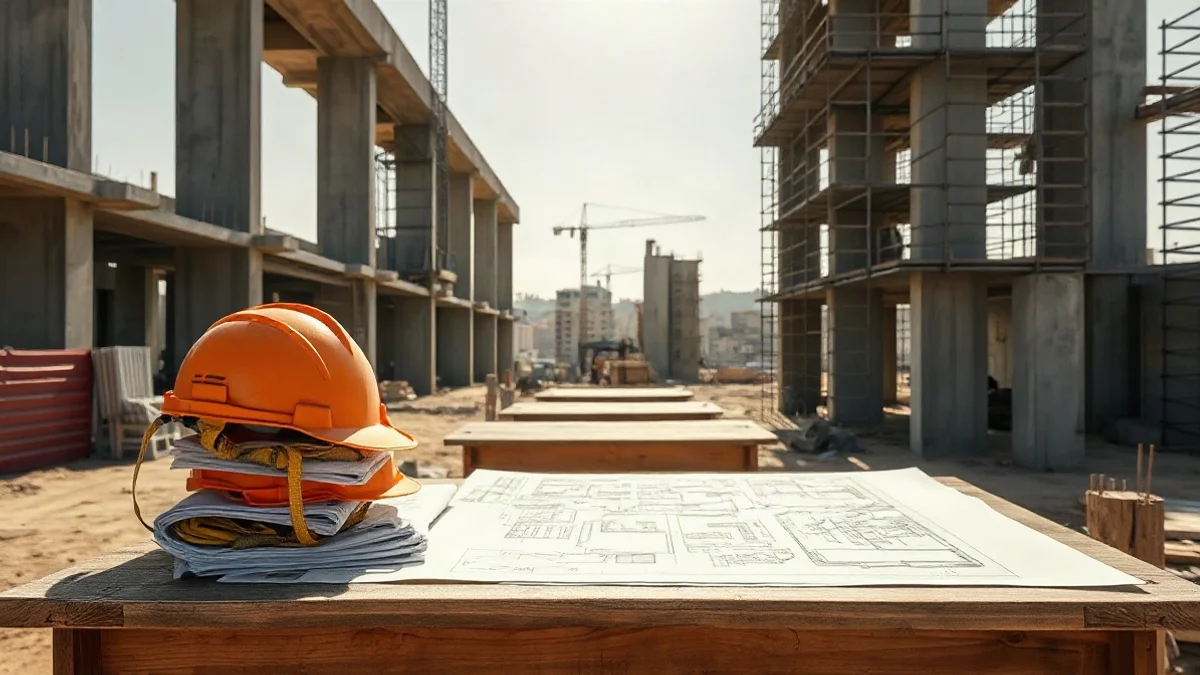
Behind the surge are two engines. The first is the recovery in the construction industry, which is injecting demand back into production lines. The second is the wave of orders for protection products, against the backdrop of fortification and rehabilitation operations in the North. Alongside these, the efficiency processes that the company implemented are beginning to trickle down to the profit line, improving margins even without full dependence on sales volume.
To understand why the market is excited, one must go back. 2024 was a difficult year for Rav-Bariach, with heavy losses that reached a peak of about 20 million shekels in the second quarter of that year. Since then, controlling shareholder and CEO Shmuel Donnerstein has led a series of difficult steps to stabilize the company, which he calls his "life's legacy." He carried out a convertible bond issuance that diluted his personal holdings, rearranged the debt structure with the banks, and began to realize real estate assets.
A prominent expression of this strategy is the real estate deal with the Migdal group. Rav-Bariach is selling its share in the complex in Ashkelon for a cumulative net cash flow of about 118 million shekels, money that is used to remove liens, repay loans, and reduce leverage. Here enters an important caveat: the operating profit in the first half includes a one-time income of about 8.6 million shekels from that sale.
That is, part of the impressive improvement in the half-year does not stem from current operations. Precisely because of this, the net profit of the second quarter, which does not rely on the one-time component, is perhaps a cleaner indication that the operating engine itself has started to work.
Looking at the half-year as a whole, sales rose by about 10% to about 404.3 million shekels, net profit climbed to about 16.3 million shekels, and EBITDA reached about 77 million shekels. Growth was recorded in all activity segments, and future order intake in the contractor sector grew to about 142.4 million shekels. At the same time, the company is promoting the construction of the glass factory in Ashkelon, a growth engine that is supposed to get underway in the second half of the year.
Shmuel Donnerstein, CEO of Rav-Bariach, stated:
"The second quarter of 2026 well expresses the successful fruits of the strategic plan we implemented in recent years and especially during 2025 and 2026. We conclude the quarter with an increase in revenues, a sharp rise in gross profit margins and net profit, and this alongside an increase in future order intake in the contractor sector (residential and institutional) which ensures the continuation of the positive trend later in the year and in 2027.
The improvement in results also illustrates the high-quality operating leverage created with the completion of the operational moves we carried out, and whose results will also be reflected in the coming quarters. In the second quarter, the growth trend in the activity of the construction industry continued, and accordingly, the demand for the variety of products offered by the Rav-Bariach group to its customers also increased. The growth in sales in the quarter, at a rate of about 19%, teaches about the existing need in the construction industry for the company's products, including protection products as part of the activity for the rehabilitation and fortification of the North, and we are experiencing a strong similar trend even these days.
Alongside the growth in sales volumes, the fruits of completing the operational revolution at the group's sites, the efficiency measures we took last year and at the beginning of this year, as well as the reduction of our financial leverage, following the repayment of obligations we carried out after selling our share in phase A of the Rav-Bariach complex in Ashkelon, are now coming to fruition. Accordingly, we are presenting in the second quarter a significant increase in gross profit margins and an increase in the group's net profit.
Looking forward, we are witnessing the continued growth in the group's future order intake and a business environment that supports the continued growth of our activity, as the construction momentum in all sectors of the economy continues. The total future order intake of the group in the first half of 2026 in the contractor sector (residential and institutional) amounted to about 142.4 million shekels.
At the same time, despite delays that arose following the 'Lion's Roar' war, we are continuing with vigor the construction of the unique and innovative glass factory in Ashkelon. Upon its completion, this factory will become a magnet for customers from the construction industry, and will provide high-quality glass of blue-and-white production for a wide circle of projects in the Israeli economy, and of course will also contribute to accelerating the growth of the Rav-Bariach group."