Behind Israel Katz's directive: Yoram Halevy's plan
The Coordinator of Government Activities in the Territories (COGAT) proposed months ago to redistribute responsibilities between the IDF and the police. In a document presented by Major General Yoram Halevy, it is argued that the IDF lacks a professional advantage in civil law enforcement tasks. The proposal: a new police force, with its own staff and budget, to reduce the burden on regular and reserve units. Security responsibility will remain with the IDF.
Behind the directive of Defense Minister Israel Katz to transfer to the Israel Police the responsibility for law enforcement and order among the Israeli population in Judea and Samaria stands a proposal initiated by the Coordinator of Government Activities in the Territories, Major General Yoram Halevy.
Yoram Halevy's initiative
According to sources familiar with the details, Halevy, on his own initiative, presented a proposal to the Chief of Staff several months ago for a redistribution of responsibilities between the IDF and the Israel Police. Recently, in light of the increase in friction incidents in Judea and Samaria, he drafted an additional document which he presented to the Defense Minister.
Halevy, who served in a series of senior positions in the Israel Police, including Commander of the Jerusalem District and Commander of the Border Police (Magav), is intimately familiar with the capabilities and operational methods of both organizations.
In the document, Halevy wrote that the gap between classic military missions and current security missions in Judea and Samaria has always existed, but in recent years the gap is more evident than ever. According to him, changes in reality mean that a significant portion of the tasks in the area require training, skills, and authorities that are not at the core of military activity, and therefore IDF units do not have a comparative advantage in performing them.
The IDF is not built for civil enforcement
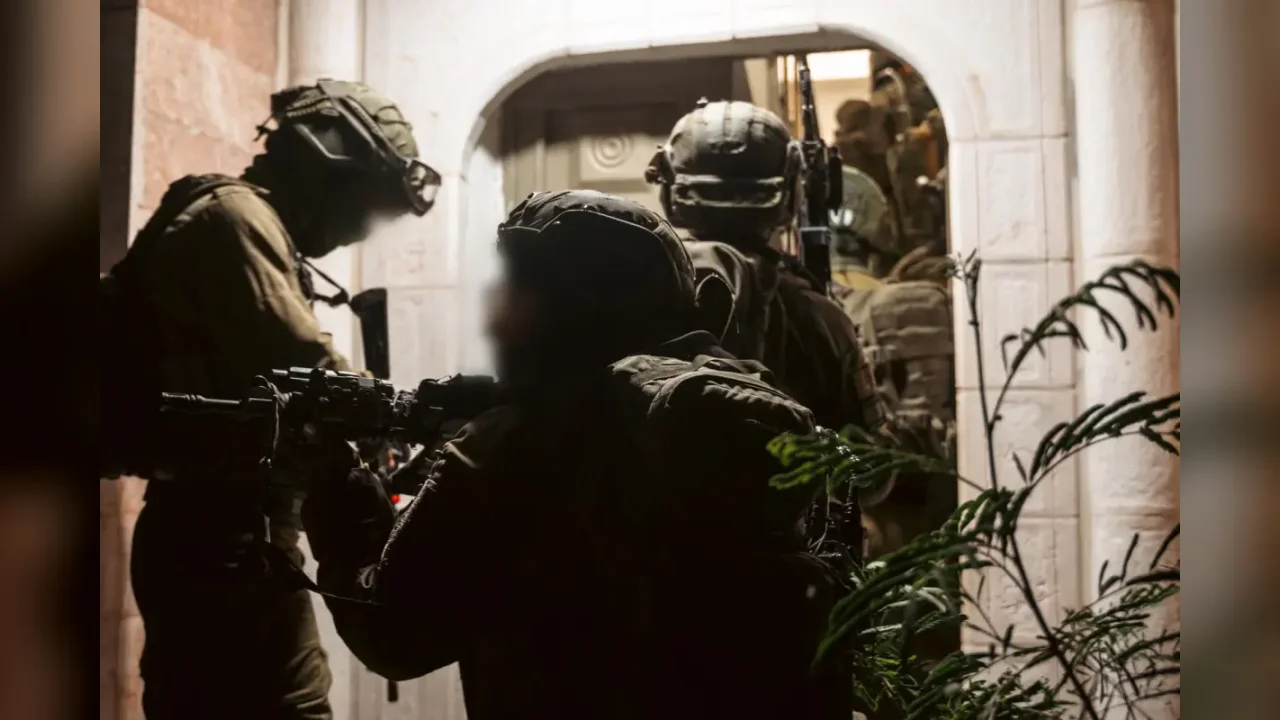
The police operate daily against civilians and possess the training, experience, and authorities required for law enforcement and dealing with public disturbances and friction incidents. A military force, by contrast, is trained first and foremost to deal with an enemy and security threats, and it has no professional advantage in handling civil incidents of this type.
The need for a division of responsibility is sharpened in light of the multitude of security challenges and the burden placed on the IDF. In this reality, allocating military forces for civil enforcement tasks diverts manpower and attention from combat missions, counter-terrorism, and emergency readiness, precisely when the IDF is required to focus its main efforts on them.
Halevy also wrote that changes in the area, alongside the IDF's manpower challenges and the need to maintain stability in Judea and Samaria, raise the need for a rethink of the operational concept in the area regarding the maintenance of public order and law enforcement.
A dedicated police force in Judea and Samaria
According to the proposal, the answer is not to impose additional tasks on existing police forces, but to establish under the Israel Police a new dedicated force that will be trained for activity in Judea and Samaria and will receive full responsibility, alongside the allocation of the necessary manpower and budgets. The move is required to be carried out in a gradual and coordinated manner, in order to build an effective police capability that will be able to operate also in the defined friction areas.
The model proposed by Halevy is based on a division of responsibility according to the professional comparative advantage of each organization. The IDF will focus on counter-terrorism, combat, emergency readiness, and the protection of borders and communities, while the dedicated police force will take responsibility for maintaining public order, preventing friction incidents and nationalist crime, and handling civil incidents.
According to the document, the new division also has direct significance for the IDF's use of force. It is expected to reduce the burden of tasks placed on regular and reserve units, reduce the need to divert military forces to tasks that are not at the core of their purpose, and expand the overall response through an additional police force. This will allow the IDF to direct more forces and attention to dealing with security threats, without harming law enforcement and the maintenance of order in the civil sphere.
The proposal does not seek to diminish the IDF's responsibility in the area. It is intended to allow each organization to focus on the tasks in which it has a professional advantage, and to strengthen both the security response and law enforcement in the area.