Wall Street Suffers Worst Month Since 2025 as AI Bet Faces Reality Check
Wall Street experienced its worst month since March 2025 as massive AI investments yielded negative cash flows and disappointing earnings from giants like Alphabet, Amazon, and Intel. Compounded by hawkish Federal Reserve signals, rising oil prices, and midterm election uncertainty, investors are increasingly demanding tangible returns on technology expenditures.

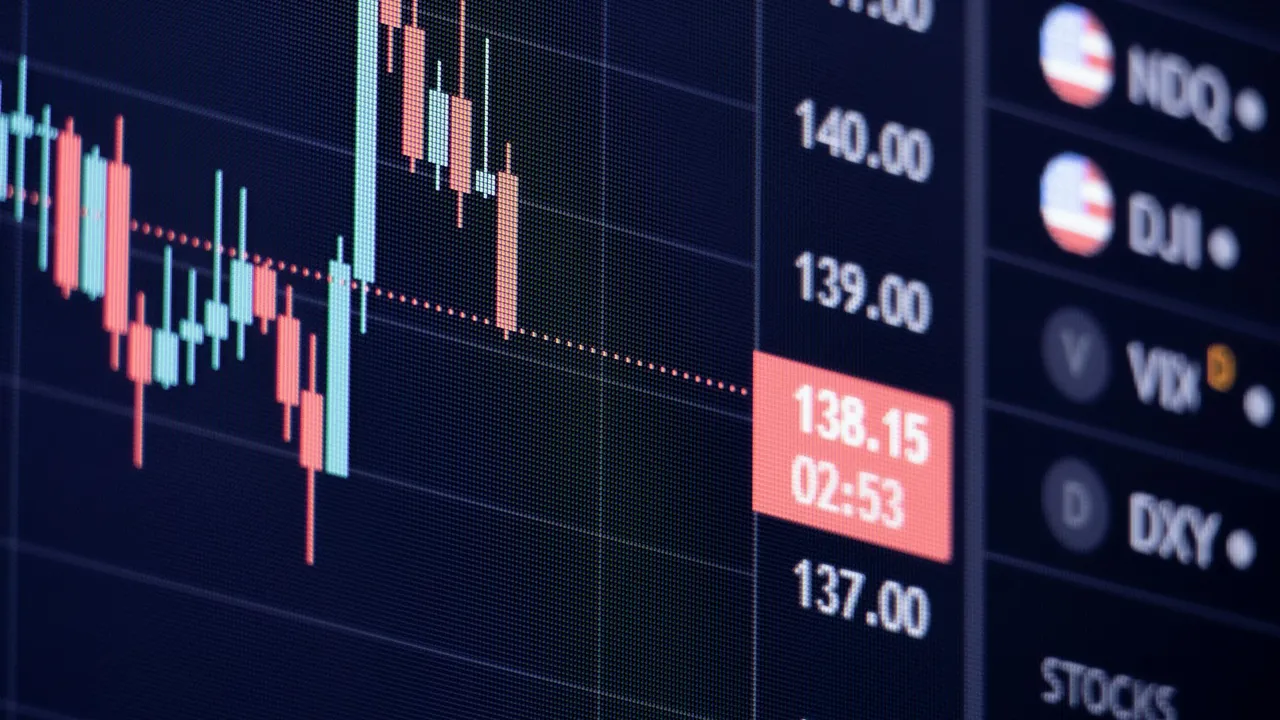
Wall Street sentiment has shifted dramatically. For months, artificial intelligence acted as the primary fuel for the bull market, but in the final week of October, it became a source of fear. The Nasdaq index plummeted 2.86% on Friday, marking its sharpest daily drop since June, and finished October down 5.3%, its worst month since March 2025 when trade tariffs introduced by Donald Trump rattled the markets.
The S&P 500 declined 0.9% in October, logging its third consecutive week of losses. Conversely, the Dow Jones Industrial Average, which is less reliant on technology, rose 1.7%. This divergence highlights a rotation within Wall Street rather than a capital flight, with funds moving out of AI stocks and into defensive and traditional equities. The blow came from an unexpected direction: the earnings reports of major AI beneficiaries. Alphabet reported negative free cash flow driven by massive AI investments, causing its stock to suffer the worst day in its history by plunging 12.6% and wiping out half a trillion dollars in market value. Amazon reported cash burn running into tens of billions of dollars, while Intel dropped 29% on Friday following a weak forecast, marking its worst single day in 52 years and dragging semiconductor stocks down with it.
The Shift Toward Financial Accountability
Investor sentiment has hardened around a core message: heavy AI spending is no longer enough; companies must demonstrate a clear return on investment. According to Capital Economics, four major cloud giants account for more than a third of all capital expenditures by S&P 500 companies over the past year, a share that is projected to grow. When such a vast portion of the market rests on a single bet, any cash flow fracture reverberates across Wall Street.
The market has begun to differentiate strictly between corporate balance sheets. When Oracle announced it would curb external hiring and return to positive cash flow, its share price surged. Meanwhile, neo-cloud firms constructing data centers through debt financing were severely penalized, with CoreWeave losing over a third of its value in October. Investors are increasingly verifying who is funding the dream out-of-pocket versus who is relying on loans.
Federal Reserve Policy and Macro Pressures
While artificial intelligence ignited the sell-off, interest rate policy provided the fuel. On Wednesday, the Federal Reserve kept interest rates unchanged in the 3.75% to 4% range, but delivered a hawkish message. The central bank noted that inflation remains elevated and hinted at potential further rate hikes. Two committee members, Governor Lisa Cook and Cleveland Fed President Beth Hammack, dissented in favor of an immediate rate hike. Markets are now pricing in an 80% probability of a rate increase at the December meeting, with another expected in March.
Rising energy prices underpin these inflationary pressures, as Middle East conflict pushed Brent crude to nearly USD 115 per barrel, with energy costs bleeding into the broader economy. Personal Consumption Expenditures (PCE) price index data indicates that inflation in numerous consumer sectors exceeds 3% annually. The yield on the 10-year US Treasury note breached the 5% threshold this week before settling at 4.94%, serving as a key driver behind the technology sell-off. Elevated interest rates increase the cost of capital required for AI infrastructure while discounting the present value of future earnings.
Political Uncertainty and the Path Ahead
Market anxiety is compounded by the upcoming midterm elections. Investors realized profits ahead of the weekend both to close out October and to hedge against political risk. Forecasts project the Democrats to capture the House of Representatives, while the Senate race remains tightly contested. Market analysts indicate that every electoral outcome carries economic implications: a Democratic sweep could introduce stricter regulatory oversight while lowering bond yields and the dollar, whereas a Republican victory might renew protectionist tariff concerns, stoking inflation and heightening rate hike expectations.
The coming week remains critical, packed with midterm elections, October employment data, and additional technology earnings. While the S&P 500 hovers just percentage points below its peak, the Nasdaq is nearly 8% off its record high, edging toward correction territory, and semiconductor equities have officially entered a bear market. The decisive factor will be whether corporations can prove their AI investments generate tangible revenue, how the Federal Reserve responds to persistent energy inflation, and the definitive outcome at the ballot box.