UK Government Urges Citizens to Stockpile Essentials for Three Days
The British government urges citizens to stockpile three days of essential supplies amid rising geopolitical tensions and climate concerns, drawing mixed reactions from the public.
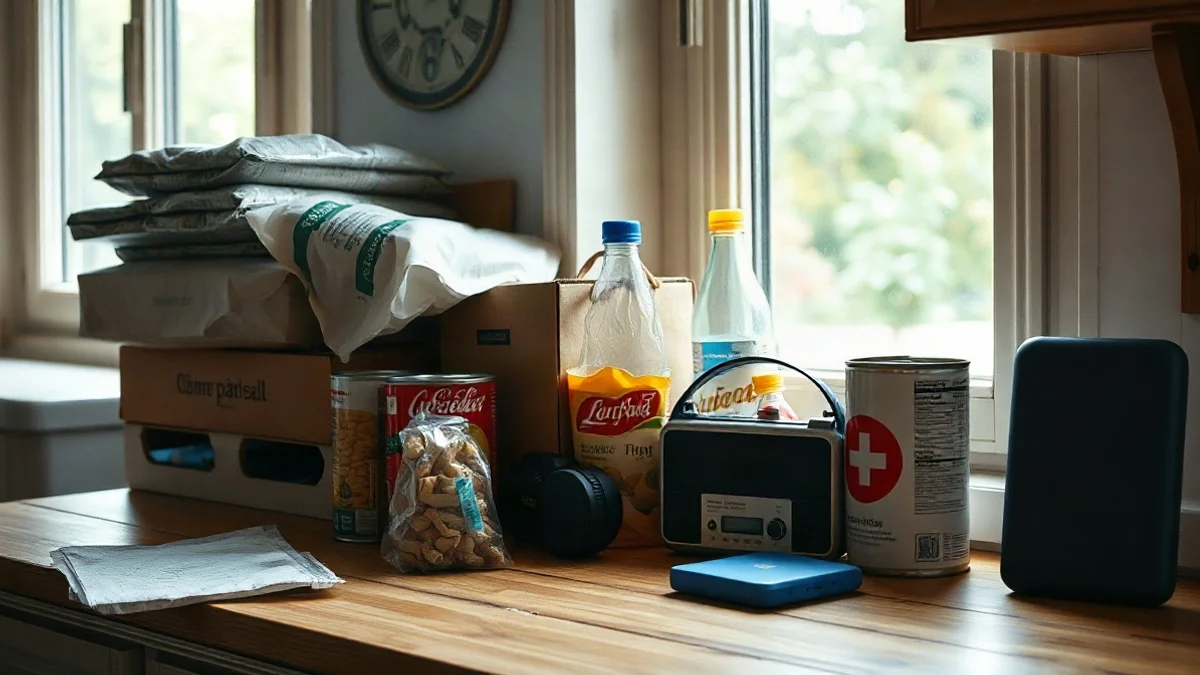
The British government has launched a new campaign urging citizens to prepare for potential emergencies and disasters by stockpiling food, water, and essential supplies to last for three days. The guidelines come amid growing warnings over state-sponsored terrorism from Russia, as well as concerns regarding climate change impacts and potential disruptions to infrastructure and essential supply chains.
According to reports, the government recommends that citizens keep an emergency inventory at home, including canned goods, dry products, bottled water, medications, and portable power banks to charge electrical devices during power outages. While the official campaign was recently launched, government ministers have been promoting similar recommendations for months, prompting some citizens to begin gathering supplies independently.
Citizen Preparedness and Precautions
Lawrence Barrett, a resident of Hythe in Hampshire, told the press that he began adding a few items to his regular shopping list every week to gradually build an emergency reserve. His stockpile includes canned beans, soups, meat dishes, noodles, rice, bottled water, a first aid kit, a battery-powered FM radio, a flashlight, and a portable power bank capable of charging phones, running a small television, and powering a compact fan heater.
Similarly, Marco Camori, a resident of the Greenwich neighborhood in London, shared that his family has started hoarding pasta, tomato paste, bouillon cubes, canned goods, water, medicines, and toilet paper, drawing lessons from the COVID-19 pandemic. Camori noted that his family is also prepared for more severe scenarios, such as temporarily leaving the UK for continental Europe if the country enters a war or faces direct threats to London, or if a severe infrastructure collapse threatens their jobs.
To prepare for potential shelter-in-place scenarios without basic utilities, Camori has stored firewood in his garden to boil water if necessary. The family also maintains charged portable chargers, USB-rechargeable flashlights, matches, lighters, and keeps their vehicle's fuel tank more than half full, providing a driving range of approximately 480 kilometers.
Skepticism and Public Reaction
While many citizens are adopting the recommendations, others remain skeptical about the effectiveness of the government guidelines. Deirdre O'Sullivan, a resident of Leicester, criticized the campaign, comparing it to the civil defense advice issued in the 1970s regarding nuclear attacks. She argued that maintaining a three-day supply is inadequate for major disasters, noting that severe crises like contaminated drinking water or extreme food shortages would require more comprehensive and long-term preparation.