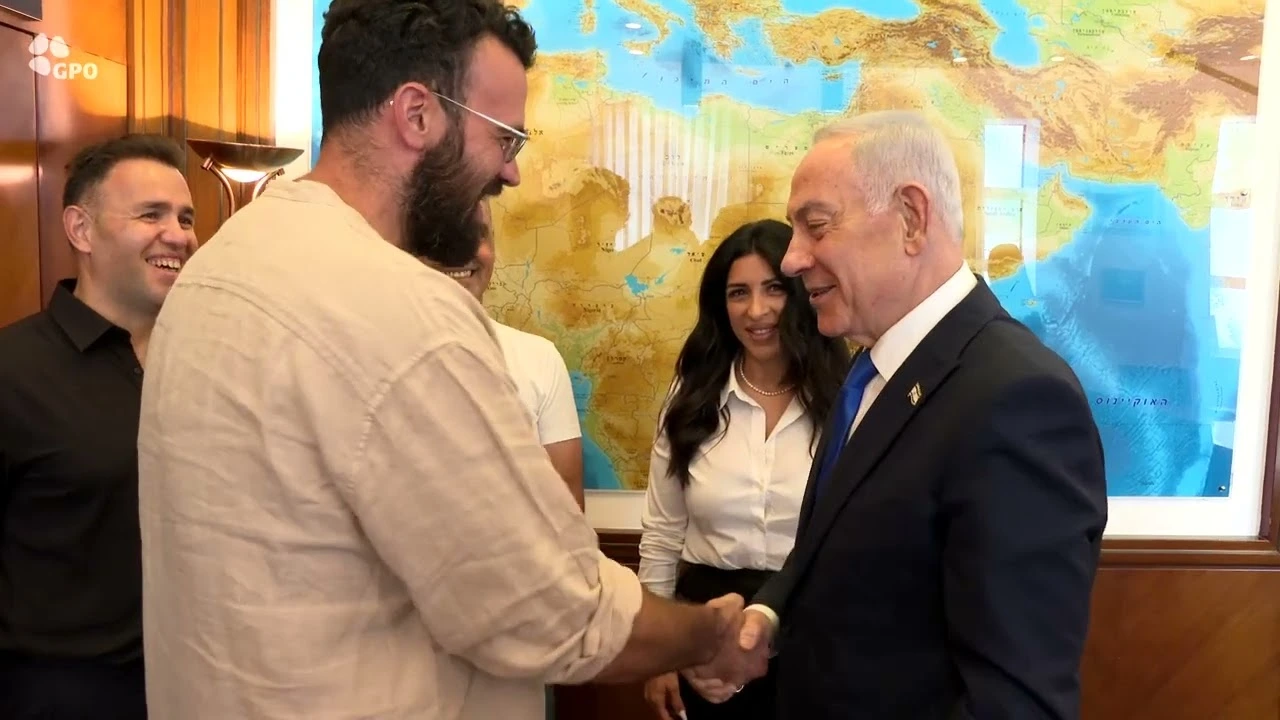
Yashar’s Shaul Meridor Rules Out Coalition Government With Benjamin Netanyahu
Shaul Meridor of the Yashar party ruled out any rotation or coalition with Prime Minister Benjamin Netanyahu, stressing that the party prioritizes credibility even if it leads to new elections.
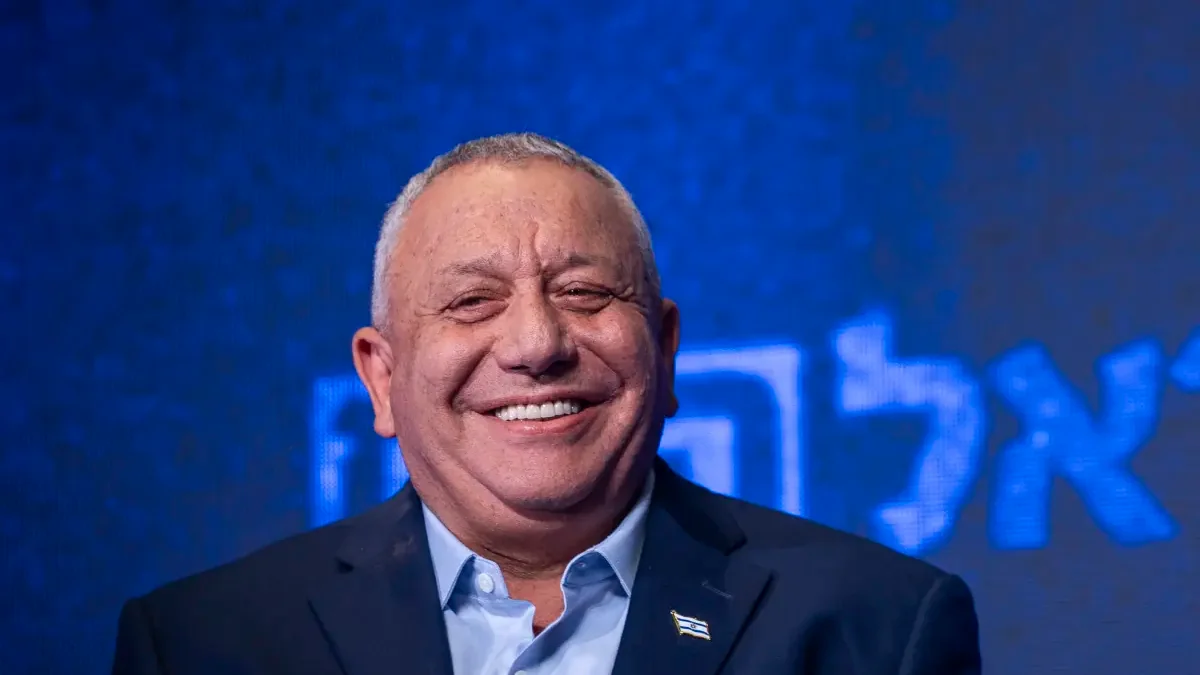
During a parlor meeting of the Yashar party, its number 7 candidate, Shaul Meridor, addressed potential political alliances and compromises in the post-election landscape. Amid reports that President Yitzhak Herzog is working to establish a unity government between Gadi Eisenkot and Benjamin Netanyahu, Meridor provided an unequivocal statement ruling out sitting in a government with Netanyahu, stressing that the party will not compromise on its credibility even at the cost of new elections.
Shaul Meridor stated: "I promise one thing, our leadership will not lie. It will not say yes and do no. It will not say I will sit with him and then not sit with him. I tell you honestly, there is no chance we will do a rotation with Netanyahu! Even at the price of another election."
Expounding on how the party intends to operate after the elections to form a government and restore state management, Meridor added: "And I am ready to explain why there will not be repeat elections. We will achieve over 61, but even if not, we will swear in a Zionist government and bring it to a Knesset vote, letting the Knesset say whether it is ready or not. I am convinced that even with fewer than 61 seats—though I commit to you here that we will bring over 61—such a government will pass and rule Israel, first and foremost removing this bad government from its place and starting to manage the country. This country must be managed; it has not been managed for years. We do not have a second chance."
The Electoral Strategy and the 61-Seat Goal
A central part of the meeting was devoted to election strategy and the need to position the Yashar party as the leading force in the opposition bloc. Meridor addressed internal relations with bloc partners, clarifying that the main goal is not fighting for individual list placements, but achieving a bloc victory of over 61 mandates.
Meridor noted: "The discussion in my view is not about whether we include the 11th candidate on a certain list, who might be an excellent MK, or our 27th who is also excellent, because I do not want excellent people sitting in the opposition. I want to win, and the only relevant and interesting target is to achieve more than 61 mandates. To do that, in my view, we must ensure Yashar is strong and large."
Meridor detailed four key arguments for why Yashar must be significantly larger than Likud: first, securing the presidential mandate first and controlling Knesset committees to prevent legislation aimed at weakening the judiciary; second, managing a stable government from the political center to reduce coalition extortion; third, pulling right-wing and Likud voters across the political aisle; and fourth, pushing small right-wing parties below the electoral threshold.
Accountability and the Judicial System
Later in the meeting, Meridor engaged in a sharp debate with an audience member regarding judicial reform and leadership responsibility. Addressing the failures of October 7, Meridor asserted that Prime Minister Benjamin Netanyahu bears ultimate responsibility and is unfit to lead.
Shaul Meridor stated: "We think that whoever brought Israel to the greatest disaster it has ever experienced does not deserve a leadership position. It is his role to go home! He must go home in shame! He brought us to the greatest disaster we have ever had here. He caused citizens to spend 12 hours inside a shelter, begging for an army to come and the army did not come. The failure spans the entire line, but there is one commander, his name is prime minister, he is responsible and he must go home."
Meridor compared this to former security chiefs who resigned, and launched a blistering critique of Justice Minister Yariv Levin, stating that Levin seeks unbridled governance and absolute control without judicial oversight. Meridor emphasized that democracy is not merely majority rule, but majority rule coupled with the protection of minority rights and institutional checks and balances.