Fear of an American embargo: Netanyahu's dramatic order to the IDF revealed
The US is seeking to reduce fighting in Gaza and Lebanon to focus on the confrontation with Iran and the crisis in the Strait of Hormuz. Israel is attempting to maintain its military achievements while avoiding a broad escalation that could lead to diplomatic pressure from Washington.
In the US, Iran is currently viewed as a central theater of combat. The situation in the Strait of Hormuz remains a significant point of tension for the American administration. Donald Trump has recently renewed his threats against the Iranian leadership, mentioning the possibility of the strait becoming part of US territory. Simultaneously, the administration is facing pressure and frustration from Gulf Arab states, who are dissatisfied with the lack of decisive US success in confronting Iran.
The American administration currently requires calm on the flanks: in Gaza and Lebanon. Consequently, they are applying pressure on Israel to exercise restraint in both theaters. Furthermore, diplomats Jared Kushner and Steve Witkoff have been sent to the region to advance diplomatic initiatives.
Israel is in a complex period of waiting and shaping the space. The IDF is committed to protecting its personnel while maintaining the military achievements attained over nearly three years of fighting. At the same time, it must maintain a level of intensity that does not lead to regional deterioration or force the Americans to act against Israel on the diplomatic stage, including potential arms embargoes.

For this reason, Prime Minister Benjamin Netanyahu has demanded that the political echelon approve every elimination in Gaza and every action beyond the "yellow line." An exception is made for cases of immediate danger to IDF soldiers or Gaza envelope communities, where forces have permission to act to neutralize the threat.
In recent days, the political echelon approved four proactive eliminations. Yesterday, within one hour, the IDF attacked two targets: an Islamic Jihad terrorist in the Khan Yunis area and a Hamas terrorist in the Nuseirat area. According to the IDF, both were advancing terror plots and were targeted from the air.
Within the IDF and Shin Bet, it is emphasized that dosage is currently the key to preventing the situation from deteriorating. Israel does not believe that Hamas and Islamic Jihad will disarm, but it does not want to be perceived as the party that broke off negotiations.

In Lebanon, the situation is more complex. The IDF is preparing to defeat Hezbollah forces on the Ali Taher ridge, which serves as the main defensive line in southern Lebanon. Hezbollah understands the strategic significance of this territory, as the path to the Beqaa Valley, Beirut, and the western coastline remains open to the IDF should it decide to deepen its maneuver.
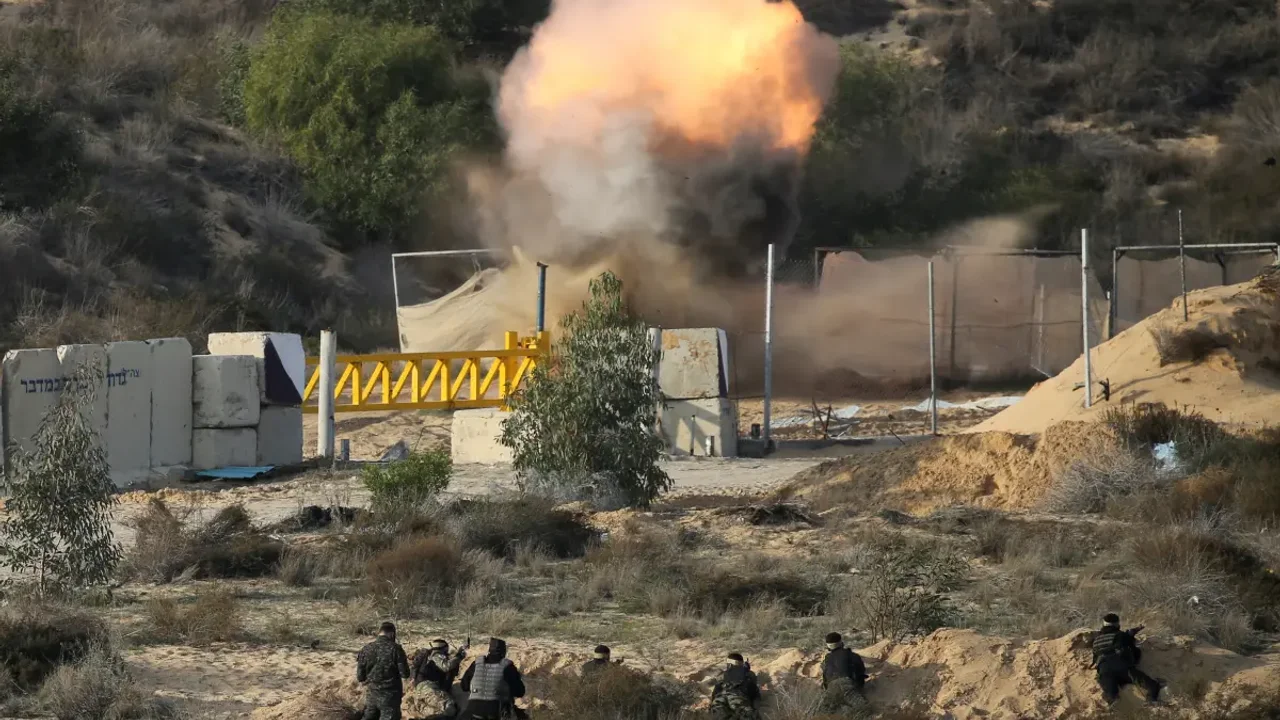
Hezbollah and Hamas are attempting to challenge the IDF. On Friday night, an explosive drone hit a force from the Yahalom unit, causing serious injuries to an officer and two fighters. On Saturday, a powerful explosive device was detonated against an IDF tank in the southern Strip.
Daily incidents are reported on both fronts. The goal of Hamas and Hezbollah is to drag the IDF into high-intensity combat, effectively forcing the IDF to "break the tools" of negotiation. This complex reality requires the IDF to manage combat intensity in a way that preserves the safety of its fighters and Israel's achievements without escalating the conflict to a point that would derail the diplomatic process.