Flavors of the Judean Hills: Mateh Yehuda Rural Food Festival Returns
Discover the Mateh Yehuda Rural Food Festival's autumn edition, featuring rustic home hospitality, artisanal cheeses, orchid greenhouse treats, and a unique craft beverage hub.
For more than a decade, I have returned to the Mateh Yehuda Rural Food Festival. In its early days, it was a well-kept secret: doors of village homes swung open, pots were pulled from shelves, and the sleepy settlements dressed up for a holiday. Even three decades later, it preserves its rustic charm—and that is the secret of its magic.
This spring, the festival was canceled due to the war, but now it returns with an autumn edition taking place across two weekends, October 22-24 and October 29-31, alongside activities on election day, October 27. Dozens of home cooks and hosts will open their homes and businesses alongside special events. We mapped out a day featuring three food stops and one drink stop, telling the stories of the people behind the pots.
Food Stop 1: Stuffed Borekas in a Little Piece of Heaven
Whatever Yoel Biton craves, he usually knows how to make: goat cheeses from his backyard, honey, pickled vegetables, spreads, and even wine. He prepares all of these in a little piece of heaven—his and his wife Naomi's home in Moshav Sho'eva, overlooking the Judean Hills.
And the plot is indeed divine. Backyard chickens, bleating goats, vegetable beds, and wooden furniture crafted by Yoel's own hands create a wonderful rustic backdrop. Yoel, an engineer by profession, grew up on stories told by his grandfather—a Zionist farmer who immigrated from South Africa—and agriculture seems to flow through his veins. In the morning, he milks the goats, collects eggs, and picks vegetables, returning to engineering later in the day. Naomi, a social worker, is a full partner in the baking and hospitality, which has become therapeutic for the couple, especially between Yoel's reserve duty stints.
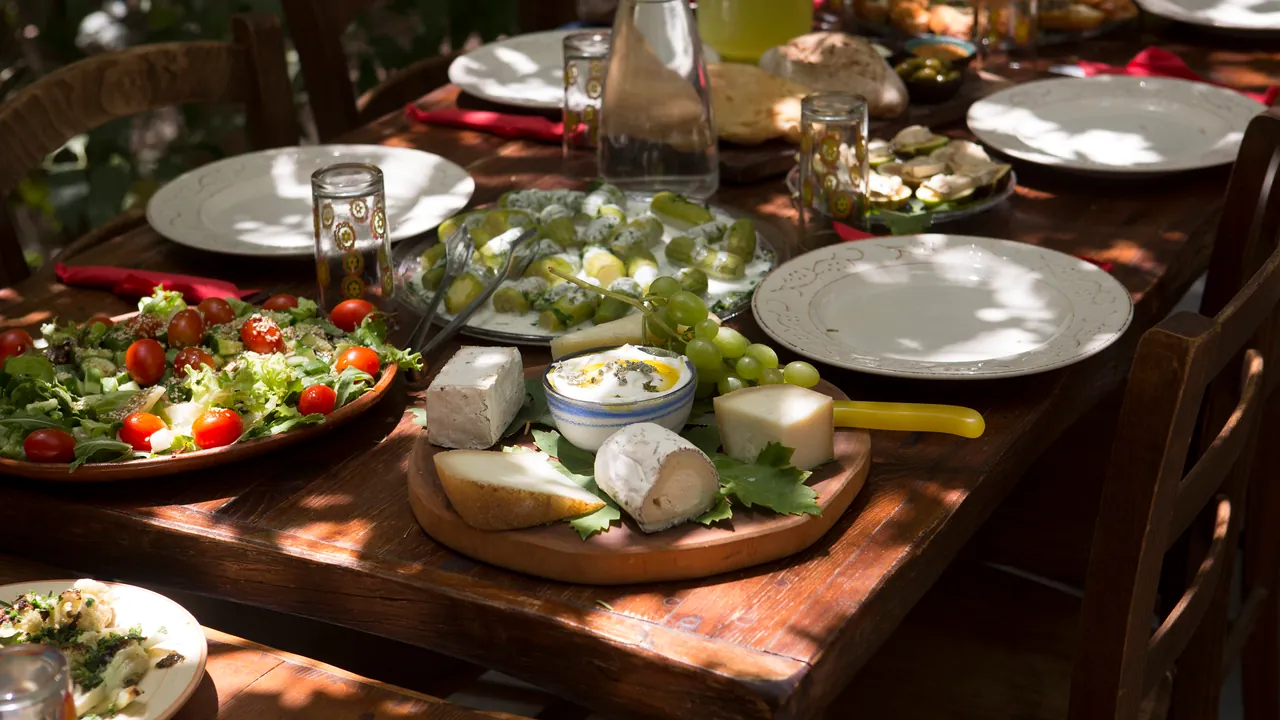
On the table sat a Tome cheese sandwich with tomato spread, zucchini, and greens, alongside a sandwich with cheeses, salmon, and vegetables, accompanied by dips and olives. During the festival, they will serve spinach-stuffed borekas, salads, cakes, malabi, and cookies. What you cannot finish tasting, you can take home from the pantry in the yard—a cute shop offering pickles, olives, soaps, and more.
Chipis, Sho'eva. Kosher.
Food Stop 2: Matjes with Cream in an Orchid Sanctuary
Ma'ale Hahamisha's Orchid Greenhouse Café is an enclave of taste and bygone eras, where orchids and giant potted plants share space with tables and a nostalgic soundtrack. Dudu Aslan-Silberstein, a pillar of Jerusalem culinary culture, and his wife Daniella, an artist and Bezalel lecturer, fell in love with the greenhouse and breathed new life into it. Alongside the food, connoisseurs have long brought their orchids here for rehabilitation and boarding.
The portions are generous—true to Jerusalem tradition—and carry an Italian flair. Breakfast is served on a Roman focaccia, serving as a sort of edible plate holding the meal. We tasted the "Fizboker" (focaccia topped with breakfast) with potatoes, ricotta, and cream, and another version with mushrooms, cheeses, coconut cream, and fried eggs. We tore into them eagerly: the yolk spilled over the mushrooms, seeped into the dough, and created a dance on the palate. Matjes herring with a dollop of cream, zucchini carpaccio, and cheeses also caught our eye, followed by a wonderful tiramisu for dessert.
Orchid Greenhouse Café, Ma'ale Hahamisha. Kosher.
Food Stop 3: Hummus and Lahoh with Painful Memories
Behind the Yvel jewelry factory in the Motza neighborhood lies a sweet courtyard: checkered tablecloths, vegetable beds, books, and backgammon—a true feeling of home. Tamar Bat-Zion Shah-Lavan's menu is an ode to pastries, foremost among them kada, a Kurdish pastry beloved by Jerusalemites, alongside Yemeni doughs she learned to make from her ex-husband's grandmother. "I'm Ashkenazi," she laughs, "and I fry kada in samneh."
Beneath the layers of pastry lies a layer of sorrow. Some dishes are dedicated to fallen soldiers and the victims of October 7. The hummus dish commemorates Daniel Ben Haim, who fell in Gaza and dreamed of opening a hummus spot; the lahoh dish with an omelet and cheeses was inspired by Rotem Calderon, who used to prepare pampering breakfasts for combat-shocked soldiers—and was murdered in Be'eri.
Make no mistake, however, "Mozala" is a joyful place. "You cannot open a place without remembering them," Tamar says, "it is like breaking a glass at a wedding, in memory of the destruction." We found ourselves tearing up over the lasagna—which, in a single bite of cream and mushrooms, gently stirred sorrow into joy.
Mozala, Motza. Mehadrin Kosher.
A Drink Stop: Relaxing with Alcohol in Leather Armchairs
In the Beit Shemesh industrial zone, an intriguing complex hides away: a brewery, a whiskey distillery, and the "Tavlin" gin distillery sharing a single roof—a sort of WeWork for alcohol, or if you prefer, WeDrink. A great startup for gloomy days.
Founded by Eli Kamyonsky and Amir Gutel, who combined a passion for distillation, entrepreneurship, and bringing hearts together through alcohol. Copper stills, handmade ceramic bottles, and a selection of herbs and spices used to craft gin fill the space. During the festival, visitors can join a distillation workshop. We concocted a blend of juniper, coriander, cardamom, hibiscus, chamomile, and carob, adding alcohol. Meanwhile, we tasted local and international gins and sank into the leather armchairs. Then the magic happened: the first drops of gin began to drip, and the genie in the bottle revealed itself as a magnificent gin.