"The student hits me, someone help me": The teachers left alone against the violence
Teachers' testimonies revealed: violence, threats, curses, and humiliation by students and parents have become a daily routine. The Teachers' Union warns that "there is no safety net for those who have suffered violence," while no body in the country checks how many teachers have been attacked - and the Ministry of Education claims: "Teaching staff receive a safety net."
"I had a fifth-grade student who would regularly hit me and other students. He literally beat us up, I would come out with bruises all over my body," says Michal (pseudonym), who taught at an elementary school in Gush Dan during the last school year.
"I almost left the education system this year because of the violence. I had a very difficult year, with several cases of violence simultaneously - students and parents who lost all restraint. I wrote messages to the homeroom teacher, the principal, and the vice-principal, and they promised it was being handled, but they did nothing. When that child's mother would come to school, she would give us both a reprimand. In the end, I decided that I would not return there, and I left the school."
With the opening of the 2026/27 school year, the education system in Israel is dealing with a deepening crisis: violence against teaching staff. Teachers, principals, and school counselors describe a routine of curses, threats, humiliation, and beatings by students and their parents. Parents who burst into school and raise a hand, students who throw stainless steel bottles, teachers who are evacuated to the emergency room. What used to be a red line has become part of the work routine. Most teachers are afraid to be exposed by name. Afraid of the principal on one hand, and afraid of the parents on the other.
"There was a student who would regularly threaten that he would kill me. During one of the breaks, he kicked me in a shocking way," says Yaniv (pseudonym), a young teacher in the system. "When I wrote to his mother that I couldn't contain it anymore, she lashed out at me and came at me with complaints. When I wrote in the general teachers' group 'The student is hitting me, someone help me' - no one came. There were many other cases that were not handled. I reached a state where I didn't want to come to school, and I am not the only teacher. Violence in the education system is simply rampant, and there is no response."
Loss of boundaries
In the Teachers' Union, reports are being collected from the field, including difficult testimonies. For example, a teacher in the center of the country describes: "A student hit me and kicked me after I took from him a paper airplane he had thrown in class that hit students. When I tried to contact the principal by phone, he tried to take the device from my hand and hit and kicked me. When I moved away to protect myself, he banged on the classroom desks with a stainless steel bottle and flipped tables. The students were terrified and screamed in fear. When I went down the stairs to ask for help, he threw the bottle at me, full of water, and hit me in the head." The teacher was evacuated to the emergency room following the incident.
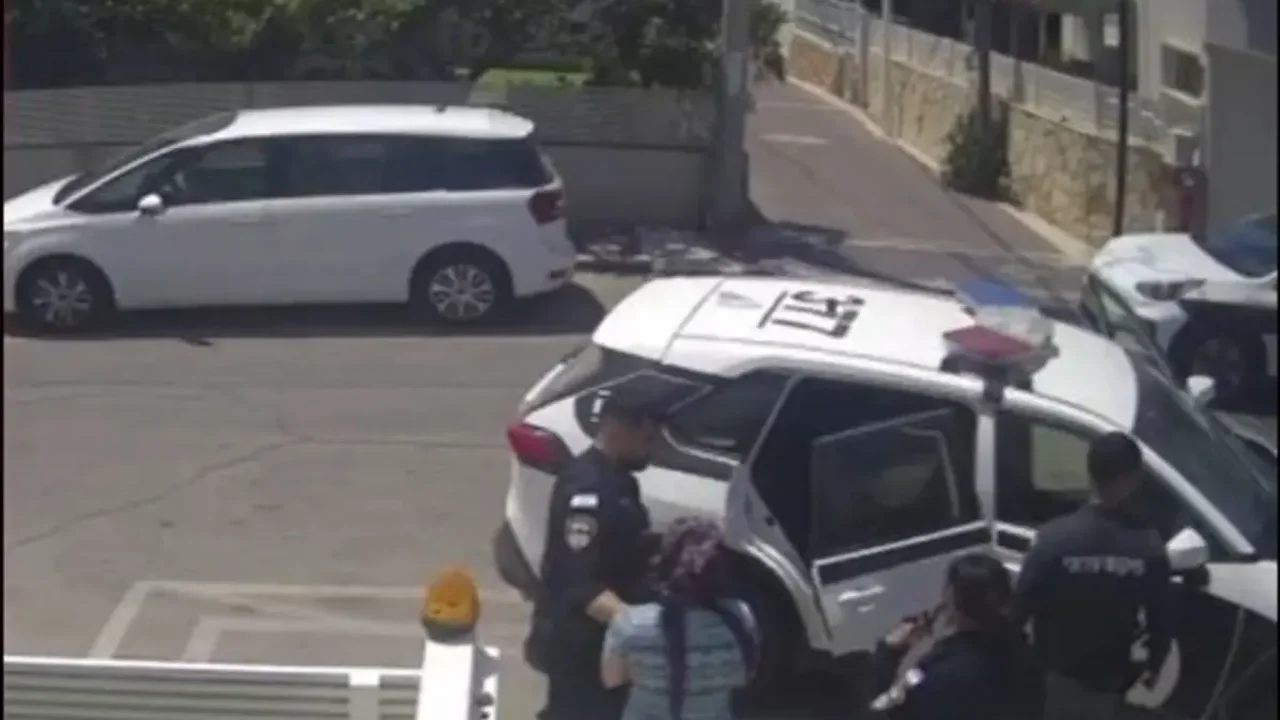
In another case, a female educator described a father who burst into the school and threatened the staff: "At the end of the school day, a student's father jumped over the fence after the guard did not allow him to enter. He angrily looked for the vice-principal, pushed the counselor, and left only after he heard that the police had been called. The mother, who was waiting outside the gate, cursed the counselor and shouted. When the father left the school, he threatened that he would catch the principal and burn the school down."
What drives this phenomenon? It is a combination of several factors. First, the erosion of the teacher's status, which is no longer perceived as a professional authority but as an administrative role holder. Second, a growing perception that "my child deserves everything": instead of setting a boundary, many parents provide automatic backing even for violent behavior.
"In the Ministry of Education, there may be safety nets, but there is no safety net for teaching staff who have suffered violence. You can count on the fingers of one hand the restraining orders that the Ministry of Education has acted to issue, and it only does so when we threaten to shut down classes," says Yaffa Ben David, Secretary-General of the Teachers' Union. "The Ministry of Education is the employer of the teachers, but they are forced to deal with it alone. No one calls them."
According to her, the treatment must start with the parents: "Most parents cooperate with the school, but there are also quite a few parents who are destroying the system. A director-general circular must be issued that explicitly states what is allowed and what is forbidden. A parent cannot call or arrive whenever they want, and cannot speak however they want or threaten."
Ben David adds that there is a shortage of positions for school counselors: "Principals employ counselors on teacher positions, and cannot guarantee them permanent work. Therefore, they do not stay, and there is no one to handle the outbursts of anger and violence of the students. A therapeutic safety net must also be built to accompany the teachers who have been harmed."
Without data, without deterrence
In Israel, there is no body that tracks the extent of violence against teachers. The Ministry of Education collects almost every piece of data about the system, but not about the harm to its own employees; a request for data was met with a general answer. Also, in the Teachers' Union and the Teachers' Organization, there is no organized annual report on the extent of the phenomenon.
In the field, the teachers' feeling is that whoever raises a hand or threatens does not pay a real price. Violent students are returned to classrooms quickly, and aggressive parents have learned that the system prefers quiet over unequivocal backing for the staff.
As mentioned, the Ministry of Education did not provide data on the extent of violence against teaching staff, but responded: "Violence against educators is crossing a red line and is not accepted under any circumstances. Every incident is reported to the supervision and receives an immediate response that includes educational, disciplinary, and professional measures, alongside accompaniment and support from professional bodies.
"In accordance with the director-general circular, in serious cases, an inter-professional committee convenes that is authorized to decide on a series of measures, including separating those involved, extending suspension, or permanent expulsion, depending on the circumstances of the case. At the same time, the teaching staff member receives a safety net of professional and emotional accompaniment, assistance in exhausting protection measures, including an order to prevent stalking in appropriate cases, and therapeutic response subsidized by the Ministry of Education."
From the Israel Police, it was stated: "We are unable to provide data in the requested breakdown. You can direct your request according to the Freedom of Information Law, and your application will be examined."