The sector in Tel Aviv that disconnected from the global trend, and the optimistic forecast for Wall Street
The struggle around the Strait of Hormuz continues and its end is not in sight. Defense stocks in Tel Aviv plummeted, while a reverse trend was recorded globally. The earnings season in the US is on its way to being the strongest in five years, and a wave of companies from various sectors will report this week in Tel Aviv. The Fed protocol will reveal how divided the central bank is regarding the interest rate level. Also, the most optimistic analyst on Wall Street raised his forecast for the S&P 500.
1. Events that will influence the trading week
Another week in the markets will open in the shadow of geopolitical uncertainty, as the Strait of Hormuz remains closed to free movement. The tension around the strait is high, after Trump noted at the end of last week that he plans to declare it an American territory soon.
In Israel, investors will react to the escalation recorded at the end of the week on the northern border against Hezbollah, while the political process regarding Gaza and the effort to dismantle Hamas are also looming in the background.
In the earnings season in Tel Aviv, many interesting reports will be published this week. On Monday, Mizrahi Tefahot, the Meitav investment house, and the Migdal insurance company will report; on Tuesday, Matrix, Mor Investments, and Alony Hetz will report; on Wednesday, Azrieli Group and Beit Shemesh Engines will report; and on Thursday, Altshuler Shaham, Nofar Energy, and G City will report.
In the earnings season in the US, this week is expected to shed light on the state of the American consumer, with reports from several key players in the retail sector. This comes after the retail sales data for July published last Friday surprised to the downside. On Tuesday, Home Depot will report; on Wednesday, Target will report; and on Thursday, Walmart will report.
In the macro sector, the most interesting event this week will undoubtedly be the publication of the protocol of the Federal Reserve's Open Market Committee meeting on Wednesday evening, where investors will try to look for clues regarding the monetary policy further down the road.
Also in the macro sector: tomorrow (Monday) labor force survey data for July will be published in Israel, while growth data for the second quarter will be published in Japan. On Wednesday, consumer price indices in the UK and the Eurozone will be published; and on Friday, purchasing managers' indices for August in the manufacturing and services sectors will be published.
2. Defense stocks in Tel Aviv disconnected from the global trend
The dual-listed stocks will return tomorrow with a slight positive arbitrage gap of about 0.2%. Camtek and Nice are expected to weaken by about 5.7% and 4.3%, respectively, while Palo Alto is expected to lose about 3.3%. On the other hand, Tower will climb by about 4% and Teva will advance by about 1.5%.
The Tel Aviv Stock Exchange concluded the trading week with a mixed trend, for the third consecutive week. The TA-35 index rose by about 0.8%, the TA-125 index advanced by about 0.2%, and the TA-90 index weakened by 2.2%. Thus, the index that includes second-tier stocks fell to its lowest level since last December.
The sectoral index that led the declines is the defense index, which fell in the past week by about 7.8%. Contributing to the decline were Next Vision and Elbit Systems shares, which both weakened by over 10%, despite strong financial results — a trend that analysts attributed to the high bar of investor expectations from both companies, considering their high valuation. Thus, the defense index signed off on three consecutive negative weeks, during which it summarized a plunge of about 17%; this, while the ETFs ITA and SHLD, which track defense stocks in the US and the world, respectively, actually signed off on that same period with prominent gains (over 5.5% and close to 12%, respectively).
On the positive side, the gains were led by the TA-Oil and Gas index, which climbed by 3.2%, against the backdrop of the rise in oil prices globally and the financial results of NewMed Energy and Tamar Petroleum. The banking index also stood out positively and climbed by 2.2%, in view of positive reports from Leumi, Hapoalim, Discount, and the First International Bank.
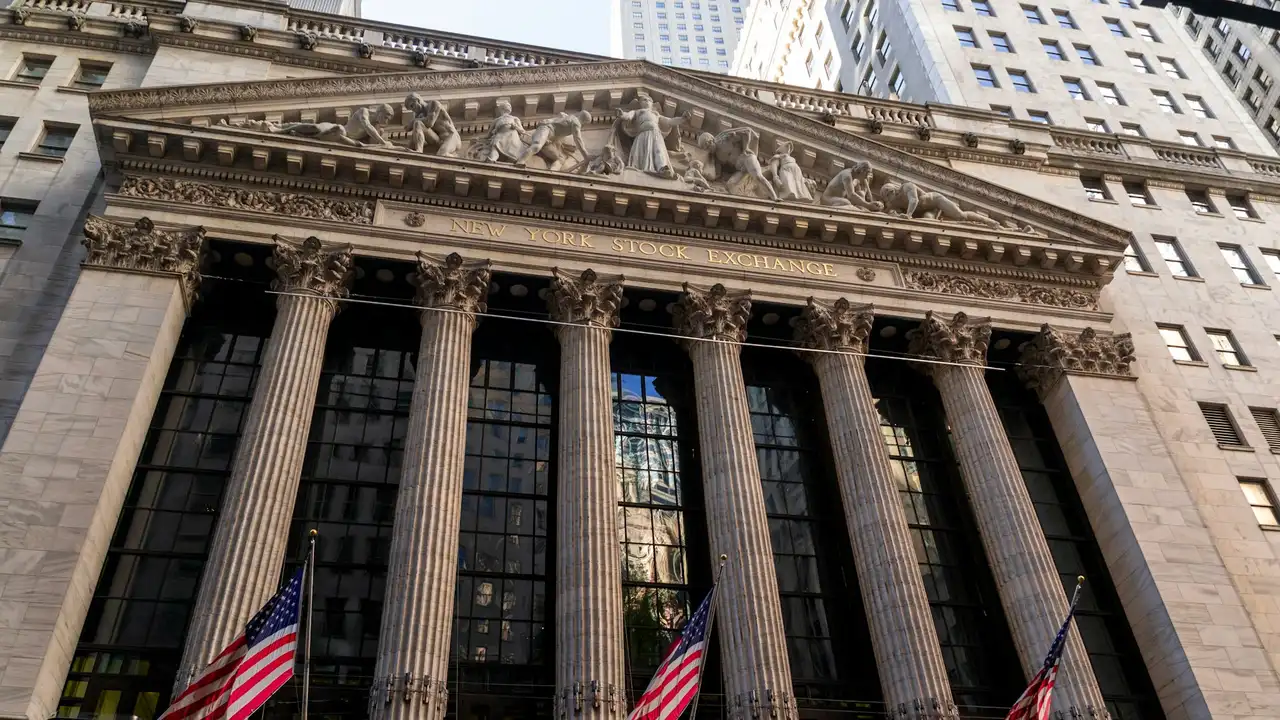
The New York Stock Exchange also signed off on the week with a mixed trend, as the S&P 500 and Nasdaq indices closed a third consecutive positive week. The S&P 500 rose by about 0.4%, the Nasdaq climbed by 0.1%, and the Dow Jones lost about 0.6% of its value.
The sector that led the gains in the past week is the energy sector, which jumped by a sharp rate of 7.3% — its largest weekly gain since October 2022. In the background, the great uncertainty around the Strait of Hormuz and especially strong reports from oil companies for the second quarter.
Over 90% of S&P 500 companies have already published their financial results, although there remain some giants that have not yet done so, such as Broadcom and Nvidia. According to FactSet, profit growth among the index is around 50%, a figure that if it remains as is at the end of the season, will be the strongest since the second quarter of 2021.
Although the S&P 500 and Nasdaq finished the week in the green, on Friday Wall Street closed with price declines. The S&P 500 (which crossed the 7,800-point threshold for the first time during the week) fell by about 0.2%, the technology-biased Nasdaq lost about 0.3% of its value, and the Dow Jones weakened by about 0.2%.
Jay Hatfield, CEO of Infrastructure Capital Advisors, told CNBC on Friday that in his opinion, the trend recorded on Wall Street is a sign of what is expected for the stock market in the rest of August and September. "Today is like the beginning of the flattening out after the earnings season," he said.
Since most of the earnings season is behind us, Hatfield noted that there is no longer a significant catalyst for continued gains, except for those reports and a possible reopening of the Strait of Hormuz. Hatfield added that assuming profit growth remains at its current level until the end of the season, that oil prices continue to move around 80 dollars, and that the Fed leaves the interest rate level unchanged — he expects the S&P 500 to reach 8,100 points by the end of the year (an upside of close to 4%).
3. Oil prices returned to climb
After a long period of weakening, the shekel closed a second consecutive week of strengthening against the dollar and added about 1.4% against it, when its continuous rate stood at just under the 2.96 shekel threshold. At the same time, the dollar index (DXY) climbed by 0.1%.
Oil prices climbed by over 5% in the weekly summary. Brent crude closed at a price of 88.5 dollars per barrel, while American-type oil (WTI) closed at a price of 82.4 dollars per barrel.
The prices climbed when in the background, as mentioned, the tension around the Strait of Hormuz remained especially high and reports continue on Iranian attacks on ships moving in the area. On Friday, the US noted that the naval siege on Iran could continue "indefinitely". The upward movement also came against the backdrop of the statement by US Treasury Secretary Scott Bessent that the US is expected to use economic measures against Iran "that have never been seen before".
On Friday, Trump declared during a speech he gave that Americans will have to suffer slightly higher fuel prices while the US punishes Iran. "For you to pay a little more for your fuel, just remember that you are doing it so that a very evil country cannot get nuclear weapons. A country that is truly the number one exporter of terror in the world".
Also in the commodities market, gold futures signed off on a fourth consecutive week of gains and climbed by close to 1%. This, against the backdrop of the decline in expectations for an interest rate hike in the US and the weakening of the dollar globally in recent weeks.
4. Growth data in Israel do not support an interest rate cut in September
The consumer price index for July in Israel showed that the annual inflation rate fell from 1.6% to 1.5% — the lowest in five years and deep below the midpoint of the Bank of Israel's target range (between 1% and 3%).
Ronen Menachem, chief economist at Mizrahi Tefahot, estimated that "the Bank of Israel is facing inflation low enough to allow for another interest rate cut. The recurrence of the shekel's appreciation recently may also ease its task on this issue. Still, a number of risk factors may delay the move, among them the frequent changes in direction of fuel prices, the continued upward pressure from rent, and the fact that the August index is seasonally high. Therefore, a scenario of an interest rate cut should not be ruled out, although for now, in our assessment, it is still not the main scenario."
Also in the macro sector in Israel, growth data surprised to the upside, which on the face of it slightly reduces the chance that the Bank of Israel will go for an interest rate cut move in September. The economy grew in the second quarter of the year by 15.4% in annual terms (3.6% in quarterly terms), when most forecasts in the capital market expected an increase of about 10%.
Menachem referred to the growth data and noted that "this is a broad improvement of most parameters, which could indeed have been expected, given the exit from the first quarter, which was marked by intense fighting. However, the strength of the recovery is definitely impressive and even stands out positively compared to the recovery from the 'Roar of the Lion' operation a year earlier."
However, Menachem added two warning lights: according to him, "the CBS details this time the GDP figure 'excluding adjustments for production abroad', which actually isolates the work and production processes that are actually taking place within Israel's borders. It turns out that in the second quarter of 2026, the small gap between the growth of the general GDP (+15.4%) and the growth of GDP excluding production abroad (+14.4%) indicates that the leap and recovery in the second quarter were indeed due to strong local activity within Israel; however, looking at the first half of the year, the product growth excluding production abroad shrinks to only 1% at an annual rate."
"Another reservation involves the way of comparison," Menachem noted. "As the CBS says, a comparison of the second quarter of 2026 data to the second quarter of 2025 data is also needed, due to the timing of the 'With a Lion' and 'Roar of the Lion' operations. Here, more standard results are obtained, including a GDP growth of 3.2%. A growth of 4.7% was recorded for the business product and in particular the expenditure for private consumption, which this time shrinks by 0.4%."
In the US, the central macro event in the coming week will be the publication of the protocol from the Federal Reserve's Open Market Committee on Wednesday evening. Daniela Hathorn, a senior market analyst at Capital.com, told the Wall Street Journal that "the protocol will be examined closely to understand the extent of the disagreements among Fed members." According to her, the weaker-than-expected employment report in the US and the consumer and producer price indices strengthened the argument that the Fed "can afford to remain patient" and leave the interest rate unchanged for now.
5. The most bullish strategist on Wall Street raises his bet
In light of the strong earnings season on Wall Street, veteran strategist Ed Yardeni raised his forecast for the S&P 500 and now expects the index to reach a level of 8,400 points by the end of the year — an upside of almost 8% compared to its closing price last Friday. Yardeni's forecast is now the highest among the analysts and large investment banks on Wall Street.
Yardeni sticks to his approach regarding the American stock market, according to which the gains are not driven by FOMO, but by what he called 'FEMO' — an acronym for Fabulous Earnings Momentum.
The veteran strategist noted that as a rule, companies shattered analysts' forecasts in the market. "We have never seen profit expectations rise so rapidly for the current year and the years ahead, as they have risen since mid-2025," Yardeni said. "The result was a meltup in the stock market to all-time highs." Yardeni added that "we think that any pullback (and even a crash) will be a buying opportunity and will not lead to a recession or a bear market, similar to the dot-com bubble in 1999-2000."
Yardeni added that "we remain with the target of 10,000 points by the end of 2029, although we will likely raise it if the roaring 2020s continue to go in our favor."