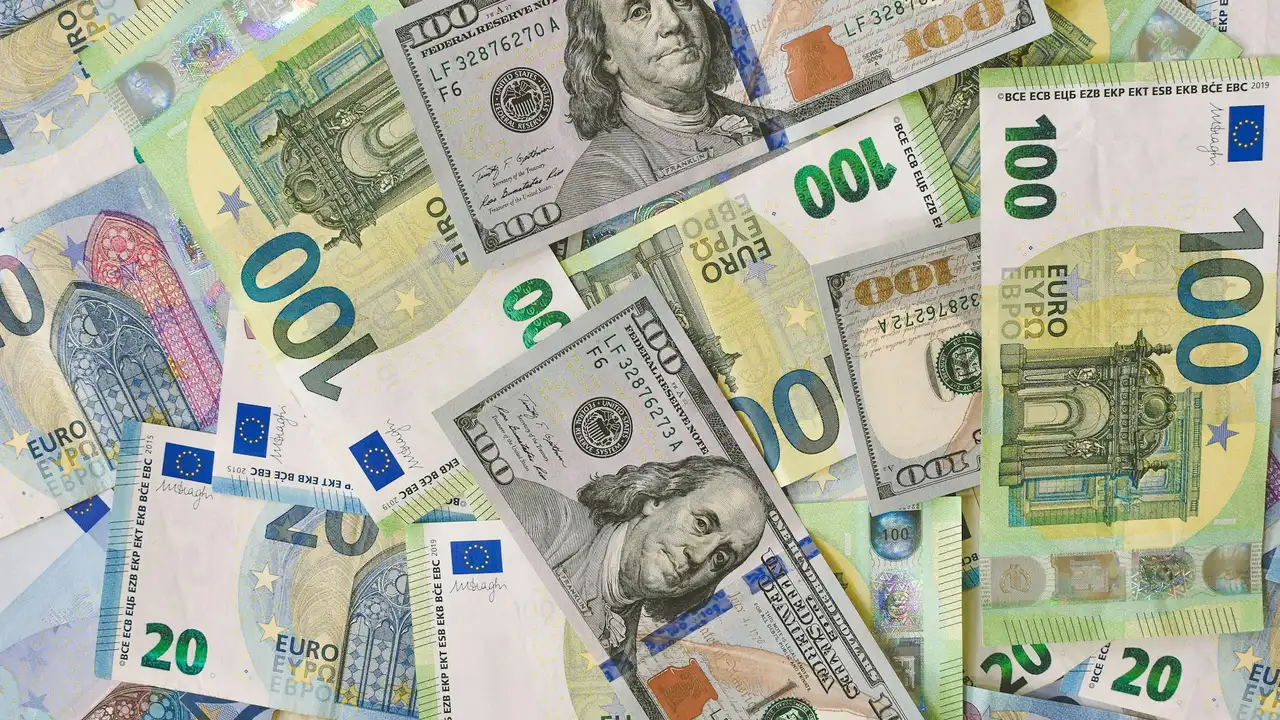
Dollar falls to 3.00 shekels and stabilizes globally ahead of August US employment data
The dollar has fallen to 3.00 shekels, while the euro dropped to 3.49 shekels. Markets are awaiting US employment data, with forecasts of 55,000 new jobs and an unemployment rate of 4.1%.
The dollar falls to 3.00 shekels from yesterday's representative rate of 3.025 shekels. The euro falls to 3.49 shekels from yesterday's representative rate of 3.51 shekels. In the international market, the dollar, which recorded a sharp decline yesterday, is stabilizing at 99.00 points.
Markets are awaiting US employment data at 15:30 with a forecast of an increase to 55,000 new jobs in August compared to a decrease of 23,000 in July, and an unemployment rate of 4.1% in August, identical to July. Federal Reserve Governor Christopher Waller said yesterday that he is "inclined to support" leaving the interest rate unchanged, as long as there are no surprises in the upcoming inflation data. The probability priced in by federal funds rate futures traders that the central bank will raise the interest rate in about two weeks fell to 54.6% after his remarks, according to CME's FedWatch tool. This is compared to 63.2% the day before.
The Japanese yen is on track for its strongest week in over a month, as traders increased bets on an interest rate hike by the Bank of Japan. The Japanese yen strengthened to 155.25 yen per dollar in morning trading, a level close to the high of 155.20 reached last month. Later it traded around 155.71 yen per dollar. The yen is now on track for a 2.5% gain this week.
Analysts say the sudden jump in the yen reflects bets that the Bank of Japan may be more dovish than previously expected when it meets on September 17–18. Meanwhile, Japan's top currency diplomat, Atsushi Mimura, said on Friday that he remains vigilant to currency rate movements and is in constant contact with US authorities.
The dollar index was stable at 99.01, while the euro traded around 1.1625 dollars and the pound at 1.3527 dollars. Attention is now shifting back to key data releases ahead of the FOMC meeting on September 15–16, including nonfarm payrolls data later today and the Consumer Price Index (CPI) next week.
Investors also monitored geopolitical tensions in the Gulf, as Brent crude oil futures remained at high levels above 95.52 dollars per barrel after US attacks in Iran this week.
"Rising oil prices and the shift in expectations from central banks have pushed bond yields globally higher, but currency markets are reacting to this selectively. We prefer carry opportunities backed by stronger fundamental data, and believe that investors should focus on building a stable, diversified, and risk-controlled investment portfolio," said Mark Haefele, Chief Investment Officer (CIO) of UBS Global Wealth Management.
He added that within the currency market, they prefer currencies that combine attractive carry yield with stronger fiscal fundamentals, including the Norwegian krone (NOK) and the New Zealand dollar (NZD), while the British pound (GBP) and the Chinese yuan (CNY) also remain attractive. Furthermore, they identify value in maintaining a strategic allocation to gold as a protective component in the portfolio against currency devaluation and fiscal pressures in the US.