The IDF's long scar: The battalion born from the severe failure of October 7
A sniper bullet passed centimeters from him and changed everything. Now, Lt. Col. Eli Zilberman commands the 'Tzuri' battalion, a reserve force in the IDF's 'Bazak' brigade, designed to bridge the gaps revealed on October 7. In a special interview, he tells about the raids in Judea and Samaria and how he dealt with the challenge while his child with special needs was undergoing chemotherapy.
In November 2023, the 162nd Division, under the command of Major General Itzik Cohen, maneuvered toward Hamas's "security square" as part of breaching the defensive walls of Gaza City. The General Staff attached fateful importance to the raid on the complex, which included an intelligence, operational, and governmental array critical for Hamas - which until those days viewed it as its most fortified and protected array against an IDF ground maneuver.
In retrospect, it turned out that the complex included an extensive tunnel system for the movement of operatives and the escape of senior officials, databases, weapons manufacturing workshops, and a command and control center for the entire Strip. Major General Cohen's deceptive plan succeeded, and already in the opening phase, more than fifty terrorists were eliminated.
"This was one of the IDF's first battles in the northern Gaza Strip," recalls Lt. Col. (res.) Eli Zilberman this week during operational activity in Judea and Samaria. "We entered one of the most difficult areas for combat, with an inconceivable scope of terrorists. There, for the first time, commanders were required to maneuver in alleys and a nearby school in face-to-face battles. We understood very quickly that we were in a different event, and that this war would be long. The vehicles were hit by anti-tank missiles, and there wasn't one force that didn't encounter battle in this sector."
In one of the important moments of the operation, Lt. Col. (res.) Zilberman exited the Namer APC he was in to precisely direct the operator of the 'Zik' (remotely piloted aircraft). Within tens of seconds, a sniper identified him and fired a bullet at him, which hit a few centimeters from his body. "I was almost hit. I jumped back into the Namer and was really angry at myself: 'How irresponsible you are. You are 36 years old and acting like a little child who wants to see everything from the outside, without really remembering the size of the responsibility on your shoulders and the family at home, things that should make you much sharper.' I think this is a feeling that no fighter doesn't carry with him, and certainly as a commander on the battlefield, because you are required to be the best version of yourself every day. It made me much sharper and more professional, and overall I just wanted to direct the fire to hit the terrorists in the area. For me, this was the defining event, and I certainly didn't think I would find myself after two and a half years as a reserve battalion commander."
Intense fighting continued on all fronts. Lt. Col. Zilberman continued to contribute as a commander and fighter in various arenas, and at the same time, the General Staff investigations continued, which did not renew anything beyond what was obvious: the IDF lacks a fighting force in the regular and reserve ranks, with an emphasis on a force available for erupting events.
On October 7, the IDF faced a gap of tens of thousands of weapon-holders who would arrive quickly at the Strip's border, organize into company and battalion frameworks, repel the Hamas attack to prevent the terrible massacre and the kidnapping of hundreds of Israelis from the heart of the communities, and stabilize the border that was breached without interference.
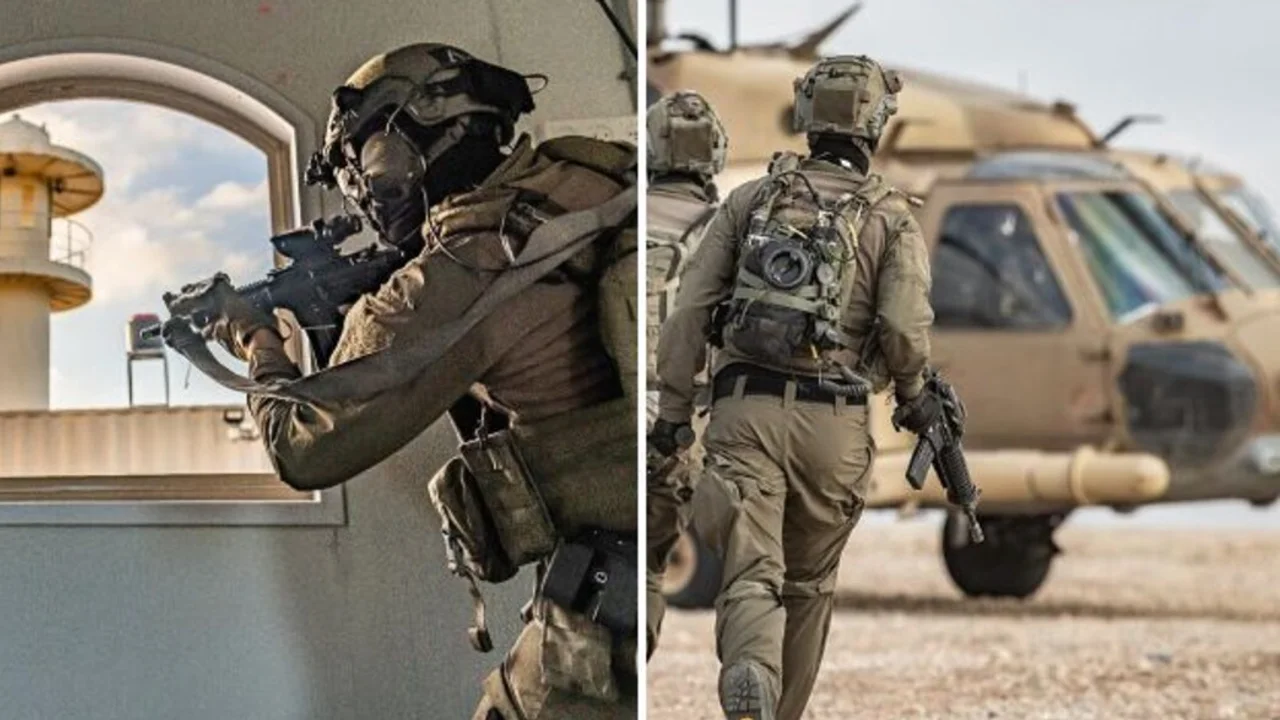
To cover the long and coarse scar that the IDF has carried since then, in 2025 Lt. Col. Eli Zilberman was called to the flag and established the 'Tzuri' battalion for the first time. The move was part of a broad General Staff plan led by Brig. Gen. Oren Simcha to establish "David" brigades, in an attempt to bridge the gap in fighting manpower.
The General Staff project became a success story against all odds: within its framework, reserve fighters who were no longer assigned to the combat array were recruited, alongside volunteers who had finished their service long ago.
Since then, more than 20 reserve battalions have been established at various levels of competence, based on soldiers carrying personal weapons (rifle and bulletproof vest in a home safe, A.B.), which dramatically shortens arrival times in any scenario. Their central purpose is to be a light and mobile reserve force, providing a flexible and fast response to erupting threats, for blocking terror infiltrations and for protecting the borders and in the depth of the country, each battalion according to a plan and designated sector determined in advance.
While around him was a commotion of commanders and fighters in the Maccabim sector, Lt. Col. (res.) Zilberman said this week: "The process of establishing the battalion began about two years ago. This is the first time that we all gathered as a whole battalion, not for training, but for full operational employment in defense and attack under the Binyamin Territorial Brigade, with all the complexities that this sector brings with it."
At first, the battalion was received in the Judea and Samaria Division with great suspicion and doubt as to whether it would succeed in meeting the complex mission: protecting the seam line along 50 km and creating a defense belt around the city of Modiin and other communities, including Modiin Illit, Mevo Horon, Hashmonaim, and Matityahu - against 21 Palestinian villages. But as the days passed and the results spoke for themselves, the Central Command decided to expand the battalion's authorities and assign it also offensive missions that included arrests, security, searches in complex areas, and at the peak - battalion operations.
"For me, this happens at one of the most important milestones that can be for a battalion in formation," Zilberman said and added: "I enlisted for the formation when I was still in the midst of the fighting in Gaza. It was like a wave and ripples: I recruited a deputy battalion commander, and from there everything rolled in stages. Everyone contributed and recruited friends. And then an amazing thing happened - by the 'friend brings a friend' method, a full battalion was established, with all the position holders and the administrative array. There are fighters here from all the infantry brigades, the best of the best. Beyond the fact that reserve personnel are unique individuals in the State of Israel, the people here have an extra asterisk: these are fighters who really insisted on returning to the array, or those we collected with tweezers. With an average age of 33, it is a dynamic and energetic battalion that has many more years of joint action ahead of it."
Almost every night, the battalion goes out for offensive activity in the Palestinian villages: arresting wanted persons, and searching cells of territory to locate weapons and dual-use equipment for terror. "Like in the Gaza Strip, the defense here is not carried out from the gate line but beyond the fence lines, with the goal of distancing any danger from the axes and the communities," the battalion commander concluded. "There is something primary here that is taking shape, and when it succeeds, it just gains momentum."
The battalion's list of achievements speaks for itself: more than ten arrests, the capture of over a hundred infiltrators (of whom 30 were transferred to imprisonment), close cooperation with intelligence agencies, locating weapons - including IDF uniforms found in a Palestinian house - and three battalion operations in friction points like Khirbat Abu Lakham, Katana, and Beit Liqya, alongside ongoing dealing with disturbances.
"With the necessary caution, I will note that we are without infiltrations in the seam line during this period. Literally two days after we entered employment, there was an event here of the entry of a not-small amount of infiltrators, and we managed a pursuit that made it clear that we would not allow passage from this sector. Together with complementary actions of the police, security agencies, and the security coordinators, there is no night when the battalion does not operate in the Palestinian villages," the battalion commander said.
Despite the public criticism regarding the equality in the burden, the erosion in the reserve array, and the bureaucracy in the Manpower Directorate, Lt. Col. Zilberman claims that the high motivation of the fighters is the most important weapon. "You can't put your finger on one point and say what it stems from. Maybe it's the size of the hour and the importance of the mission, and the desire to take part in this difficult war since October 7. Take for example my deputy: 400 days of reserve duty, of which 150 in fighting in Lebanon, was wounded on October 7 and is now leading soldiers and commanders after him. When the soldiers see their commanders pushing forward, they want to be part of something bigger than them. And when you are part of a formation process, it is something that cannot be explained in words."
Zilberman marks one of the battalion operations in the villages as his peak moment in the role: "A whole battalion behind you, and suddenly you see 10-12 armored vehicles, hear orders on the radio, and this whole armada is just waiting for the signal to go out for a raid. For me, this is the event I waited for all that time, and we returned from there with a feeling of real pride. A whole battalion born from zero goes out and performs offensive activity together with envelope and support forces."
At the same time, it is impossible to disconnect the battalion from the increasing tension ahead of the holidays in Judea and Samaria. This week, this tension brought the Chief of Staff, Eyal Zamir, to deploy another division and raise the level of readiness for a scenario in which it would be required to join the Judea and Samaria Division, to thicken the seam line and the protection of the communities.
"Without going into too many details, I will tell you a sentence I said this week to my people: the thin difference between a quiet sector and a non-quiet sector depends solely on the degree of activity of the forces in it and how much they truly believe that the threat exists also with them," says Zilberman. "There is no shortage of threats here. Just in the last week, a terrorist cell was arrested here with weapons and unfriendly intentions, when we were envelope forces for another unit, and there are quite a few such cases. It's not for nothing that we go out every night for raids in the villages. The goal is to ensure that in the day-to-day, quiet is maintained for the residents, and that whoever lives in Modiin or Matityahu will feel the same security as in any other city in Israel."
In one of the conversations with the fighters, the question of the intense pace of activity arose, despite them being reserve personnel and not a regular force. The battalion commander's answer was sharp: "I told them that if everyone in their own little plot of God believes truly that the threat exists with us and that we are required to eradicate it every night, this will be our answer to the citizens who ask if the IDF has fixed what was. It is the moral duty to ensure that an event like October 7 will never return. Ultimately, October 7 surprised us all, and we will still be required to get to the bottom of the details to understand how such a thing happened to us."
On the question of what the battalion under his command would have done at 06:29 that morning if it had existed then, he replied: "It would have gathered immediately from home, and within a quarter of an hour would have received a point where it must start rolling forward, with the weapon and vest that are in his safe. A 'Bazak' battalion that knows how to do exactly what we were so thirsty for on October 7: that forces would unite into an orderly framework that gives a quick response within the country's borders, so that good people would not find themselves suddenly arriving at the Nova festival or Kfar Aza without anyone calling them."
Towards the end of the interview, it is impossible to ignore the family rear and the challenges at home. "Everyone has their own complexities, and I meet this now with fighters who in August left behind a supporting family that did everything to allow the existence of these reserves. They are truly heroes and heroines. In my private plot, I will reveal a secret to you: if not for my wife, who pushes me with all her might and tells me 'we are here, go be a battalion commander', I probably wouldn't be in the role. At the beginning of the road, when I was asked and called to the role, I moved uncomfortably in the chair. I am a father to a child with special needs, who has undergone a very complex process of chemotherapy and transplantation in the last year and a half. Without the real support at home, for each and every one of the reserve personnel, we would not be able to maintain the level of security that exists today in the State of Israel. One needs to salute these families every day. These are unique individuals, and this is something that the people of Israel must always remember."