Opposition Blocs Weigh Strategy to Replace Knesset Speaker Amir Ohana
As the Israeli Knesset elections approach, opposition factions are preparing strategies to replace Speaker Amir Ohana using Arab party votes if a 61-seat coalition fails to materialize.
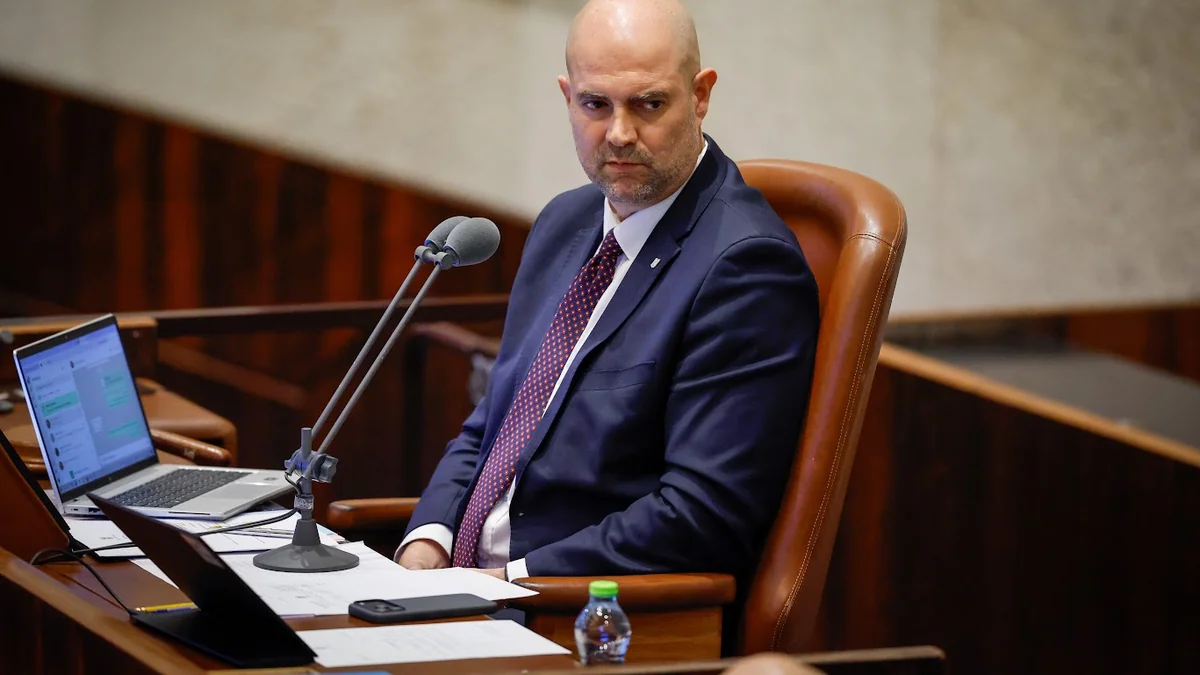
With just six days remaining until the 26th Knesset elections, opposition factions are already planning for the "day after," focusing heavily on the contingency that they may fail to form a governing coalition backed by 61 Zionist lawmakers. In such a scenario, the primary strategy would be to replace incumbent Knesset Speaker Amir Ohana, who would remain in office until a successor is chosen. To achieve this, the opposition bloc would rely on the votes of Arab parties, framing the move strictly as a parliamentary vote rather than a coalition partnership.
Several figures within the opposition have confirmed this direction. Avigdor Lieberman, leader of Yisrael Beytenu, declared that immediately following the swearing-in of the 26th Knesset, they will work to replace Ohana and elect a new speaker, followed by advancing the "Defendant Bill" through three readings.
Lieberman laid out the rationale: seizing control of the Knesset agenda to swiftly advance critical measures, such as establishing a state commission of inquiry, repealing draft exemption laws, enacting a limited conscription law, and passing the "Defendant Bill" to prevent Benjamin Netanyahu from serving as prime minister due to his ongoing criminal trial. Observers note this bill faces a high likelihood of being struck down by the High Court of Justice as personalized legislation targeting Netanyahu.
Ohana has previously clarified that if a solid majority of 61 votes coalesces to unseat him, he will convene the plenum and not obstruct the process, viewing it as a legitimate parliamentary procedure. This contrasts with the 2020 precedent when then-Speaker Yuli Edelstein refused to convene the plenum to avoid obstructing unity government negotiations—a move that ultimately prompted the High Court to intervene.
If the opposition and Arab parties succeed in securing a majority, potential candidates for the speakership are already being discussed across the various opposition factions.
Within the Yashar! party, led by Gadi Eisenkot, potential candidates include Chili Tropper, who is widely respected across the political spectrum and has been promised first pick of cabinet portfolios but might opt for the speakership. Other contenders include Matan Kahana and Elazar Stern, the latter of whom has publicly expressed interest in the role and exchanged sharp words with Ohana.
The BeYachad joint list, uniting Naftali Bennett and Yair Lapid, highlights its deep parliamentary experience. Relevant candidates include opposition coordinator Meirav Ben Ari and Eitan Ginzburg, an expert in Knesset regulations.
The Democrats have also targeted the position as pivotal for restoring democratic values, putting forward MK Efrat Rayten as their candidate, who is simultaneously aiming for the justice portfolio.
Meanwhile, should a full right-wing coalition emerge, Ohana's position remains far from secure. Ultra-Orthodox parties have voiced sharp criticism against him, with Shas leader Aryeh Deri attributing coalition struggles to his appointment as an openly gay man. Should ultra-Orthodox factions demand his replacement, other senior Likud figures—such as coalition chairman Ofir Katz, Eli Cohen, Yoav Kisch, or Yariv Levin—could be put forward.