"I was preparing for the memorial and felt movements in my stomach": The moving birth of Miriam after the death of her daughter
A year after 15-year-old Emuna Yehudit Danino was killed in a car accident in the southern Hebron Hills, her mother Miriam gave birth to her sixth daughter. "It symbolizes continuity and faith in life, without ignoring the longing," she said. According to her, the baby is not a replacement: "We accompanied Emuna to the next world, and the baby to this world."

About a year after losing her daughter Emuna Yehudit in a car accident, 39-year-old Miriam Danino from Karmei Katif gave birth to her sixth daughter.
"I was preparing for the memorial and felt the movements in my stomach," she said. "It symbolizes continuity and faith in life - without ignoring the difficulty and the longing." When Miriam answers the phone, it takes a moment until the crying in the background stops. "Just a moment," she says. A year has passed since her 15-year-old daughter was killed, and after a year of loss, a new baby has joined the family.
When asked if she will celebrate her birthday in the future together with the start of the school year, Miriam denies it: "We celebrate according to the Hebrew date, the 19th of Elul." At 8:00 AM on September 1st, Miriam Danino brought her sixth daughter into the world.
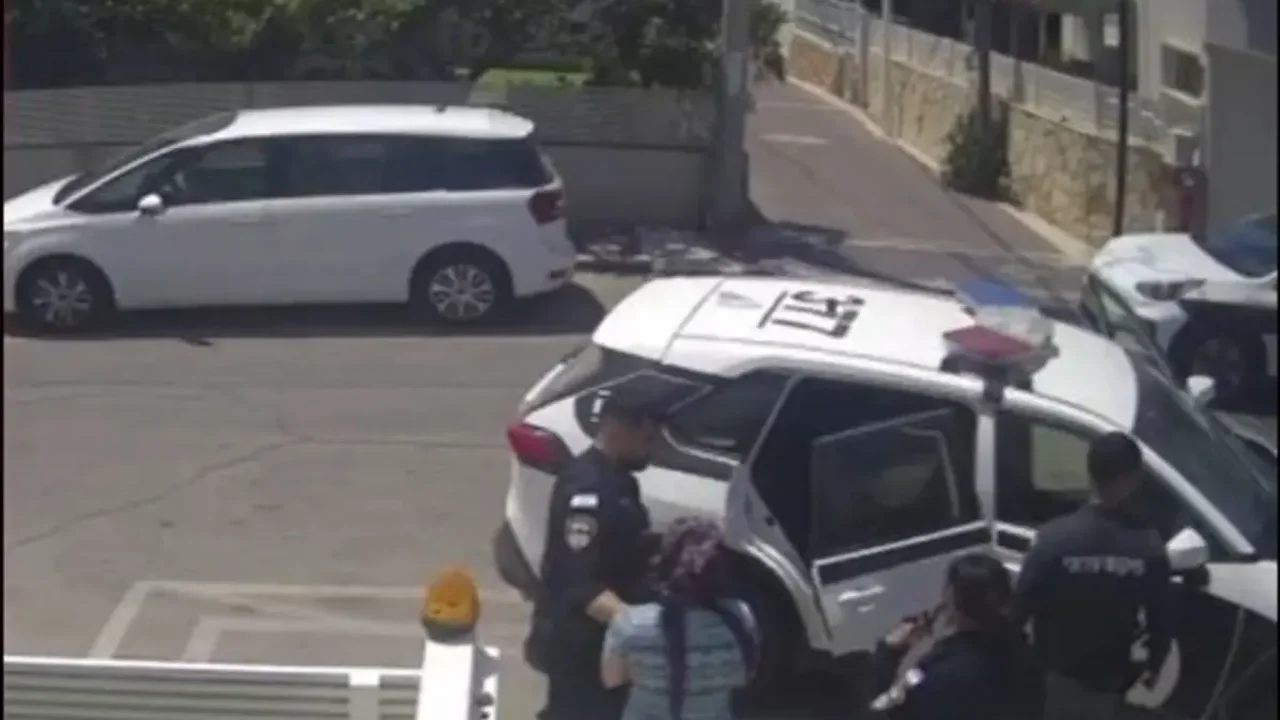
Her second daughter, Emuna Yehudit, was 15 when she was killed on August 11, 2025, by a truck on Route 3552, near the settlement of Adora in the southern Hebron Hills. Her death was confirmed on the spot, only ten days after she celebrated her 15th birthday. She was laid to rest in the settlement of Bnei Dekalim in the Lachish Regional Council.
"She was tall, impressive, amazing in her beauty, deep," her mother said. "She held the power of life and the power of depth - ideals, faith, love for the Land of Israel." For Miriam, the past year was much more than a year of mourning. It was a year in which the family had to learn to live alongside the loss, while discovering she was expecting another child.
"I can say that the year was a very empowering journey, with all the pain and loss," she says. "It is very painful, and we felt how Emuna continues to influence the world in all sorts of ways. People clung to her character, to her virtues, to her traits and her deeds." According to her, it was precisely after her death that the family began to discover sides of Emuna they did not know. "We discovered the writings she wrote on her phone. She really had a chat with the Holy One, blessed be He. She left us a will of many things. She wrote a lot to herself."
Among the things the family found was a text Emuna wrote about Memorial Day and Independence Day. "She wrote that these are great days for the people of Israel and that we have a huge connection to these days. A 15-year-old girl - that's what she wrote."
Miriam uses an image to describe how the family experienced the loss. "We said at some point that it is like a feather pillow that we had in our hand and the feathers scattered everywhere. We felt that it is not only our loss, it joined everything." In the first half-year after Emuna's death, it became clear to the family that alongside the mourning, new life was also developing.
"The experience was that we were accompanying our Emuna from this world to the next world, and in the last month we accompanied our baby from the next world to this world," says Miriam. "My husband laughs that we can add to our resume that we are 'soul escorts'." She laughs and adds: "But enough." Thus, the last year became a year in which mourning and pregnancy, death and birth existed side by side.
"It really symbolizes the continuity and the faith in life, without ignoring the difficulty and the longing," says Miriam. "Our daughter is missing to us, to her friends, to the teachers and the principals. But thanks to the fact that we could touch the depth of the pain, we can also see the power, the meaning and the strength - both in faith and in this birth."
The connection between the two events accompanied Miriam throughout the entire pregnancy. "There were really moments of preparing for the memorial, which was at the beginning of the ninth month, and feeling during it the movements in the stomach and the life that is inside me. We are happy to receive this sweet baby into our hands and to know that Emuna is really present in the delivery room. We felt how to connect between the worlds."
Miriam emphasizes that the baby does not come to replace Emuna. "Now we have a new girl, and she has a role of her own. She is not in Emuna's place, she did not come to fill a void. The void will be. The family's void will be." Even during the pregnancy, the loss did not disappear: "In the pregnancy check-ups, I always put some yellow note on which it was written - 'We lost a daughter a year ago'. It ultimately brings up a lot of tears and difficulty." According to her, it is precisely the place that the family gives to the pain that allows it to move forward. Even their little four-and-a-half-year-old daughter already knows how to give place to the longing. "She says: 'Mom and Dad cry when they miss Emuna'. She knows that crying is good and that one can let go."
From Miriam's point of view, the connection between Emuna and her new sister began even before the birth. "I think the dynamic between Emuna and the baby already happened. She sent her to us and told her about all of us. Sent her ready. If Emuna were here, she would really take care of her, be happy and love her, be excited and skip and tell everyone that she had a sister born." And when the baby grows up, Miriam intends to tell her about the sister she never got to know. "We will show her pictures, we will tell her that she would have loved her very much and that she is with us in our hearts all the time."