Iran Restricts Women in Sports as IRGC Secures Control of Facilities
Iran's regime banned women from outdoor tracks at Tehran's Keshavarz sports complex. An investigation reveals the IRGC is repurposing sports venues for military use and financial gain.
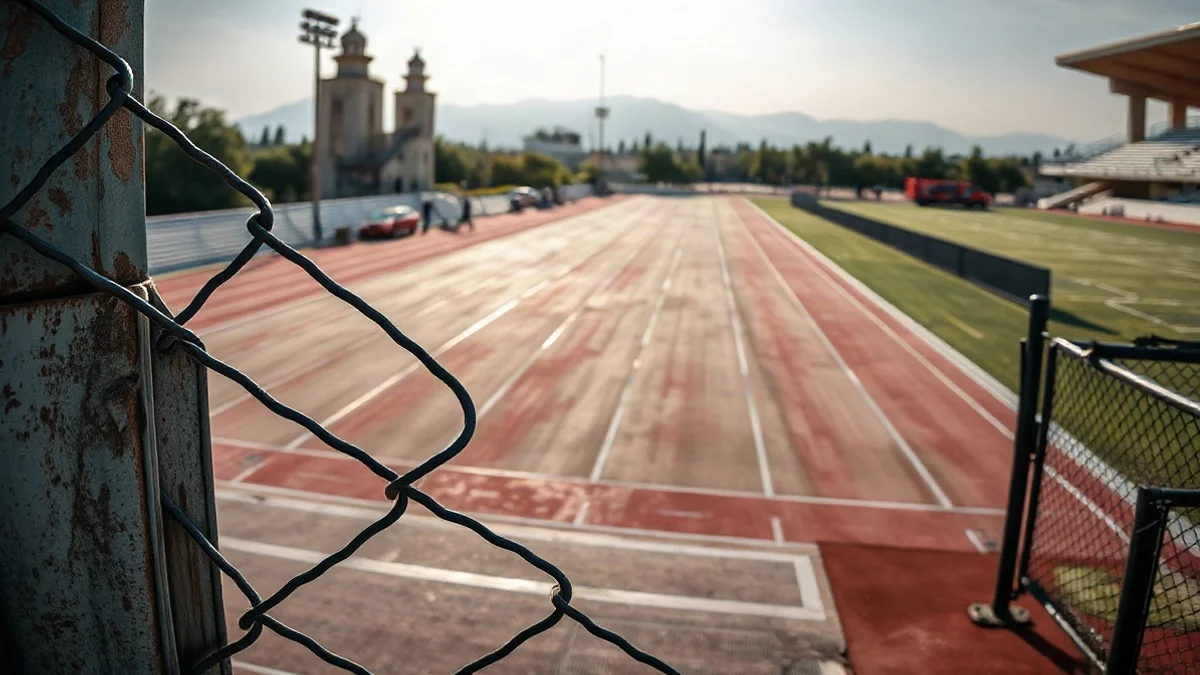
The Iranian regime has introduced new restrictions on women's athletic activities, banning them from the open-air running track at the Keshavarz sports complex in Tehran. The decision, set to take effect on Friday, October 23, confines women to indoor halls only. Athletes have expressed outrage on social media, with many threatening to boycott the complex.
According to an investigation published by IranWire, the move is part of a broader takeover of sports facilities by entities linked to the Islamic Revolutionary Guard Corps (IRGC). On October 11, the company responsible for maintaining sports facilities announced the closure of the Keshavarz and Enghelab complexes, citing religious and legal compliance. While the Ministry of Sports initially denied the closures, restrictions were subsequently enforced.
The investigation highlights Elheh Rajabi Pirkuhi, who was appointed head of the Keshavarz complex in March 2025 by Mohammad Ali Sabet-Kadam, the head of the state-owned sports facilities company. Sabet-Kadam is reportedly a former IRGC commander whose appointment was pushed by the organization's intelligence wing.
Financial ties are also deep, with the IRGC economic arm, Khatam al-Anbia, securing lucrative contracts to renovate Tehran's Azadi Stadium. Since 2015, cumulative budgets totaling 7.81 trillion tomans—valued at over 368 million dollars at the time—have been allocated, yet the stadium suffered from severe structural flaws following its reopening.
Most critically, the report reveals that sports facilities have been repurposed for military use. Sources indicate that during recent conflicts, Azadi Stadium halls were converted into military barracks and storage for equipment. A 12,000-seat arena was reportedly used to house IRGC personnel, and military forces were deployed in wrestling halls and the Olympic Village.
Analysts note that the frequent closures of Azadi Stadium have conveniently reduced the potential for anti-government protests in the stands. Athletic venues across Tehran have increasingly transformed into economic, political, and security tools for the IRGC, while Iranian women continue to bear the brunt of these oppressive measures.