Persian Gulf Energy Crisis Mounts as Brent Crude Stabilizes at $115
Brent crude stabilizes at $115 a barrel amid a Persian Gulf energy crisis. Iran's oil revenues drop 44%, while Saudi Arabia pursues foreign storage solutions as Washington seeks to reshape global markets.
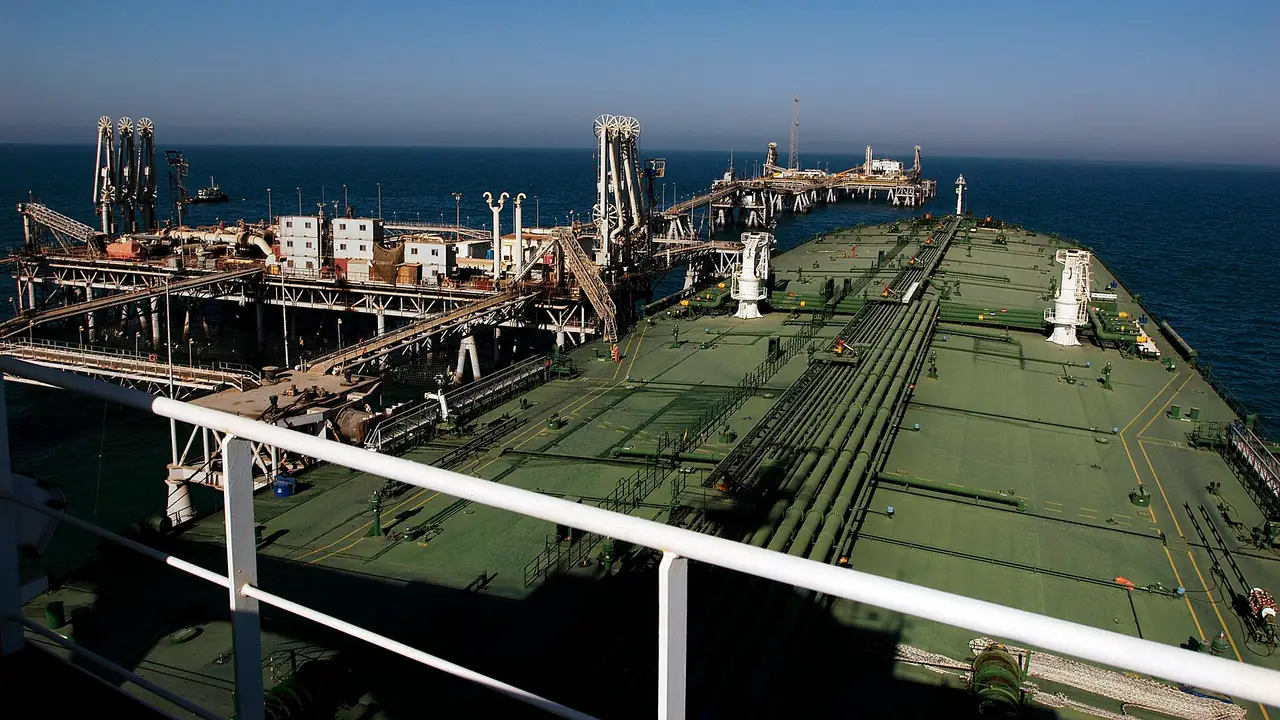
The ongoing crisis in the Persian Gulf is heavily disrupting the global energy market, with Brent crude oil stabilizing at around $115 a barrel. Tensions are primarily dictated by aggressive Iran and Saudi Arabia, which is gradually losing its standing as the dominant oil heavyweight. According to data from the Iranian regime, oil export revenues plummeted by 44% in October compared to the monthly average recorded in the first half of the year, while Saudi Arabia is pursuing a creative solution by storing oil outside its borders.
On the one hand, the United States imposed a naval blockade on the Islamic Republic on July 14, but the measure only began taking full effect by mid-September. This delay occurred because Iran's primary oil buyers are Chinese refineries, which typically settle payments roughly two months after receiving the shipment.
Undermining OPEC's Market Control
Citing data from Kpler, Voice of America reported that over the past three months, Iran supplied China with an average of one million barrels of oil per day, representing a roughly 40% decline from the average recorded during the first four months of the Persian calendar year.
Kpler also found that no fewer than 57 million barrels of Iranian oil are currently stranded in the Persian Gulf. For the already struggling economy of the Islamic Republic, this development is a severe blow. Oil revenues in 2025 totaled approximately $57.44 billion, accounting for about 55% of the regime's total exports, according to data from the Central Bank of Iran.
Former Israeli Consul in Los Angeles Yaki Dayan explains that regional US strategy is divided into short-term and long-term objectives. In the near term, US President Donald Trump aims to demonstrate to the American public that fuel prices are not surging, even if it requires unconventional arrangements with Russian President Vladimir Putin. Conversely, over the long term, Washington seeks to secure strategic maritime chokepoints.
"Trump is taking unilateral steps, such as declaring an 'energy ceasefire' in Russia and Ukraine that neither side has heard of," Dayan notes, adding that "the United States signed an agreement with Indonesia to influence the Malacca Strait and aims to dismantle OPEC as a cartel that dictates quotas and, consequently, global oil prices."
The Creative Saudi Strategy
Saudi Arabia remains the most influential player in OPEC, having recorded a daily production rate of 9.55 million barrels last year, according to OPEC data. Today, the Saudis are among the hardest hit by Middle Eastern instability, which is deeply affecting their national economy. Furthermore, from a security standpoint, the leader of the Sunni world has rarely appeared as vulnerable as it has following recent Houthi attacks.
The international energy market is not waiting for Riyadh, finding alternative supplies particularly in the United States, which has firmly established itself as the world's leading oil producer and exporter. According to OPEC, Saudi Arabia produced approximately 8.3 million barrels per day in September and exported about 6 million, while the US produced roughly 13.8 million and exported 3.4 million. This disparity highlights the profound crisis facing Riyadh, where oil accounts for approximately 46% of the GDP.
Against this backdrop, Riyadh is actively exploring innovative solutions. Amin Nasser, CEO of Saudi petroleum giant Aramco, revealed in an interview with Al Arabiya that the company is currently seeking partners to significantly expand oil storage capacity outside Saudi Arabia. According to Nasser, the moment the conflict with Iran concludes, global oil demand is expected to surge by roughly three million barrels per day.
Dr. Yoel Guzansky, head of the Gulf Program at the Institute for National Security Studies (INSS), emphasizes that this creative measure is merely a temporary fix. Storing oil abroad can extend supply capabilities to clients for a month or two, but it cannot resolve long-term demands, especially as global buyers increasingly turn to the United States for stable supplies.
Strategic Realignments under Trump
Addressing the US dimension of Saudi Arabia's predicament, Dayan notes that the kingdom needs Washington, and vice versa. "They saw that the United States did not step in to assist against the Houthi attacks, which prompted Riyadh to pursue an alliance with Pakistan and Turkey. Riyadh is building alternatives to the United States, just as Washington is building alternatives to Saudi Arabia. This conflict has generated dynamics that make Saudi Arabia less dependent on the Strait of Hormuz as it seeks new routes," the former diplomat explains.
Dr. Guzansky concludes that in discussions with Saudi officials, they frequently express frustration over receiving mixed signals from the US administration. "The Americans came and acted in the region, albeit not entirely in the manner the Saudis desired. There were unilateral strikes without full coordination of interests, which is arguably inevitable. The Saudi grievance centers on the application of power. Beyond a mere willingness to act, no one in Riyadh manages to accurately read Donald Trump, who articulates a different position on a daily basis."