Gaza Envelope Housing Demand Surges Over 350% Amid Post-War Influx
Housing demand in the Gaza envelope has surged over 350% compared to pre-war levels, driving up property prices by up to 16% as families and newcomers flock to the region.
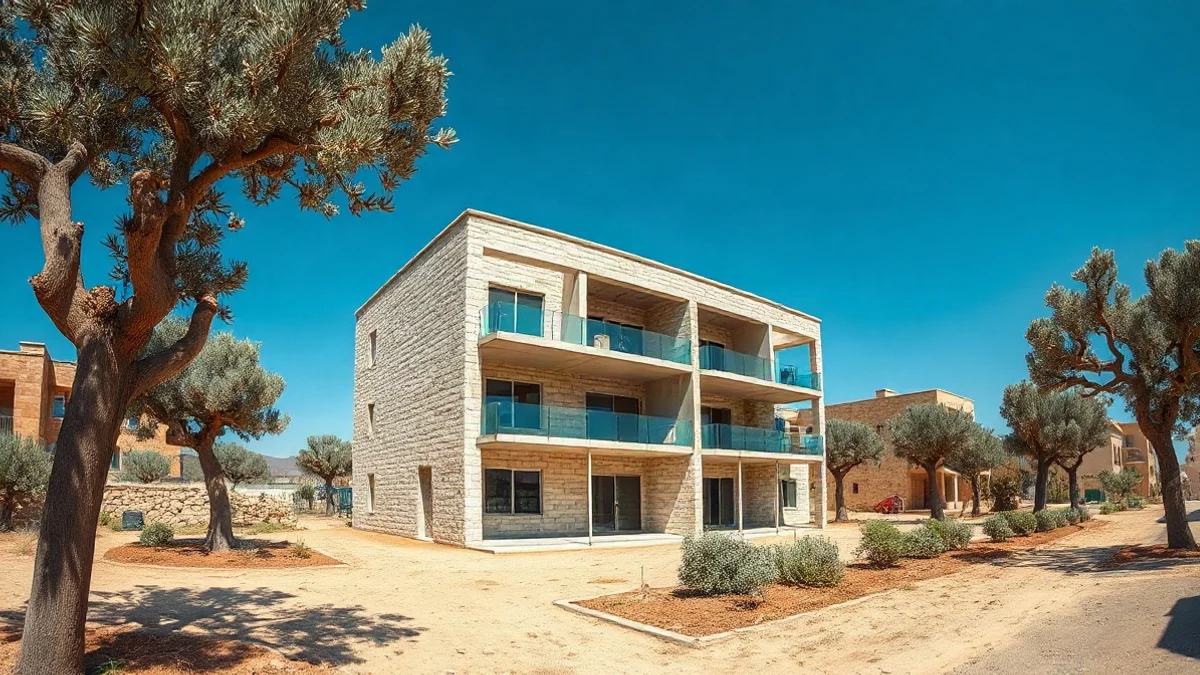
Demand for rental and for-sale housing in the Gaza envelope, kibbutzes, and surrounding communities is surging dramatically. According to data from the Madlan real estate platform, just over three years after the outbreak of the war, a staggering 350% jump in housing demand has been recorded in the envelope—several times higher than pre-war demand, following an initial plunge to near-zero right after hostilities began.
Skyrocketing Demand and Waiting Lists
This soaring demand is clearly visible on the ground. In Sderot, a sales and rental hotline representative noted a severe shortage of available housing. "There are no apartments available at all in the new buildings. There is crazy demand here, I have about 100 people in line," the representative stated.
Among those relocating to the region are Gal and Dor, who decided to leave the Jerusalem area and move with their family to Kibbutz Sufa. "We are Zionists, this is the time to move," they shared. "Other families moved just like us. We didn't know anyone here and wanted to integrate."
A similar trend is unfolding at Kibbutz Nahal Oz. Nadav Peretz, manager of demographic growth at the kibbutz, reported receiving inquiries every week from dozens of people seeking to join, including both returning locals and young families. Peretz noted that there is currently a waiting list of several dozen families.
Rising Prices Amid High Demand
"There is crazy demand here, I have about 100 people in line."
As demand climbs, property prices are following suit. According to Madlan, three years ago a 100-square-meter second-hand apartment in Netivot cost 1,259,300 shekels. Today, the price has surged to 1,460,200 shekels—a 16% increase. In Ofakim, a comparable 100-square-meter apartment saw an 11% price hike, with similar increases registered across other regional towns.
While the path to fully rehabilitating the envelope is still long, the on-the-ground reality reflects a profound shift, driven both by returning residents and newcomers choosing to make the envelope and its surrounding communities their home.