Managing Israel's Foreign Labor Shortages and Economic Demands
A review of Israel's foreign worker quotas highlights the balance between protecting the local labor market and addressing critical workforce shortages in construction and industry.
The discourse surrounding the employment of foreign workers in Israel often unfolds as if the state has opened its gates indiscriminately, with employers rushing to replace local staff with cheap, powerless labor. This concern deserves serious attention. A country aiming to maintain a fair labor market cannot allow a business to systematically choose a more vulnerable worker to bypass fair wages, proper conditions, or productivity investments.
Yet, the distance from this valid concern to claims of an "influx" is vast, especially in light of recent reports. Employers in construction, industry, commerce, and services argue that a plan to increase foreign worker quotas is delayed due to a 10 million shekel budget transfer to the Population and Immigration Authority. According to reports, the program is supposed to allow the entry of about 50,000 additional workers: 20,000 for construction, 15,000 for the metro project, and 15,000 for industry and commerce. These are planned and approved quotas—not workers who have already arrived in Israel or entered workplaces.
The Reality of Infrastructure Demands
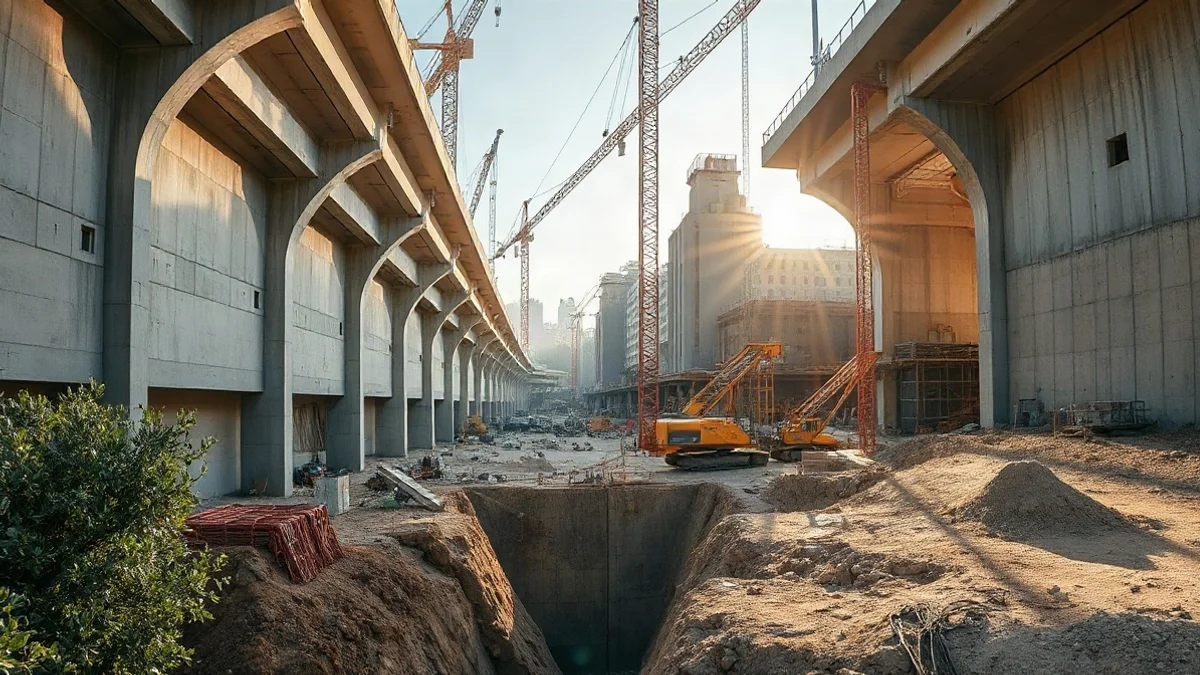
The metro project also illustrates the gap between need and response. At peak execution, estimates suggest the project will require about 16,000 foreign workers and 23,000 across all years of work. Simultaneously, regulated solutions for housing and transporting workers remain lacking, alongside descriptions of shortages in civil engineers and drivers. One cannot directly compare the estimated project needs with its share in the quota plan: these are data referring to different scopes and periods. Together, they illustrate that the challenge is not merely how many workers will be approved, but how to bring them, house them, and integrate them into work on time.
Therefore, this is not a picture of an opened tap. It is a picture of an economy required to decide whom to serve, and of projects risking paralysis if the labor force and its supporting apparatus do not arrive on time. Even an approved quota does not equal a worker standing the next day on the production line, in the warehouse, or at the construction site. Between the request for allocation, the employment permit, worker assignment, entry and residency visa, and actual arrival, many procedures intervene. Those presenting the system as free entry ignore the difference between a number on paper and actual employment.
Filling the Void Left by Palestinian Labor
This demand did not arise in a vacuum. A significant portion of the positions in question was filled until October 7 by Palestinian workers. Since then, the entry of Palestinian workers to many jobs in Israel has been cut off. Consequently, the foreign worker does not arrive to push out an Israeli worker waiting for the same job, but to fill a vacancy torn open in the labor market all at once.
In addition, employing a foreign worker is far more expensive than employing an Israeli worker, due to fees, housing costs, and medical insurance funded by the employer. Over the years, employers have tried offering incentives, bonuses, and wages above minimum wage, but certain positions have seen insufficient local response. This is not to disparage Israeli workers or justify calling a generation "spoiled." In physical, continuous, and sometimes demanding roles, under current conditions, there are simply not enough local candidates to fill the need.
Balancing Policy for the Future
Wage increases are part of a fair discussion and are sometimes necessary, but they do not create available labor in the volume of thousands of workers within weeks. Young people may prefer office work over picking products in a supermarket, even when the physical role pays higher. This is not a reason to blame them; it is a reason to understand the demand structure and working conditions, and to work toward improving them.
Accordingly, the correct policy is not a choice between Israeli workers and foreign workers. It requires investment in training, population integration, improved working conditions, and increased productivity, alongside the limited and supervised importation of foreign workers into areas where shortages already harm economic activity. The first steps are vital for the future; the second is required for the present. Presenting them as alternatives cancels the urgent need for both.
Managing the Gap Responsibly
Proclamations frequently arise that Israel is on its way to becoming Dubai—a market where the labor force relies heavily on foreign workers. Yet in the same breath, it is worth remembering: Israel is indeed not Dubai, and it must not adopt a model of a stateless, unprotected, and limitless foreign workforce. Precisely for this reason, it must manage the existing need transparently and responsibly, rather than denying it. Following a prolonged war and hard years for the economy, it makes no sense to subject factories, businesses, and vital networks to paralysis in the name of a theoretical solution that does not yet exist.
Employers can and must be demanded to pay well, improve conditions, and invest in efficiency. But the economy cannot be required to recover while functioning without the workers it needs, while simultaneously leaving the logistics required for their reception unaddressed. Legal, limited, and rights-preserving employment of foreign workers is not a waiver of the Israeli worker. In the current reality, it is an answer to a tangible shortage, provided it is accompanied by planning and supervision. Not an influx to be halted, but a gap to be managed responsibly.