Flydubai Extends Israel Suspension Through November, Driving Up Fares
Flydubai's extended suspension of flights to Israel until late November has driven up travel costs and forced passengers to seek alternative routes to Asia and the UAE. Despite a 65% drop in actual bookings, industry experts note that demand remains strong and expect a rapid recovery once regular operations resume.
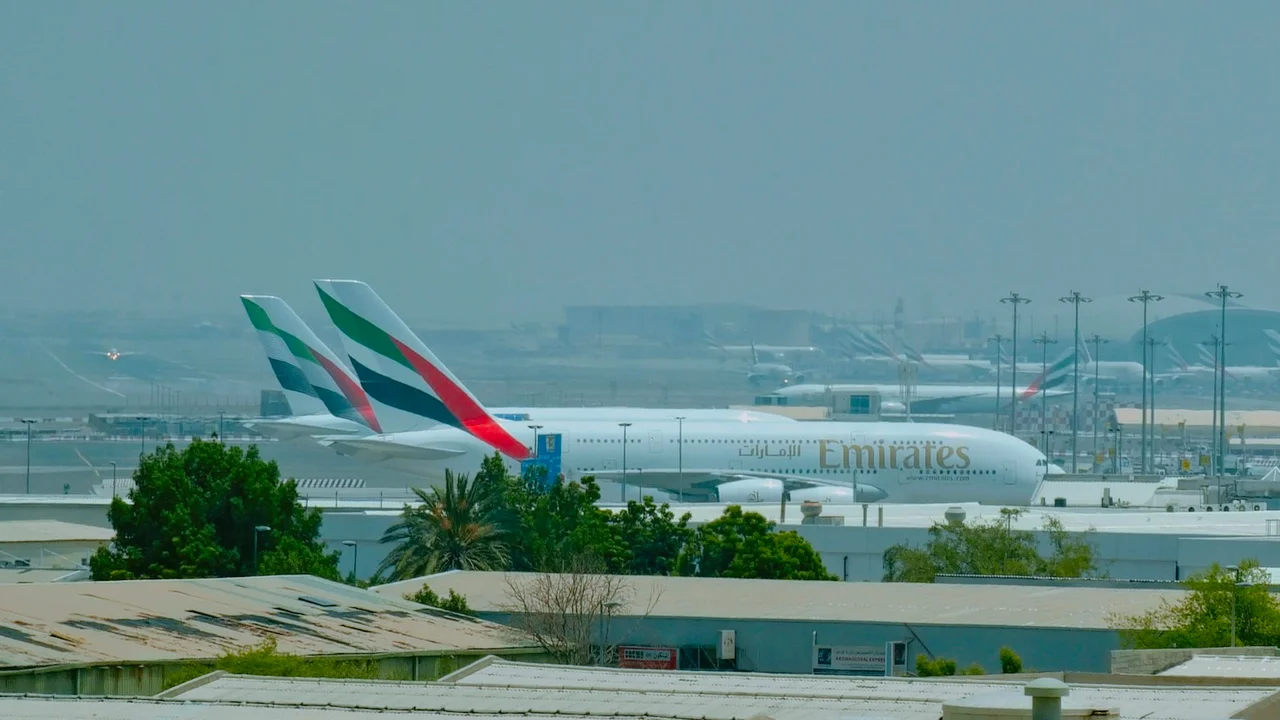
Flydubai has announced that it will not resume flights to Israel until at least the end of November. Given that Israeli carriers have also yet to restart flights to the United Arab Emirates, the resumption of the airline's operations in December remains in doubt. Currently, Israeli travelers wishing to fly to the region are limited to a single carrier, Etihad Airways. This restricted supply has driven up average prices, which are projected to reach $1,185 for a round-trip ticket in December, according to a data analysis by lastminute.co.il. By comparison, if Israeli flights resume by December, prices are expected to range between $400 and $500.
The disruption affects not only those vacationing in the Emirates but also travelers heading to the Far East who previously relied on Dubai as a transit hub. These passengers now face two main alternatives: direct flights or alternative connecting routes. In the direct flights segment, a round-trip ticket to Hanoi with Arkia will average $1,197 in December. Bangkok is available via Arkia for $1,541 and via El Al Israel Airlines for $1,611, while flights to Phuket with El Al are priced at $2,250.
These prices represent an increase compared to the previous year. The average price for bookings to Phuket in December 2025 stood at $1,328, while Bangkok was accessible for $1,250. Conversely, the average price for Hanoi has dropped from $1,294 during the same period last year.
"The disruptions in Dubai also impact travelers planning trips to Thailand," says Asaf Greenberg, Chief Marketing Officer at lastminute.co.il. "They eliminate a major connection option, and routing passengers through Abu Dhabi could increase demand and drive up prices there as well. In such a scenario, one should not assume that a connecting flight will automatically be the cheaper alternative."
Alternative Connections and Pricing
While options via Dubai are constrained, travelers can reach Asia through various other hubs, such as Addis Ababa, Zurich, Vienna, and Munich. Although these routes often offer lower prices, this is not always the case. According to a survey by the Gulliver travel portal, travelers flying to Bangkok with Ethiopian Airlines in mid-November can find round-trip tickets for $1,092, with prices dropping below $900 on certain dates. Swiss International Air Lines offers connections to Bangkok starting at $923, featuring a layover in Zurich on the outbound leg and Vienna on the return. Austrian Airlines provides connections via Vienna for $1,272, and Lufthansa offers December flights with a Munich layover starting at $1,020.
"Israeli travelers currently have a wide range of options to reach the Far East, even without Flydubai flights," notes Tamar Gerzon, CEO of Gulliver. "The multiplicity of routes allows passengers to compare alternatives and choose the one that best fits their budget, schedule, and comfort. Over the past month, we have seen an increase in Israelis choosing to transit through Addis Ababa, Vienna, or Warsaw. Flexibility regarding travel dates and layover destinations can further expand choices and help secure a suitable itinerary."
Exotic Alternatives and Demand for Dubai
For travelers seeking exotic destinations who are willing to explore alternatives, direct flights are available at lower average prices. According to lastminute.co.il, round-trip flights to the Seychelles with Arkia average $715, while flights to Zanzibar via Israir Airlines and Arkia hover around $800. "Our findings show that expanding destination choices is worthwhile," Greenberg concludes. "Seychelles and Zanzibar offer direct flights for an average of less than $900, making them viable alternatives to the high cost of flights to Thailand."
Despite the limited supply and logistical hurdles, demand for travel to the United Arab Emirates remains strong. Ofir Tours reports no significant change in Google search volumes for the destination before and after the Flydubai disruptions; however, actual bookings have dropped by 65 percent due to the reduced availability of flights.
"The data tells a clear story: Israelis have not given up on Dubai," says Yoni Waxman, Deputy Chairman of Ofir Tours. "Instead, existing demand simply cannot find enough available seats. It appears to be a temporary disruption, as Dubai remains a beloved, close, and successful anchor destination for Israeli tourists. We estimate that once logistical stability returns and airlines resume regular operations, we will see a rapid and sharp surge that closes the gap, with Israelis returning to fill the aircraft."