Labor Court Recognizes Veteran Firefighter's Lung Disease as Work Injury
The Tel Aviv Regional Labor Court recognized a veteran firefighter's lung disease as a work-related injury, overriding Bituach Leumi's rejection. The court ordered 7,000 NIS in legal fees following expert medical testimony linking smoke exposure to severe pulmonary damage.
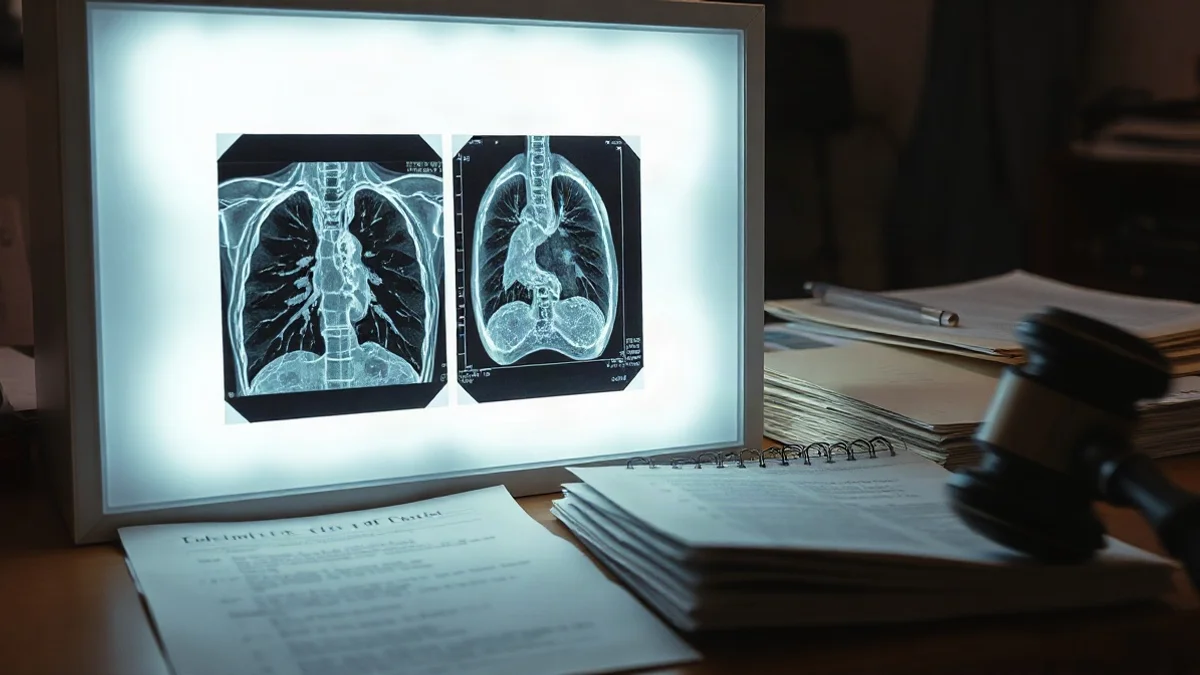
The Tel Aviv Regional Labor Court has ruled in favor of a veteran firefighter from Rishon LeZion, recognizing his chronic lung disease as a work-related injury following a legal battle with the National Insurance Institute (Bituach Leumi). Judge Dafna Hasson Zacharia accepted two medical expert opinions supporting the plaintiff, overriding a dissenting opinion, and ordered the state agency to pay 7,000 NIS in legal fees.
The plaintiff, 70, served as a firefighter across two periods: from 1978 to 1985, and again from 1998 until the onset of his illness. Throughout his career, he battled fires in forests, open fields, residential homes, vehicles, and industrial plants, routinely inhaling toxic smoke and combustion byproducts such as rubber, plastics, and fuels. Protective respiratory gear was used only intermittently, and rarely during open-field blizzards. The firefighter has never smoked.
In 2018, a CT scan revealed fibrotic and emphysematous changes in his lungs, accompanied by a chronic dry cough, chest pain, and severe breathing difficulties. After Bituach Leumi rejected his initial claim for occupational injury recognition in May 2021, the firefighter filed a formal lawsuit with the labor court.
To adjudicate the complex medical dispute, the court appointed three independent medical experts. The first expert concluded that the plaintiff suffered from no demonstrable lung disease or respiratory limitation. However, two subsequent experts appointed with the consent of both parties reached the opposite conclusion, establishing a clear causal link between decades of occupational smoke exposure and the lung damage.
The second expert diagnosed the firefighter with restrictive lung disease involving reduced lung volumes, noting that the smoke exposure—in the absence of any smoking history—strongly indicated occupational causation. The third expert identified fibrotic and emphysematous alterations alongside asthma, concluding with a greater than 50% probability that the condition stemmed from professional hazards.
Bituach Leumi urged the court to prioritize the first expert's findings, arguing that the subsequent evaluations lacked precise exposure data and suggesting that the symptoms might stem from a hiatal hernia and acid reflux. The court rejected these arguments after a rigorous review of the medical documentation.
Judge Hasson Zacharia ruled that the first expert's assessment contradicted objective diagnostic findings, including 2019 and 2020 methacholine challenge tests demonstrating severe airway hyperresponsiveness and CT results. Furthermore, the concurring experts explicitly addressed the hernia and reflux conditions, concluding they could not account for the totality of the pulmonary damage.
Invoking established legal principles, the court noted that when medical opinions are evenly balanced and one supports the insured party, precedence is given to the worker. With a two-to-one majority of medical experts supporting his claim, the court officially recognized the pulmonary condition as a work-related injury under occupational disease provisions.