Eisenkot Urges Election Committee to Block Netanyahu-Police Chief Meeting
Yashar! leader Gadi Eisenkot has petitioned the Central Election Committee to block a meeting between PM Benjamin Netanyahu and Police Commissioner Danny Levi, citing deep distrust and election integrity concerns.
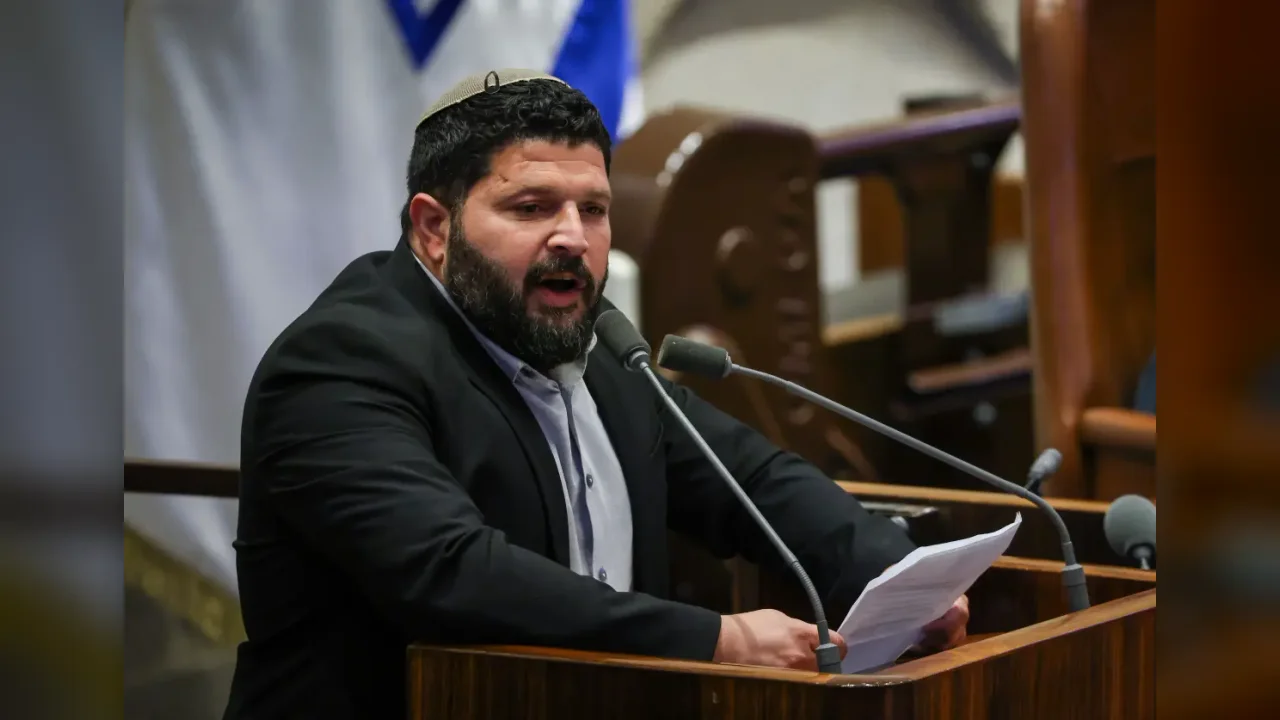
Gadi Eisenkot, leader of the Yashar! party and former IDF Chief of Staff, has filed an urgent request with the Central Election Committee to block a scheduled meeting between Prime Minister Benjamin Netanyahu and Police Commissioner Danny Levi. Eisenkot expressed deep distrust in the prime minister, warning against potential interference with election integrity.
Speaking in an interview on 103fm with Gideon Oko and Amihai Attali, Eisenkot voiced strong confidence in his political future. When asked directly whether he will be Israel's next prime minister, Eisenkot answered affirmatively: "Yes."
Despite his optimism, Eisenkot remains deeply concerned about the final days before the vote. His party's urgent petition aims to prevent a bilateral meeting between Netanyahu and Police Commissioner Levi regarding election integrity without the presence of independent officials. "I hear Netanyahu's statements about sanctions, about crypto, and him claiming he destroyed Iranian nuclear bombs — I do not trust him," Eisenkot said. "We must ensure these meetings do not sabotage election day or create an artificial atmosphere of panic 48 hours before the polls open."
Recalling his experience from the emergency government formed in October 2023, Eisenkot warned that Netanyahu avoids formal documentation during critical discussions. "I attended a very important meeting and saw that he deliberately avoids bringing a shorthand writer or using stenography. We must watch him twice as carefully these days," he stated.
Eisenkot asserted that the prime minister is under severe pressure and detached from reality. He criticized Netanyahu's public statements regarding national security and economic independence, arguing that the rhetoric is designed to manipulate voters. Furthermore, Eisenkot condemned the government's strategic direction, pointing to severe international isolation, tensions in Judea and Samaria, and a reliance on perpetual conflict.
Reflecting on the personal toll of the ongoing war, Eisenkot referenced his son and two nephews who fell in combat in Gaza. "The personal commitment is to be worthy of the price paid by Gal, Maor, Yogev, and another 2,100 young men and women. Even when they fought and achieved success, there was cowardly leadership that did not know how to realize it," he said.
As the campaign enters its final stretch, Eisenkot emphasized the necessity for his party to decisively outperform the ruling Likud faction to lead the next government. Only a significant margin over Likud, he argued, will ensure the mandate is handed to his political camp.