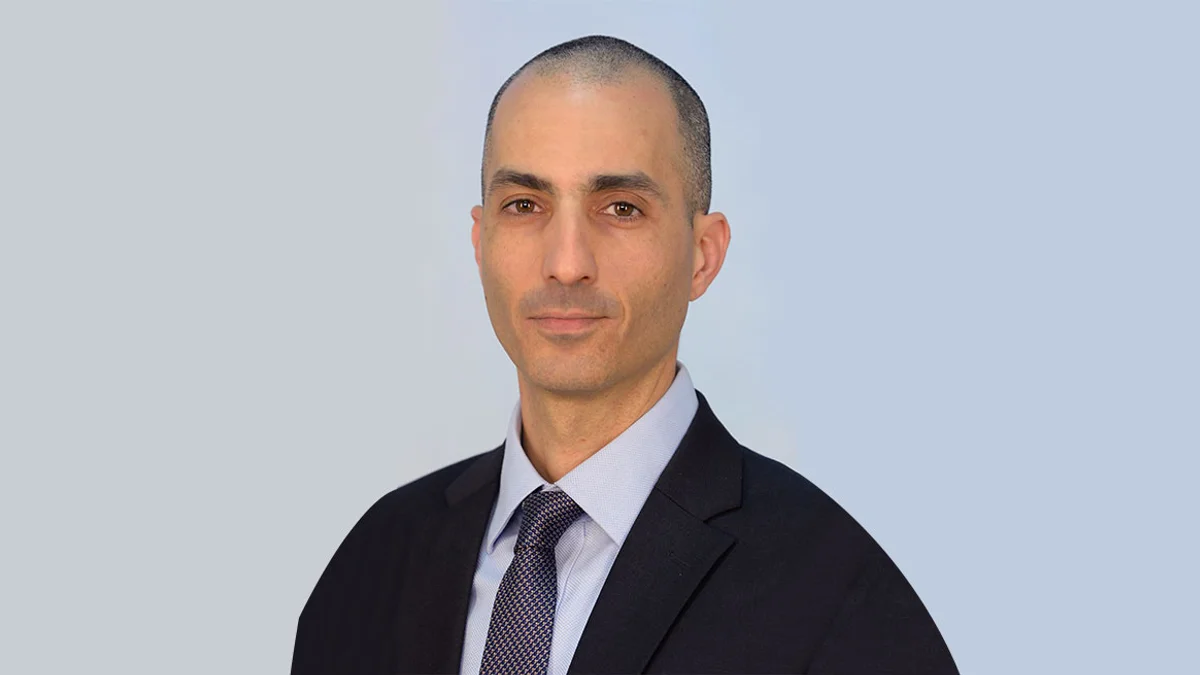
From lychee to Colgate: Shaul Meridor changed roles — and forgot some facts
Shaul Meridor, former head of the Budget Department and currently a candidate on the Yasar list, is showing great activity on the web. Between the lychee orchard in the Galilee and the toiletries department at the supermarket, he pulls out quite a few figures. Meridor is not always accurate, but at least he brings important economic issues to the discourse.
Shaul Meridor is the senior economic figure on the Yasar list led by Gadi Eizenkot. Having served as head of the Budget Department at the Ministry of Finance and as Director General of the Ministry of Energy, and having held senior positions in the private sector, he is emerging as a key candidate to serve as one of the central figures in Israel's economy.
Accordingly, Meridor is showing great activity on the economic issues at hand. In recent days, he has published two videos that have garnered quite a few reactions online — one about lychee and one about toothpaste. This might sound anecdotal, but it can be assumed that Meridor, as an experienced professional, is aiming at deeper failures in Israel's economy. The videos are certainly eye-catching, but how accurate are they?
Who profits from agriculture?
In one video uploaded by Meridor, he asks a farmer from Moshav Avdon in the Galilee how much he sells lychee for. "Around 10–12 shekels per kilo," the farmer answers. "Do you know how much it is sold for in the market?" Meridor asked a rhetorical question — and immediately gave the answer: "34, 35." "Do you understand that this gap is insane?" Meridor calls out in summary.
But in whose hands is this "gap"? Who is reaping the "insane" profit? This is not stated in the video, and we, the viewers, are left only to guess. But Meridor did give a hint: "intermediary gap." What is that?
Usually, when talking about "intermediary gaps" — that is, the gap between the price the farmer receives and the price the consumer pays at the supermarket — the accusing finger is pointed at retailers, meaning supermarket chains and grocery stores. But are they the ones taking the biggest slice of the fruit and vegetable pie?
An examination conducted by the Competition Authority found that, contrary to popular belief, most of the money goes to the agricultural segment (which includes not only the grower in the field, but also the packing house). Between 2018 and 2020, the agricultural segment's share of the average consumer price for fruits and vegetables stood at 67%–68%, while the retail segment's share (of the large chains that own logistics centers) stood at 32%–33%. The meaning: out of 10 shekels that the Israeli consumer paid for a fruit or vegetable at large supermarket chains, on average about 6.7 shekels were paid to the agricultural segment, and the rest (about 3.3 shekels) remained with the chains.
Profitability similar to the world
But this still does not mean that the chains are not "cashing in" on fruits and vegetables. To know if those 3.3 shekels they are pocketing are not 3 shekels too many, one needs to check the companies' profitability from the fruit and vegetable marketing operation.
This has also already been done. According to data from the inter-ministerial committee for examining intermediary gaps in fruits and vegetables, the operating profit of food retailers from fruit and vegetable activity is indeed higher than their operating profit from overall activity: if in overall activity it stood at 3%–5% in 2018–2020, then for fruits and vegetables it reached 6%–7%.
But is this exceptional? An examination conducted by the company KPMG (which is also presented in the committee's report) examined the profitability in the retail segment of public companies operating in the fresh fruit and vegetable sector in Israel, compared to companies in other countries. It should be noted that since it is not possible to isolate the activity in the fresh fruit and vegetable sector, the comparison was performed on the companies' overall business activity in Israel. "This, with the aim of checking whether the profitability rates in Israel in relation to overall activity are significantly different from those customary in the world, in a way that could signal abnormal profitability also in the fresh fruit and vegetable sector."
And the conclusion: "The profitability indicators in Israel are similar to those in the comparison countries and no anomaly in profitability was detected in retail companies in Israel," the committee stated. Although the gross profitability in Israel is slightly higher (24.2% in Israel compared to 23.4% in the comparison countries), the average operating profitability is slightly lower (3% in Israel compared to 3.2% in the comparison countries).
24 shekels for toothpaste?
In Meridor's second video, he is seen entering a supermarket, picking up a Colgate Max Fresh toothpaste — and performing a price comparison. "In the country it costs almost 7 euros — 23.90 shekels," Meridor noted, while "in countries like Spain, Greece, and Italy it ranges between 2.5 euros and 5 euros — 8.70–17.30 shekels."
Another "gap" that sounds "insane." But is it true? The answer appears on the price comparison website Pricez. The site does indeed list a price of 23.90 shekels for the product. However, this is the upper limit of the product's prices. The price range that appears on the site ranges from 9.90 shekels to 23.90 shekels. And it is not just about a single store. In fact, the site lists a list of dozens of stores just in the Tel Aviv and Gush Dan area where the toothpaste Meridor picked up is within the range he mentioned. If so, there are other options for those who want toothpaste at European prices.
No response was provided on behalf of Shaul Meridor.