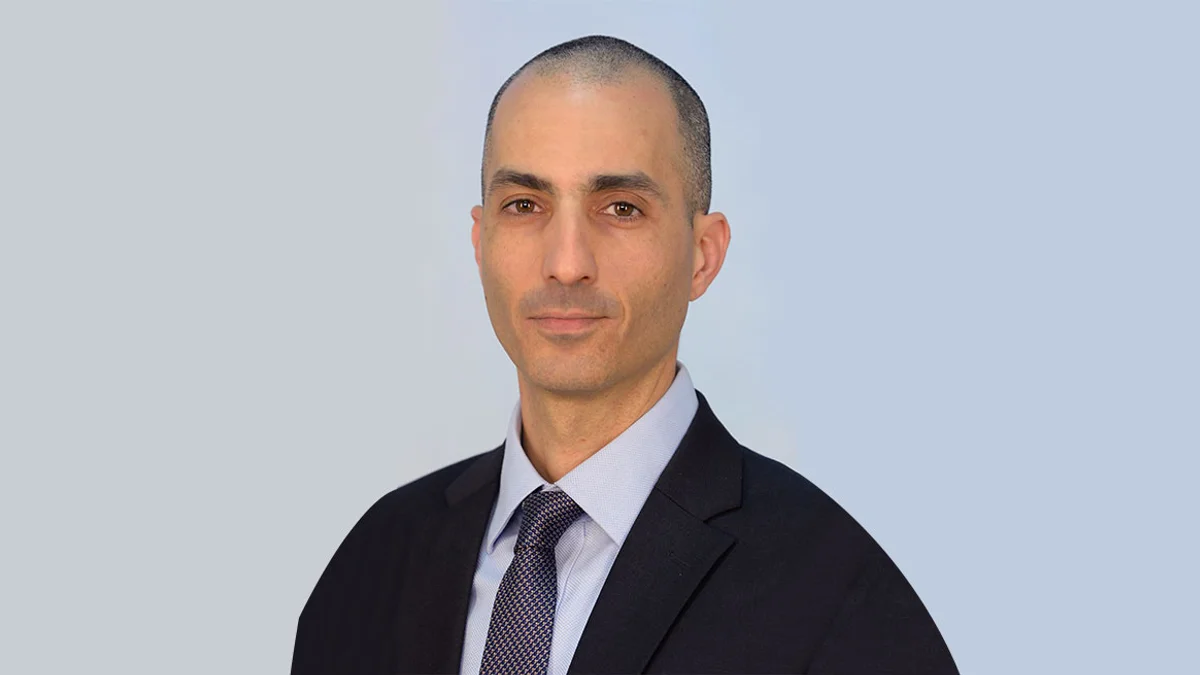
Rare Supreme Court decision: Artist to be evicted from his home due to massive debts
Ariel Palzig owes 24 million shekels to Meitav Mimun. He pledged the complex he owns on Mount Zion, which includes a commercial wing and a residential wing, as collateral. The Supreme Court rules: he must vacate the entire complex for its realization.
Artist and sculptor Ariel Palzig will be evicted from his home in the complex he built on Mount Zion due to massive debts to the Meitav Mimun partnership, after he also pledged the residential wing of the complex as collateral. Supreme Court Justice Gila Canfi-Steinitz rejected Palzig's request to appeal the decision of the Tel Aviv District Court and, in an exceptional manner, approved the eviction from a residential apartment after it was determined that the partnership must finance alternative housing for him.
80-year-old Palzig said in his request that he had dedicated the last six decades to building a unique complex on Mount Zion. According to him, he encountered severe liquidity difficulties due to the coronavirus and therefore could not meet the repayment of the 14 million shekel loan. He claims that the value of the complex currently stands at 42 million shekels. Palzig pledged the entire complex to Meitav Mimun — both the commercial wing and the residential wing.
In February 2025, the partnership began realization proceedings, a receiver was appointed, and the Execution Office registrar set the alternative housing fees for two years and the date of Palzig's eviction. He asked the Tel Aviv District Court to split the pledge so that it would only apply to the commercial wing, and in April, Judge Hari Kirsh granted the parties an extension in an attempt to reach an agreement.
According to Canfi-Steinitz, during this period the applicant presented various proposals for purchasing the property or providing third-party financing in a way that would allow the repayment of his debt to the respondent. These proposals were examined by the respondent, and accordingly, additional extensions were granted to the parties to formulate an arrangement. However, the applicant's proposals did not mature into an arrangement; and it was even noted regarding them by the court that, in its impression, these were nothing more than 'attempts to delay the end, which are not accompanied by bringing a real and full solution for debt repayment'.
Kirsh rejected the request, noting that Palzig's current debt stands at 24 million shekels, and the sale of the commercial wing alone would not be enough to cover it. Palzig's attempt to reduce the scope of the collateral would harm the entire credit market, which is based on the ability of lenders to effectively realize collateral. Kirsh noted that the root of the problem is Palzig's decision to pledge the entire complex, and ordered him to vacate by July 19. A few days earlier, Palzig requested a two-month extension, claiming he was about to borrow 18.5 million shekels and repay the debt — but this move also did not mature, and the eviction date was set for August 30.
Palzig asked the Supreme Court for another delay, claiming that the time was needed for him to find financing to repay the debt and that the eviction would cause him irreversible damage. Canfi-Steinitz rejected the request outright due to the factual finding that the sale of the commercial wing alone would not be enough. The outline presented by Palzig is also insufficient, as, as mentioned, he offered to repay 5.5 million shekels less than the debt.
It was determined that the accepted starting point tends towards delaying eviction from a residential apartment, but additional considerations must be taken into account: the right of the collateral holder to realize it as soon as possible, the balance of damages between the applicant and the respondent, the debtor's ability to effectively repay the debt from other sources, and more. Canfi-Steinitz reiterates that Palzig pledged the entire complex as a single unit, and adds: allowing a debtor to delay the realization of collateral for a prolonged period, let alone reduce its scope when the realization date arrives, will diminish the ability of lenders to rely on the collateral provided to them, and thus will significantly harm commercial life and the willingness of various entities to provide credit, and will even increase the cost of credit.
In our case, the execution file was opened about 18 months ago. During this period, the respondent was unable to collect from the applicant — who in the meantime filed a series of requests to reshape the scope of the collateral and the conditions for its realization. This state of affairs undermines the principles underlying the pledge mechanism and harms the respondent's reliance on the collateral in its possession. According to Canfi-Steinitz, the claim that the irreversible nature of the collateral realization justifies, in itself, delaying the realization, empties the institution of collateral of its content. She noted that if the value of the complex is indeed much higher than the debt, then after its realization, Palzig will be able to finance suitable alternative housing, and thus the damage caused to him will be reduced.
Canfi-Steinitz also said that the value of the commercial wing was estimated in 2021 at 10-12 million shekels, and in 2024 — at 15 million shekels (when the debt is 24 million shekels). Palzig himself presented an offer from a third party to purchase the entire complex for 20 million shekels. Although he did present an expert opinion according to which the value of the commercial wing alone is 23 million shekels, it is not satisfactory. Palzig was represented by attorney Daniel Goldman.