Abbas Strengthens Ties with Greece and Cyprus Despite Regional Tensions
Palestinian Authority President Mahmoud Abbas is strengthening strategic ties with Greece and Cyprus, prompting questions in Turkey about diverging diplomatic priorities between Ankara and the Palestinian leadership.
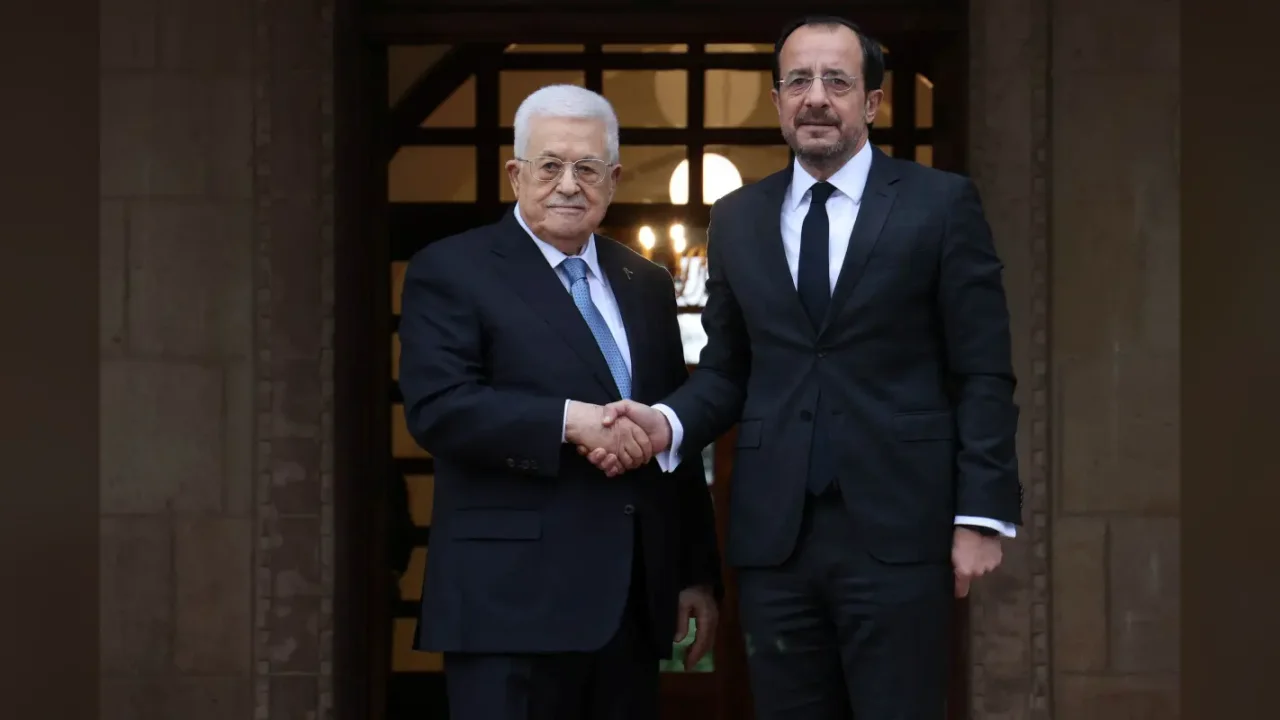
Palestinian Authority President Mahmoud Abbas (Abu Mazen) has been strengthening ties with Greece and Cyprus, two nations that maintain strategic cooperation with Israel and are considered regional rivals of Ankara. This diplomatic approach has sparked debate in Turkey regarding Abbas's strategy and the growing gap between the Palestinian Authority's interests and the policies of Turkish President Recep Tayyip Erdogan.
Turkish analyst Muhammad Taha Yildirim examined why Abbas has chosen to meet with Greek and Cypriot leaders while Turkey invests extensive political efforts in the Palestinian cause. According to Yildirim, this is not a betrayal by the Palestinian Authority, but rather a calculated political maneuver aimed at preserving international standing, securing financial support, and reinforcing the legitimacy of its leadership.
The Palestinian Division and Strategic Interests
Yildirim highlights the profound differences between the two main power centers in the Palestinian arena: Fatah, led by Abbas, and Hamas. Fatah operates within a secular-national framework and, since the Oslo Accords, has favored the diplomatic track and negotiations. The Palestinian Authority, controlled by Fatah, enjoys international recognition and maintains formal ties with global governments and institutions. In contrast, Hamas is a terrorist organization that has prioritized armed struggle and has controlled the Gaza Strip since taking it over in 2007.
These differences mean each faction pursues different priorities and partners to strengthen its standing. For Abbas, expanding relations with Greece and Cyprus does not contradict ties with Turkey. Instead, it allows the Palestinian Authority to broaden its international backing, cement its status as the official Palestinian representative, and secure aid for the reconstruction of the Gaza Strip.
Cyprus as a Bridge and Humanitarian Hub
The rapprochement with Cyprus was highlighted during Abbas's visit to the island on October 29-30, where he met with President Nikos Christodoulides. The leaders discussed bilateral relations, the situation in Gaza and the West Bank, humanitarian aid, and relations between the Palestinian Authority and the European Union.
Cyprus recognized the Palestinian state in 1988 and has expanded its involvement in delivering humanitarian assistance to Gaza through the "Amalthea" maritime corridor. According to Cypriot government data, over 37,000 tons of humanitarian aid had been delivered to Gaza residents under this initiative by August 2026. Concurrently, Cyprus maintains close ties with Israel, positioning Nicosia as a potential mediator for the Palestinian Authority to advance diplomatic channels with Jerusalem.
Meanwhile, Greece places special emphasis on the Palestinian Authority's status. During a meeting between Greek Prime Minister Kyriakos Mitsotakis and Abbas in Ramallah in December 2025, Athens affirmed that it views the Palestinian Authority as the legitimate representative of the Palestinian people and expressed readiness to participate in Gaza's reconstruction efforts.
Ankara's Pragmatic Stance
Addressing why Ankara does not react harshly to the Palestinian leadership's outreach to its regional rivals, Yildirim suggests Turkey wishes to maintain its position as a key player capable of engaging with both the Palestinian Authority and Hamas. A direct confrontation with Abbas, he explains, could damage ties with the internationally recognized Palestinian leadership and diminish Turkey's ability to influence political developments.
Furthermore, the Eastern Mediterranean disputes between Turkey, Greece, and Cyprus are viewed as a separate political arena. Ankara prefers not to turn every meeting between Abbas and its rivals into a bilateral crisis, mirroring its own pragmatic foreign policy of maintaining relations with countries of conflicting interests, such as being a NATO member while engaging with Russia.