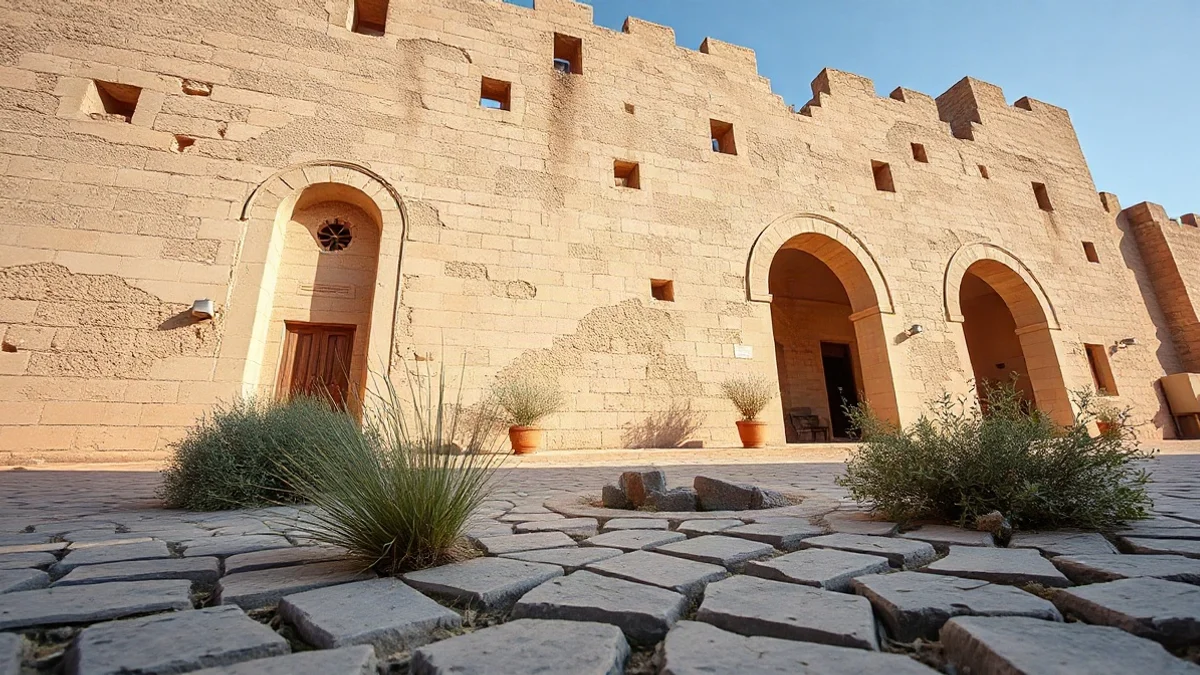
Italian con artist faked a historical site and duped thousands of tourists
For long months, crowds of tourists visiting the town of Arconiano in northern Italy heaped praise on a spectacular "Greek amphitheater" they found on a hilltop. The site received a perfect five-star rating on TripAdvisor before it was revealed to be a modern forgery.
For long months, crowds of tourists visiting the town of Arconiano in northern Italy did not stop heaping praise on the spectacular "Greek amphitheater" they found on the hilltop. "An enchanted place," "beyond time and space," and "one of the best places I have been to," were written in reviews on the TripAdvisor website, where the site received a perfect score of five stars.
However, it recently turned out that the description "beyond time" was more accurate than expected: the impressive site, which claimed to be 2,000 years old, was not Greek, not Roman, and not even ancient. In fact, it was built from scratch by the owner of the place, Franco Malusso, who used a modern construction company, tons of concrete, and even Styrofoam. This week, after a legal battle that lasted a decade, Malusso was sent to 28 months in prison for forging works of art, building without a permit, and destroying a protected landscape.
Malusso, who presented himself as a historian and a "loyal guardian" of the site, built seats and stairs on the spectacular hill in the town that received an artificial "aging treatment" to mislead visitors. He added concrete columns and plaster statues around a small lake he dug himself, and charged visitors an entrance fee that reached up to 40 euros per person — about 160 NIS, while offering private tours at a price of about 600 euros.
In the guided tours he conducted, he sold tourists absurd stories about how Julius Caesar, Cleopatra, and even Juliet Capulet — Shakespeare's fictional character — visited the historical site. The Italian police, who opened an investigation as early as 2016, were stunned by the audacity: the investigators noted that beyond the fact that the construction was clearly modern, the Greeks never established a settlement in this area of northern Italy, and the structure itself was not an amphitheater at all, but a regular theater.
Despite the clear evidence on the ground, Malusso continued to claim throughout the process that he discovered the site by chance when it was exposed after a mudslide. In court, he even tried to argue a particularly creative defense: according to him, the forgery was "so obvious" that no reasonable person should have believed it was a real archaeological site.
However, the judges were not impressed by the explanations and determined that Malusso knowingly deceived the public and damaged a protected UNESCO forest area to establish his illegal venture. Now, while the Italian con artist serves his sentence behind bars, the authorities in Italy are preparing for an expensive and complex operation to demolish the fake structure — a process that, ironically, will require real archaeological excavations to restore the hill to its original state.