Trump Kicks Off Unprecedented Republican Midterm Conference in Dallas
President Donald Trump opens a massive two-day Republican midterm conference in Dallas to rally support for tight congressional races amid low approval ratings. The unprecedented event aims to channel MAGA enthusiasm and prevent traditional midterm losses.
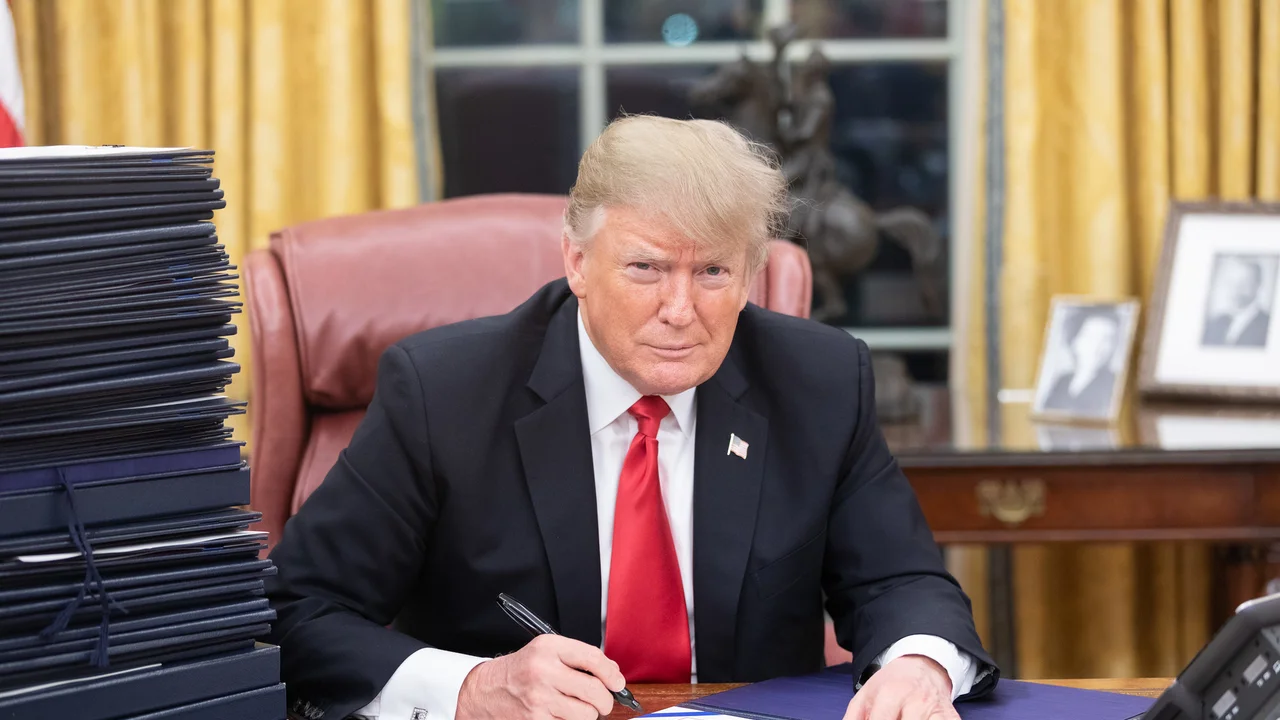
If one looks for an Israeli analogy to the Republican conference opening today (Wednesday) in Dallas, it resembles a massive revival meeting. There is no presidential candidate to choose, no new platform to ratify, and no delegate votes to cast. Instead, there is a packed arena, a television spectacle, dozens of candidates and party leaders, and at the center—Donald Trump, acting as the political spiritual leader of the movement he built (MAGA).
The president himself stoked the excitement on the eve of the event. "The Republican National Convention in Dallas is 'red hot'!" he wrote on Truth Social. According to him, all tickets for the American Airlines Center, home of the Dallas Mavericks, have completely sold out.
Trump's Strategy for Tight Races
However, the real objective behind Trump's two-day push became clear when he added: "We are really asking that only candidates who are in close races—just ahead, just behind, or tied—are the ones who speak. We want to save the stage for them. We don't need people who are leading by 45 percent and have been in office for 30 years." Trump announced he would deliver a keynote speech on the first night and return on Thursday to "close out the event."
This marks the first time the Republican Party has held a conference of this scale ahead of a midterm election. The idea was conceived by Trump and his team to address a well-known vulnerability: when Trump himself is not on the ballot, his loyal base tends to turn out in lower numbers at the polls.
In January, the Republican National Committee amended its rules to permit the conference. RNC Chairman Joe Gruters explained at the time that the goal is "to make history"—specifically, to break the historical pattern where the sitting president's party typically loses power in the midterms.
Polling Pressures and Midterm Stakes
Trump's need for such a maneuver is especially acute right now. A recent Reuters/Ipsos poll placed his job approval rating at just 33%, the lowest point of his current term, amid widespread dissatisfaction with the economy and the ongoing conflict involving Iran.
The same poll also recorded higher enthusiasm among Democratic voters ahead of November. Republicans hold a razor-thin majority in Congress, and the November 3 elections will determine whether Trump can continue advancing his legislative agenda during his final two years in office or if he will face at least one chamber controlled by Democrats.
Therefore, Trump is effectively attempting to insert himself onto the ballot without his name actually appearing on it. The conference is designed to channel the high-energy momentum of MAGA rallies from presidential election cycles into hundreds of local races for the Senate, House of Representatives, and governorships. More than 20,000 people are expected to descend upon the American Airlines Center, with RNC officials boasting that the event will surpass the scale of the 2024 Republican National Convention in Milwaukee.
Star-Studded Lineup and Tense Calculations
Nearly the entire upper echelon of the Trumpist movement will take the stage. Vice President JD Vance is scheduled to deliver a major address, alongside Treasury Secretary Scott Bessent, Attorney General Todd Blanche, Health Secretary Robert F. Kennedy Jr., Dr. Mehmet Oz, Housing Secretary Scott Turner, former White House Press Secretary Karoline Leavitt, and Donald Trump Jr. Congressional leadership will be represented by House Speaker Mike Johnson, Senate Majority Whip John Barrasso, Senator Tim Scott, and top House leaders.
Texas naturally occupies a central role. Governor Greg Abbott, Lieutenant Governor Dan Patrick, Senator Ted Cruz, and Attorney General Ken Paxton are all slated to speak. Paxton is also the Republican nominee for the Senate in a fiercely contested race against Democrat James Telerico—precisely the kind of tight race Trump wants to thrust into the spotlight.
Additional candidates from competitive districts nationwide will be given precious minutes on stage, supplanting senior senators and congressmen whom Trump asked to stay away if their re-elections are already guaranteed.
The event is not merely a show of unity. Its very existence exposes Republican anxiety regarding November. Some candidates in tight races actually prefer to remain in their home districts rather than travel to Dallas, while others must weigh whether a public embrace from a president boasting a 33% approval rating will energize the MAGA base or alienate crucial independent voters.
Yet Trump harbors no doubts about who should occupy center stage. He will speak tonight, return tomorrow night, and attempt a feat no Republican president has ever tried in this fashion: transforming a midterm conference into a two-day Trump festival, leveraging his personal party dominance to drive his followers to the ballot box even when he is absent from the ballot.