Renovation Contractors Face Labor Shortages and Push for Automation in Israel
Israel's renovation sector tackles severe labor shortages and unregistered operators through regulatory reforms, recruitment diversification, and the introduction of advanced construction robotics.
The Israeli renovation sector, comprising approximately 5,000 registered contractors alongside numerous unregistered operators, is facing an acute labor shortage and regulatory challenges. Speaking at the Israel Renovation Contractors Association conference at the Dead Sea, Amit Graydi, Registrar of Contractors at the Ministry of Construction and Housing, emphasized that unregulated competition is unfair and unhealthy. Graydi shared a personal experience where damage from an Iranian missile near his home forced him to seek renovation services, revealing that finding a registered contractor took nine months. To address this, Graydi outlined measures including raising the work volume threshold for basic classification, safety training courses, and a new registration track for jobs up to 200,000 NIS. He also announced plans to pursue administrative enforcement and financial sanctions against unregistered operators.
Labor and safety standards were further addressed by Eng. Hezi Schwartzman, Chief Labor Inspector, who stressed the importance of expanding responsibility chains to include developers. Meanwhile, the severe workforce shortage remains a central crisis. With Palestinian workers barred from entry since October 7, the sector relies on foreign or Israeli workers, both of which face deployment hurdles. Asher Vituri of the Renovation Contractors Association noted that workers from India and Sri Lanka require extensive training despite rigorous screening, and criticized delays in bilateral (G2G) and private (B2B) recruitment channels. Conversely, Michal Aran from the Ministry of Construction and Housing defended the diversification of recruitment routes, stating that quotas for the private track remain active and barriers have been removed.
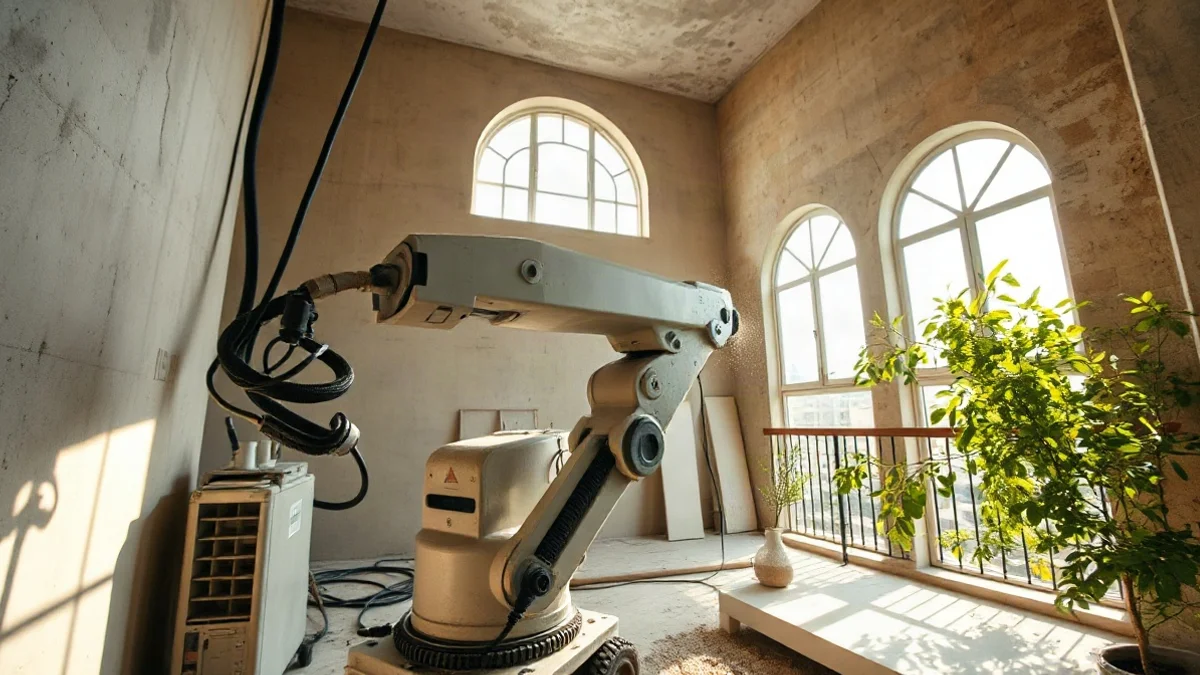
Technology and automation emerged as a potential long-term solution to the labor crunch. HUBTECH and the External Studies Unit showcased a renovation robot capable of plastering, painting, tiling, and laying blocks at four times the speed of manual labor. Association Chairman Eran Sib noted that while robots cannot replace human contractors, they ease heavy labor. He referenced Nvidia's CEO in predicting that future billionaires will emerge from trade sectors like renovation. Dikla Avital Abutbul, CEO of HUBTECH, emphasized that automation acts as a force multiplier rather than a replacement, empowering contractors to operate safely and efficiently with advanced technologies.