Facing Eviction: The Human Cost of Israel's Shrinking Public Housing
Lilach Almakies, a single mother in Lod, faces imminent eviction from her lifelong Amidar public housing apartment due to bureaucratic technicalities. Her case highlights a wider crisis as the Ministry of Housing issues hundreds of similar orders amidst a shrinking housing inventory.
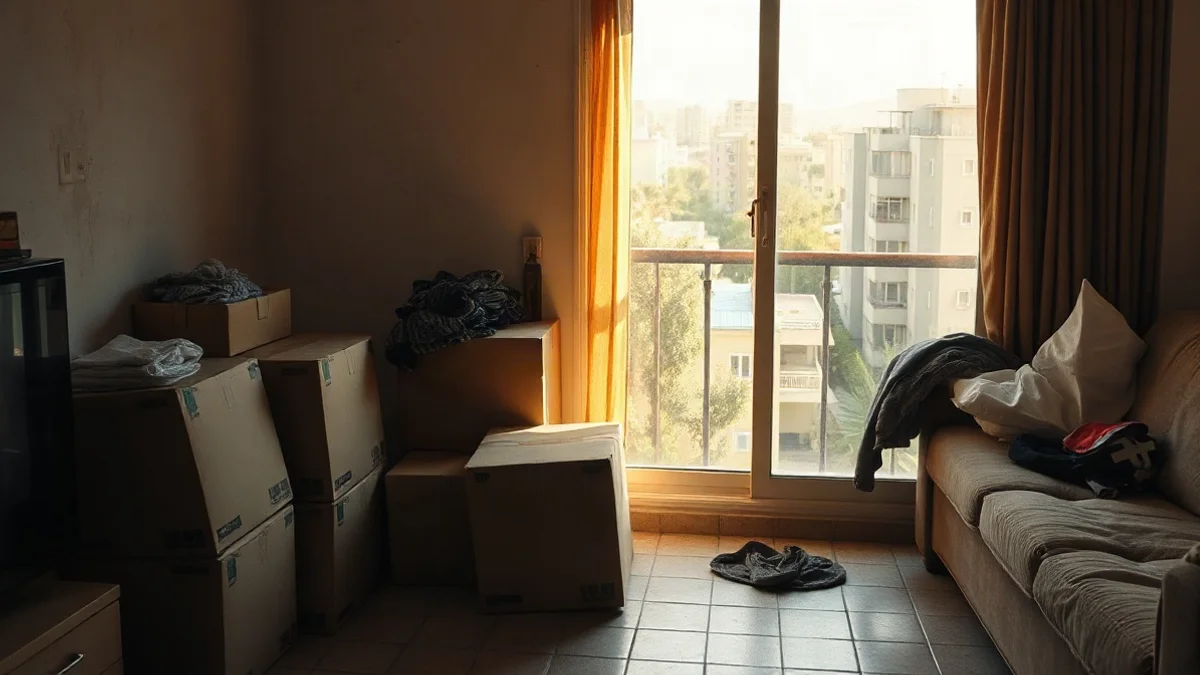
In the living room of Lilach Almakies's Amidar public housing apartment in Lod, un-folded laundry, letters from the National Insurance Institute, her teenagers' Hapoel Tel Aviv scarves, and the clothes of her octogenarian father lie mixed together. Soon, barring a last-minute miracle, she must begin packing. Three generations and fifty years of life will be crammed into cardboard boxes and moved elsewhere. How, where, and most importantly, with what money she still does not know.
"Actually, I should start packing already," she says, "but I am incapable of it. Incapable of telling the children that we have no home." The eviction order from the Ministry of Construction and Housing arrived about two months ago, setting the execution date for mid-December. The ministry states that the procedure has been ongoing for a long time and that warnings regarding the pending eviction were sent months and years ago.
Lilach, a single mother of three, recalls a phone call from Amidar and the housing ministry about four years ago, during the shiva mourning period for her mother, in whose name the apartment was registered. Following the mother's passing, the ministry demanded that the family vacate the property because the tenancy rights were registered solely in the mother's name. Over the years, the mother had declared herself divorced on official documents—likely to prevent her husband's extensive debts from attaching to her name and to protect her children. In reality, the father continued to live in the apartment all those years.
The Bureaucratic Trap of Public Housing
"We didn't know about it," Lilach says. The family suspects the mother also declared herself divorced and a single mother to increase her chances of purchasing the apartment under a historical public housing acquisition track that is no longer active. She did not manage to complete the purchase before she died, leaving no one to ask.
After that phone call during the shiva, Lilach tried to obtain answers and regularize her continued residency in the apartment. "I turned to Amidar and the municipality. They told me there was nothing to be done—that I had to wait for an eviction order and only then could I try to fight the decision. So here is the order. What now?"
Lilach's eviction order joins approximately 280 similar orders issued this year by the Ministry of Construction and Housing to public housing occupants classified as "intruders"—individuals residing in apartments without formal eligibility. Roughly two-thirds of these orders have already been executed, with the remainder pending in the coming weeks.
However, the label "intruder" rarely reflects reality. While some occupants live in properties that are not theirs, many others have lived in public housing for decades, and were even born there, but lost their eligibility due to various technicalities: a registered parent passed away, residency was not continuous, or they lived with a partner who was eligible while they themselves were never formally recognized.
Surviving Poverty and Working Two Jobs
On paper, the Ministry of Construction and Housing is correct in stating that these tenants do not meet the prescribed criteria. Yet Lilach's story illustrates the vast chasm between rigid bureaucratic rules and human reality. Born in this very apartment, Lilach tried to build an independent life and lived in rented apartments for a period. She struggled to pay rent even after her divorce, which left her with heavy debts and as the sole breadwinner.
"I lived in poverty," she says. "My electricity would get cut off; I was in situations where I didn't have food for the kids, to that extent. A meat meal meant chicken wings for years, and not even that always. In retrospect, I discovered that relatives posted requests for food donations for me, and I didn't even know." Slowly and steadily, she managed to rebuild her life: she obtained a driver's license, bought an old car, and found one job after another—working two simultaneous jobs to support her children. "I am surviving this life, truly surviving," she says.
Following her mother's passing, Lilach returned to live in the Amidar apartment where she grew up, alongside her father. Recently, Lilach was forced to give up one of her jobs to care for one of her children who was injured in an accident. Still, she works hard and earns an honest living.
Absurdly, this very fact works against her: in order to receive eligibility for an Amidar apartment in her own name, she must meet the state's stringent criteria of having at least three children and receiving a guaranteed income supplement from the state. "Instead of encouraging us to go out to work, do you want me to quit my livelihood now?" she wonders.
Shrinking Public Housing Inventory
"The public housing inventory is a limited public resource," the Ministry of Construction and Housing explains regarding its efforts to evacuate ineligible tenants. And indeed, the resource is limited—and shrinking rapidly. Over the past 15 years, the public housing stock has decreased by nearly 20,000 apartments.
"It is a disgrace that the Ministry of Construction and Housing is working to evict hundreds of tenants from the most vulnerable populations—people living in poverty who have no alternative housing, no legal representation, and no ability to cope with state systems that trample their rights," says Danny Gigi, chairman of the Public Housing Forum, an advocacy organization working to advance the rights of public housing tenants.
In response, the Ministry of Construction and Housing stated: "Out of respect for personal privacy, the ministry does not discuss the personal circumstances of tenants in the media. As a rule, requests and appeals are reviewed by professional authorities in accordance with existing laws and regulations. It should be emphasized that eviction procedures are neither arbitrary nor immediate."