2019 Elections: Back to the Big Parties
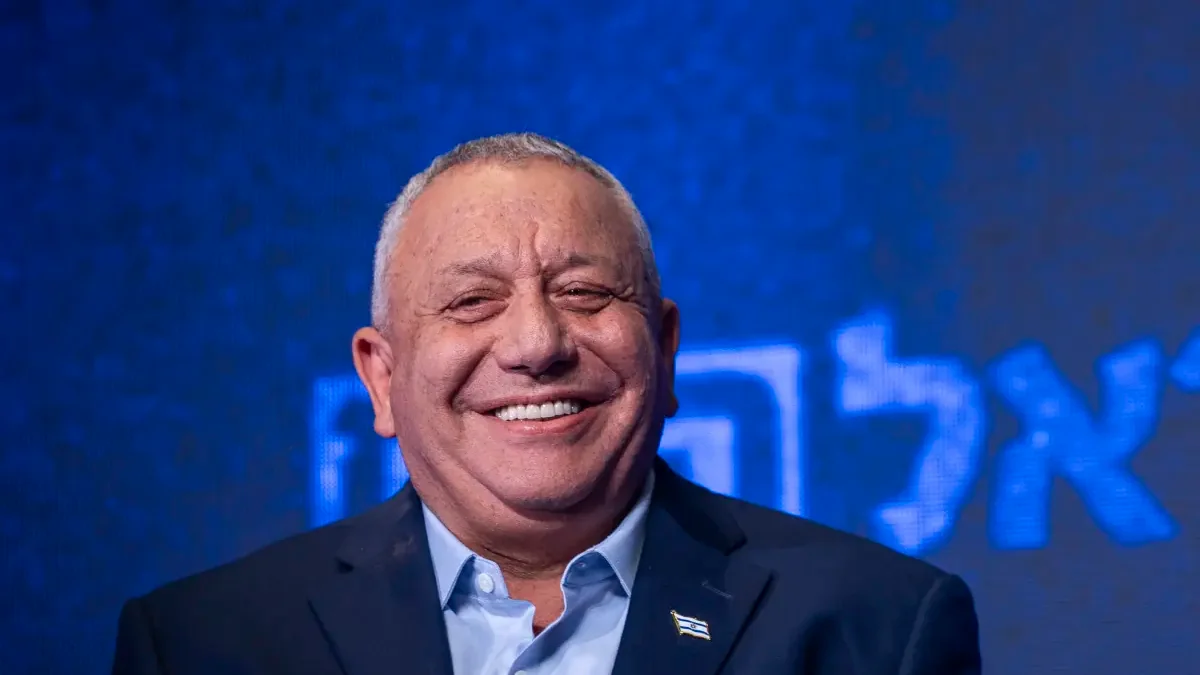
The April 2019 elections returned Israel to the era of two major parties, a battle that came at the expense of smaller factions and resulted in 8.6% of votes being wasted. Will another former Chief of Staff, Gadi Eisenkot, succeed in the 2026 elections where his predecessor failed in the battle to topple Benjamin Netanyahu?
The April 2019 election campaign returned the Israeli political system to the 80s, the era of two major parties. But this time, against the Likud, it was not the Labor party competing for leadership, but a new centrist party that many believed would end the rule of Benjamin Netanyahu and the Right.
After his victory in the 2015 elections, Netanyahu formed a right-wing government, but without Yisrael Beiteinu, whose leader Avigdor Lieberman chose to remain in the opposition. The fourth Netanyahu government faced significant challenges, primarily the nuclear agreement with Iran, which was perceived in Israel as a historical mistake guaranteeing Tehran a path to nuclear weapons.
Despite criticism of Netanyahu's policy, Isaac Herzog conducted behind-the-scenes negotiations for the Zionist Union to join the government. However, due to internal opposition, in May 2016 Netanyahu reached an agreement with Lieberman to appoint him Minister of Defense. The failure of negotiations damaged Herzog, and in the July 2017 Labor leadership elections, Avi Gabbay, a former minister from the Kulanu party, won.
At that time, outgoing Chief of Staff Benny Gantz was gaining traction as a major political figure, with polls in late 2018 predicting his party would be the second largest after the Likud.
Fearing he could not win the support of soft right-wing voters, Gantz established the "Hosen Le-Israel" (Israel Resilience) party and rejected offers to lead the Zionist Union, which plummeted in the polls and was dismantled by Gabbay in January 2019, to the astonishment of Tzipi Livni.
Moshe Ya'alon, who served as Defense Minister under Netanyahu, was the first to join Gantz, followed by a merger with Yair Lapid's Yesh Atid. Gabi Ashkenazi, the Chief of Staff whom Gantz succeeded, also joined the new "Blue and White" party, which overnight became the only significant alternative to the Likud and Netanyahu. Political unions and splits were not limited to the center-left; Naftali Bennett and Ayelet Shaked left The Jewish Home to form the "New Right" party, while religious Zionist parties united into the "Union of Right-Wing Parties" with Netanyahu's assistance.
As election day approached, uncertainty prevailed as seven parties hovered around the electoral threshold. The battle for votes became strategic, with concerns that Blue and White and the Likud would "drain" the votes of smaller parties. The results confirmed these fears: the Likud and Blue and White each won 35 seats, Labor collapsed to 6, and Bennett fell just 1,500 votes short of the threshold.
In summary, the April 2019 elections returned us to the era of two major parties, a battle that came at the expense of smaller ones and led to 8.6% of votes being wasted—nearly double the previous election. Although Blue and White proved a governing alternative existed, the right-wing bloc won with 65 seats.
Will another former Chief of Staff, Gadi Eisenkot, succeed in the 2026 elections where his predecessor failed in the battle to topple Netanyahu? According to most polls, the answer is positive, and Israel appears to be on the path to a turnaround.
Dr. Ori Wertman is a lecturer and research fellow at the University of South Wales in the UK. Author of the book "Crash: The Labor Party 1992-2024".