The basketball scientist who lived in the future: farewell to Don Nelson, the man who changed the NBA forever
The legendary coach passed away at the age of 86, leaving a legacy that included the invention of "small ball," the point-forward position, and the European revolution. "The parquet was an experimental laboratory for him."
"He understands basketball. One day he will be a coach, and he will be a really good coach." (Red Auerbach on Don Nelson, his player with the Boston Celtics, in a 1974 interview).
Don Nelson, who died this week at the age of 86, did not have an obsession with winning, which is a bit strange for someone who won five championships as a player and finished his 31-year career as a coach with the second-highest number of wins in history (1,335; Gregg Popovich passed him in 2022). But Nelson was a lover of basketball. The parquet was an experimental laboratory for him where one could improve the sport, expand it, change its horizon, and put it into different states of consciousness. Nelson did not oppose winning, but it was not the purpose.
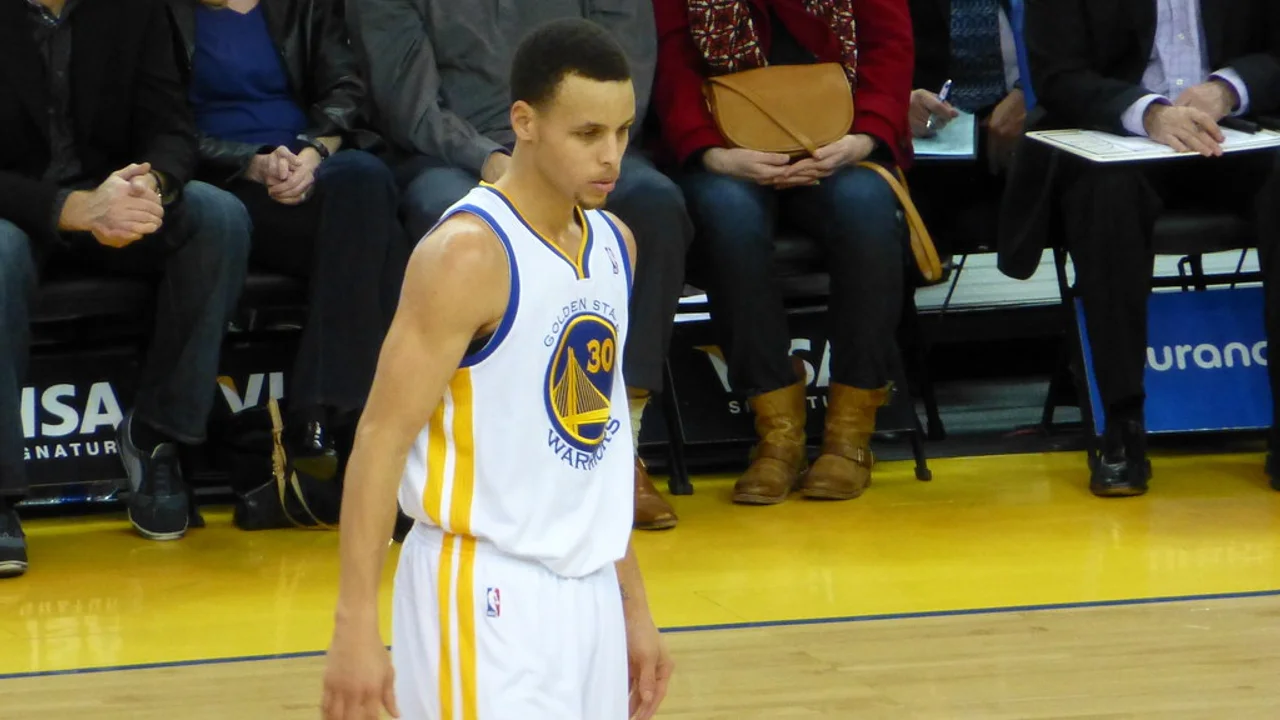
Steph Curry, whom Nelson coached for one season—the coach's last—said after Nelson passed away: "He didn't like rookies, but he was one of the reasons Golden State drafted me. He taught me a lot in the only year I played for him, challenged me, and forced me to be the best version of myself on the court."
The mastermind of the European revolution, Ricky Pierce, was a better forward than Paul Pressey in Milwaukee, Nelson's first stop as a coach, but Nelson did not want to give up Pressey's minutes, so he invented the point-forward position where he handled the ball and ran the offense. Nelson did not invent Scottie Pippen and Grant Hill, but he invented the ultimate position for their skills. He concocted "small ball." Nelson never had the luck to coach a truly talented big man, and to compensate for that, he played small and talented lineups that played a fast game with improvised centers like Dirk Nowitzki or Stephen Jackson. Basketball that is all about mismatches that forced the opponent to adapt to Nelson's teams.
The coach did not invent Draymond Green, but he invented the basketball that helped Green reach the best version of himself. Nelson devised for Nowitzki the concept of a center who hits threes (an idea Nelson took to absurd realms when he demanded Manute Bol, 7'7", to shoot from outside) and helped space the floor to its current format, but their connection signaled something bigger, something that changed the topography of the league. Hakeem Olajuwon and Patrick Ewing were stars born outside the USA but passed through American colleges. Great stars from Europe existed before Nowitzki, but Detlef Schrempf, Vlade Divac, and Toni Kukoč were not players around whom a team was built; Arvydas Sabonis arrived too late, Dražen Petrović died too early. Nelson and his son Donnie bet on foreign basketball. They built a concept around Nowitzki. After Nowitzki, the real flood of European basketball into the NBA arrived and changed the league. Nelson's teams brought the first Soviet player in its history and the first Chinese player to the league. Nelson did not invent Nikola Jokić, Giannis Antetokounmpo, or Luka Dončić (whom Donnie Nelson helped bring to Dallas), but he invented the European revolution.
"Thank you not only for drafting me but also for believing in me," wrote Nowitzki, who collaborated with the Canadian Steve Nash in Nelson's Dallas. "You saw things in my game before I even knew I could do them. My career would not have developed as it did without the freedom you gave me to play my game."
Nelson was an innovator, original, boundary-crossing, and fearless. Nelson would invent something out of complete belief in an idea, and immediately after implementing it, he was busy challenging that same idea with new ideas. He had an allergy to conventions. He led teams to achievements, division titles, and playoff upsets, and he never cried about what he didn't have. No center? Nelson took the "Nellie Ball" from Milwaukee and put it in Golden State, with Mitch Richmond, Tim Hardaway, and Chris Mullin (who were nicknamed "RUN TMC"). Shaquille O'Neal is a paint terrorist, but a bad free-throw shooter? Nelson invented the "Hack-a-Shaq" that sent Shaq to the line (Nelson experimented with the method on Dennis Rodman, which caused his player, Bubba Wells, to break an NBA record by committing six fouls in three minutes of play).
Almost everything you see in recent years on NBA courts came from the laboratory of the "mad professor" Don Nelson. Chris Webber could not stand the fact that Nelson wanted him to be a center and demanded a release. Ewing could not stand Nelson's fun and funky basketball and demanded he go home after 59 games (a Knicks fan wrote: "Bringing in Nelson after Pat Riley is like bringing in The Big Lebowski to replace a shark in an Armani suit on Wall Street"), but that testified more about them. They lived the game in its present; they did not let their imagination run wild as happened inside Nelson's head. This is perhaps Nelson's greatest legacy to basketball: he always lived it in the future; he was always there, a second before it happened and was marketed en masse. Don Nelson, the basketball scientist, died on Sunday.