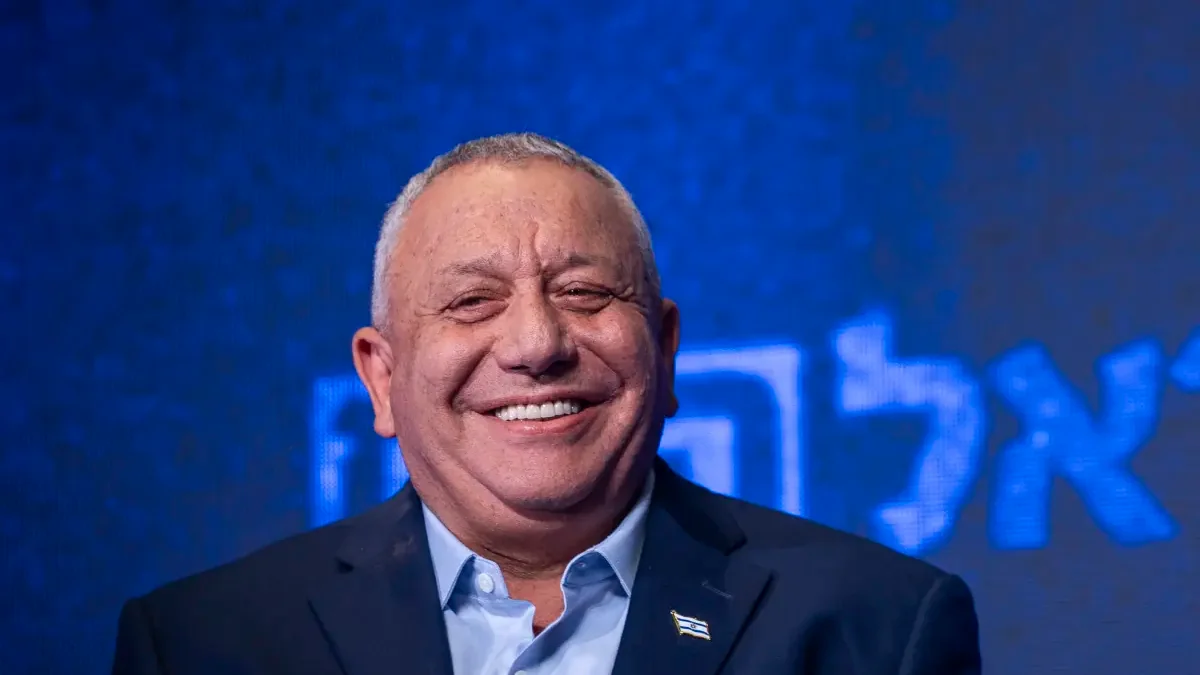
Coalition Chairman Ofir Katz: "We were too gentle on the reform. After the elections, we will go all the way"
In an interview with "120 and One", ynet's political podcast, the Likud MK claims that opposition to the legislation was not widespread: "There were not a million people in the streets. The media presented it that way." On the attempt to oust Netanyahu after 7/10: "I had concerns, it's a dangerous move." On former boss Gilad Erdan: "A Likudnik does not vote for satellite parties." On the storm over reserved spots before the primaries: "The field asked Netanyahu to see new faces." And why was Netanyahu's chief of staff sent to Aryeh Deri's house at 3:00 AM?
"120 and One" is the political podcast of ynet hosted by Moran Azulay, who hosts decision-makers, legislators, and reality-shapers in the State of Israel every week. You are invited to follow us on Be.po, Israel's podcast home, and also on Spotify, Apple Podcasts, YouTube, and everywhere else you are used to listening.
The Likud party has been neck-deep in two storms in recent weeks: the first concerns "primary fever," and the second broke out with the exposure of an internal organization to oust Benjamin Netanyahu after the October 7 massacre. For the coalition chairman, MK Ofir Katz, this is the final chord of four long years in which he navigated the coalition between the difficulties of the judicial reform and the trauma of the war. In an interview with "120 and One," he explains how he found out in real-time about the attempt to oust the Prime Minister and why he supported Netanyahu's unusual request for reserved spots.
Primaries and Reserved Spots
The weeks leading up to the primaries that will take place tomorrow (Monday) kept Likud in the headlines but did not present the party in a positive light: candidates who understand that many of them will not enter the next Knesset are competing among themselves in videos and extreme statements, and the struggle over the unusual number of reserved spots that Netanyahu requested deteriorated into legal battles and public criticism against the party that always boasted of its democratic mechanism.
According to MK Katz, the media coverage of the primaries is responsible for how the process is perceived by the public: "It's because of how it's broadcast to the public. They always try to take the less beautiful parts, but most parts of the primaries are wonderful. This is democracy at its best. We are the largest and most vibrant party in Israel, and the primaries are the party's holiday. The Prime Minister wanted a larger number of reserved spots, certain parts of the faction wanted a smaller number, and we had to find the formula that would balance it. I think we found it."
When asked if it wasn't too much to demand ten reserved spots, including one for the Minister of Defense and one for a US resident, Katz replied: "There was a democratic vote and the members of the Center chose that way. There was a majority of more than 70%. This means that the movement placed its trust in the Prime Minister. I want to remind you that 90% vote for Likud because of Netanyahu. With all due respect to all the MKs who want other things, come on, if not for Netanyahu, you are not Knesset members. Not you and not me. He brings the votes."
The Putsch Attempt
Last month, MK Dan Illouz was interviewed here after his resignation from Likud and revealed that a few weeks after the October 7 massacre, a third of the faction organized to oust Netanyahu through a constructive vote of no confidence — an initiative that failed because those involved could not agree on who would be Prime Minister. In several media reports, it was claimed that the one behind the attempt was Minister Nir Barkat. Katz, as coalition chairman, was aware of the events in real-time.
"This move, during a war and when Israel is where it is, was a shame and a disgrace," he says. "Whoever did this didn't want to save the country, he thought about how to move Bibi and take the leadership. Our luck is that they didn't succeed. If not for Netanyahu, the situation in the war would have been a thousand times worse."
When asked if he was putting the scenario of a constructive vote of no confidence on the table, Katz replied: "I am speaking very generally, but some of them understand that I know." He added that he started conducting conversations with Knesset members, telling them that war is a time when we need to strengthen the Prime Minister.
Knesset Work and Judicial Reform
MK Katz claims that his role as coalition chairman will have a two-way influence on his success in the primaries: on one hand, most of the term he was required to spend in the Knesset, and therefore his connection with the Likud field suffered. On the other hand, according to him, the registered members saw his work and will reward him for it.
As an example, he tells about the night before the dissolution of the Knesset, when the coalition was required to "clear the table" and complete laws that were waiting for approval. One of them dealt with party funding. It is an election law that requires a majority of 61, but Shas chairman Aryeh Deri refused to support it and there was a fear that the coalition would not have a majority.
"The time was already around 1:00 AM and I only have 50 MKs," he recalls. "I explained this to the Prime Minister and he answered me: 'The law must pass. I am coming to the Knesset to help mobilize MKs.' So we just drove to the houses to knock on the doors in the middle of the night." When asked why they couldn't catch Aryeh Deri, he replied: "They knocked on his door but there was no answer."
Regarding the judicial reform, Katz stated: "I am not at peace because we didn't finish. We have some achievements but in the bottom line, we were too gentle and too soft in that we didn't go all the way." When asked what to expect if Likud forms the government again, he answered: "That we are going to continue everything we stopped and this time we won't stop. We need to go all the way and bring to a vote the laws we stopped."