The US maneuver to restrain Israel: "Trump understood that this is the only player that can help him"
Turkey is expanding its involvement in Lebanon with the quiet consent of Trump, who sees it as a counterweight to Israel. The move includes understandings with Hezbollah, mediation with Syria, the promotion of energy projects, and the possibility of deploying Turkish forces in southern Lebanon instead of UNIFIL.
The visit of Lebanese President Joseph Aoun to Turkey last month may signal the beginning of much deeper Turkish involvement in Lebanon — in the political, security, and economic spheres. This was claimed in an article published on the "Arab News" website by Dr. Dania Koleilat Khatib, an expert on US-Arab world relations.
According to her, Aoun's visit to Ankara was not merely a protocol visit, but part of a broader move in which Turkey is expected to play a more significant role in Lebanon, this time with the consent or at least the acquiescence of internal elements in Lebanon and regional actors. One of the central roles that Ankara has already played, according to the article, was in preventing a confrontation between Hezbollah and Syrian President Ahmad al-Shara. According to her, Turkey opened a channel with Hezbollah and worked to maintain a relatively quiet relationship between Lebanon and Syria.
The tension arose, among other things, after al-Shara demanded that Lebanon extradite Hezbollah members accused of committing crimes in Syria. At the same time, the organization was accused of providing shelter to Assad regime personnel who remained in the area. According to Khatib, the situation approached a point where a confrontation could have developed, but Turkish intervention helped neutralize the threat, and al-Shara backed down from his initial demand regarding Hezbollah members.
According to the analysis, Hezbollah is still concerned about the possibility of Syrian intervention, partly against the backdrop of increasing pressure from US President Donald Trump. In such a situation, relations with Turkey have become particularly significant for the organization.
In the past, it is claimed, Hezbollah was not interested in any regional power that would compete with Iranian influence in Syria or Lebanon. But now it sees the Turkish presence as a necessity. From the organization's perspective, the connection with Ankara is important not only to keep Damascus away from a confrontation with it, but also as a factor that may in the future provide it with some protection from Israel.
Khatib estimates that Hezbollah understands that the current situation in Lebanon is unsustainable. At this stage, the organization still enjoys the loyalty of a large part of the country's Shiite public, but according to her, this support is not guaranteed if the war and the displacement of the residents of the south continue.
Turkey as a guarantor of an arrangement with Israel?
One of the main challenges for Lebanon is finding a solution that will bring an end to the fighting and allow the displaced to return to their homes in the south of the country. According to Khatib, Hezbollah itself cannot provide such a solution, and it understands that if any arrangement is reached with Israel, a security guarantor will be needed. Here, according to her, Turkey may enter the picture. As a NATO member, it could in principle integrate into a force or security mechanism that would accompany a future arrangement. According to the analysis published in "Arab News", a Turkish presence could serve as a deterrent against Israel.
Even the camps opposing Hezbollah in Lebanon, it is claimed, welcome the possibility of deepening Turkish influence, because they see it as a way to reduce Iranian influence in the country. From their perspective, it is also a preferable alternative to direct Syrian intervention, which could reopen historical and sectarian tensions within Lebanon.
The article also links the move to the rapprochement of the Lebanese leadership with the US. Khatib quotes Karim Bitar, a Middle East expert at Sciences Po in Paris, who said that President Aoun and Prime Minister Najib Mikati are "putting all their eggs in one basket" — the American basket. According to her, Aoun would not have come to Ankara if the move did not have at least the backing or consent of Washington.
Trump, Erdogan, and the attempt to balance Israel
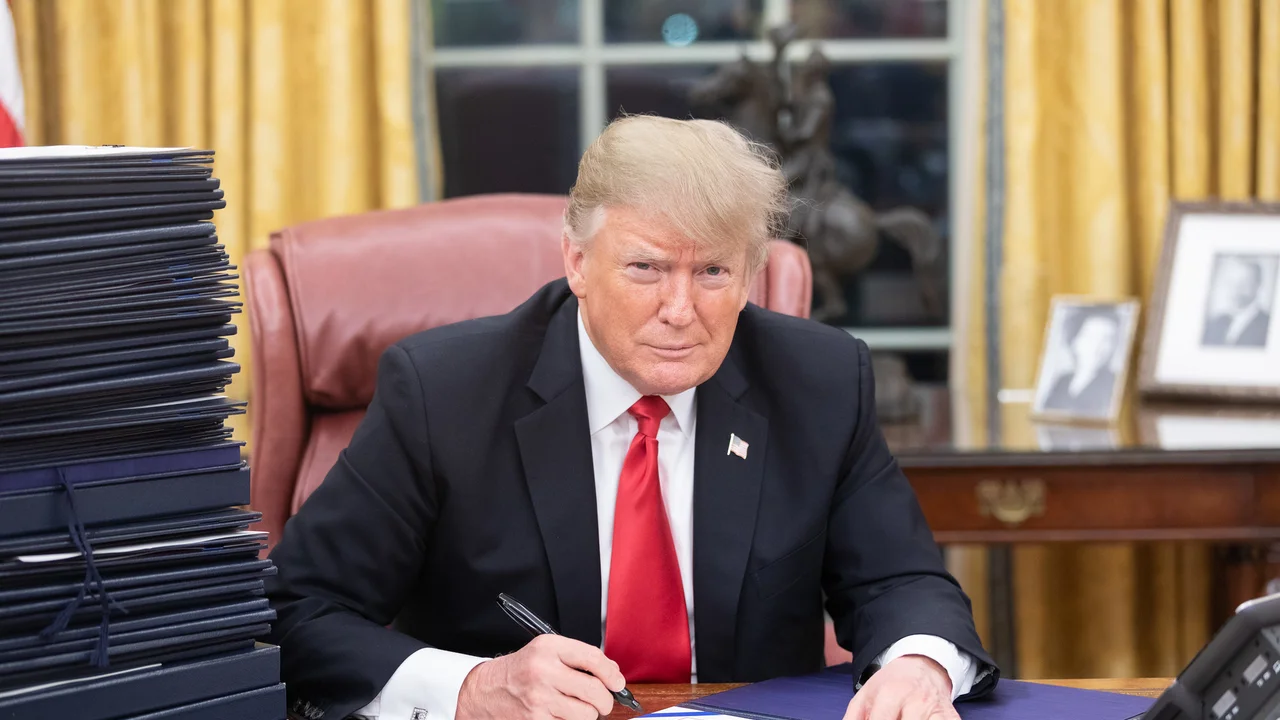
Khatib also gives special weight to the relationship between Turkish President Recep Tayyip Erdogan and US President Donald Trump. According to her, according to her sources, Erdogan enjoys the quiet consent of Trump to strengthen Turkey's status as a counterweight to Israel in the region.
According to the author, Trump understands well the limitations of the US's ability to exert pressure on Israel, and therefore the most effective way for him to restrain Tel Aviv may be through strengthening another significant regional player — Turkey. Khatib even claims that recent developments in relations between Turkey, Saudi Arabia, and Pakistan further strengthen Ankara's regional status. According to her, Turkey is no longer necessarily perceived as a competitor for Saudi influence, but as a country that can complement it.
Saudi-Turkish cooperation in Syria, according to her, has proven itself and therefore may serve as a model in Lebanon as well. Ankara itself also attaches growing importance to Lebanon. Erdogan said in June that Turkey's security begins "in Aleppo, in Damascus, and in Beirut". From Khatib's perspective, this reflects a Turkish perception that Syria and Lebanon are part of Ankara's direct security arena.
She also refers to statements in Israel against Turkey, and in particular to the words of former Prime Minister Naftali Bennett, who claimed that a "new Turkish threat is emerging" and that it is similar in nature to the Iranian threat. From the author's perspective, the very Israeli reference to Turkey as a threat reinforces the importance of Lebanon for Turkish national security.
The struggle also moves to energy and electricity
Another central issue is the end of the UNIFIL mission in southern Lebanon, which is expected to end on December 31. According to the article, the departure of the force could create a security vacuum in southern Lebanon and open the door for more extensive Israeli activity in the region. Germany suggested last month to examine the deployment of European forces instead of UNIFIL, but Turkey could also play a role in the new security apparatus.
The issue of southern Lebanon also came up in the talks Aoun held in Ankara, and according to the article, he requested Turkish assistance. Khatib estimates that after the departure of UNIFIL, Turkey may become one of the key players in shaping the new security arrangements in the region.
However, the Turkish interest in Lebanon is not limited to security. According to Khatib, Lebanon is also important as part of the broader struggle for energy and influence in the eastern Mediterranean. Lebanon's maritime border agreements with Cyprus and Syria may affect the distribution of energy resources in the region. The maritime demarcation agreement with Cyprus, which was made in 2025 without consultation with Ankara, caused anger in Turkey.
During Aoun's last visit, the issue of the electricity crisis in Lebanon was also discussed. According to the article, two possible tracks were proposed. The first track is the supply of electricity from Turkey via Syria. The second track is based on a submarine cable that will connect Turkey to the Syrian coast and from there continue to Tripoli in northern Lebanon. Turkey even expressed willingness to participate in the reconstruction of southern Lebanon, a move that could further expand its economic presence in the country.
The Hejaz Railway also returns to the picture
Another area in which Lebanon could integrate into a regional system led by Turkey and Saudi Arabia is transport. Ankara and Riyadh are promoting plans to revive the Hejaz Railway, which is supposed to connect Saudi Arabia to Turkey via Jordan and Syria. In mid-May, Lebanon opened an official tender for the planning and upgrading of the railway line from Tripoli to Al-Aboudieh in the north of the country. The goal is to connect the port of Tripoli to the regional transport network, including the Hejaz Railway route.
If the move is implemented, it could return Tripoli to the international transport and trade map and reconnect Lebanon to land trade routes passing through Syria, Jordan, and Turkey.
Bottom line, Khatib estimates that in the coming months, Ankara will occupy a much more significant place in Lebanon. If until now Turkey was perceived mainly as an external player in the Lebanese arena, then according to the analysis published in "Arab News", it may become a central player in the political, security, and economic system in the country — and at the same time also a significant factor in the balance of power against Iran, Syria, and Israel.