The Battle for the Ministry of Justice: The Crossroads of the Judicial System
An examination of the Supreme Court's power, the continuation of moves regarding the role of the Attorney General, the issue of the composition of the Judicial Selection Committee, and the importance of establishing a state commission of inquiry into the October 7 massacre. The Ministry of Justice portfolio, considered particularly desirable, will take on a different meaning after the elections.
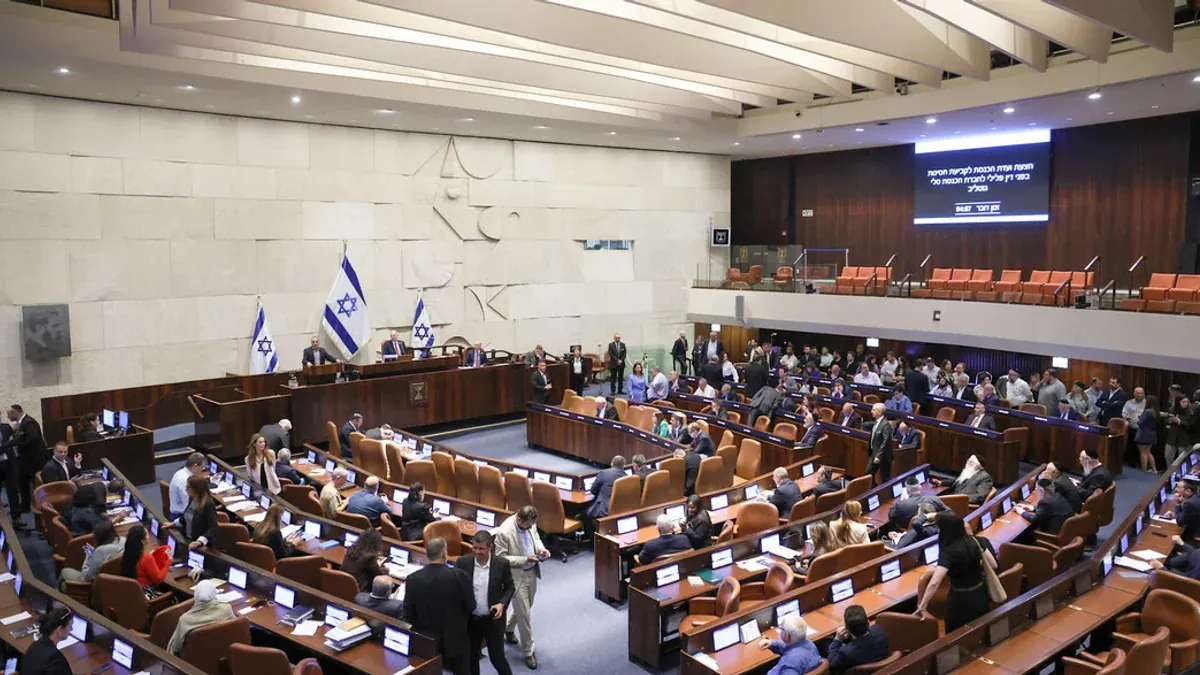
The current term at the Ministry of Justice has been one of the most turbulent the ministry has known. In January 2023, Minister of Justice Yariv Levin presented his plan to change the judicial system, and from that moment on, the legal issue became one of the focal points of political and public controversy in Israel.
The judicial reform, as its supporters call it, or the regime coup, as its opponents call it, brought hundreds of thousands to the streets, deepened the rift in the nation and the confrontation between the government and the judicial system, and reached the doorstep of the Supreme Court time and again.
Three and a half years later, the judicial system is returning to be one of the central axes of the election campaign: on one side, those who promise to complete the changes that began in the current term, and on the other, those who seek to cancel them and strengthen the status of the judicial system and the gatekeepers. For quite a few of the parties and candidates, this is the central issue on which the election campaign rests. Supporters of the reform even claimed that the controversy and public rift created around it were among the factors that projected weakness toward Israel's enemies on the eve of October 7.
The outbreak of the war initially stopped some of the moves, but later the coalition returned to promote changes in the judicial system, and in the last months of the term even accelerated some of them.
Who has declared and who is waiting
Whoever enters the Ministry of Justice after the elections will receive an especially busy desk. On the agenda are some of the most explosive issues in the political system: the continuation of moves regarding the role of the Attorney General, including the appointment of a new Attorney General; the cancellation of the change in the Department of Internal Police Investigations (Mahash) or its implementation; the change in the composition of the Judicial Selection Committee, which one camp seeks to implement and the other promises to cancel; and additional moves intended to limit the power of the Supreme Court and its ability to intervene in the decisions of the government and the Knesset.
The Ministry of Justice portfolio has always been one of the most desirable in the government, but in the 2026 elections, the struggle for it takes on a different meaning: the next Minister of Justice will be required to decide not only what to promote, but also what to do with the changes that have already passed. Here, those vying for the crown are divided into two almost opposite camps - those who seek to continue the moves of the current coalition and complete the changes that remain on the agenda, and opposite them, those who declare that one of their first tasks will be to cancel them.
The next Minister of Justice will be required to decide not only what to promote, but also what to do with the changes that have already passed. Here, those vying for the crown are divided into two almost opposite camps.
Joining this controversy is another explosive issue that will face the next government: the investigation of the events of the October 7 massacre. The controversy over the establishment of a state commission of inquiry, the identity of the body that will investigate, and the manner of appointing its members has already become a political and legal battleground in its own right - and in this too, the next Minister of Justice is expected to have a significant voice.
So who is aiming for the Minister of Justice's office? Even before the voter has had their say, a series of politicians are already marking the portfolio as a target. Some say it explicitly, others still refrain from an official declaration - but each of them has a different answer to the question that will stand at the center of the next term: whether to continue from the place where the outgoing government stopped - or to reverse the direction.
Levin's move
Minister of Justice Yariv Levin is interested in continuing in the role even after the elections, and the central goal for him will be the completion of the changes he began in the judicial system. In focus: the appointment of ten(!) new judges to the Supreme Court, where four judges are currently missing and six more are expected to retire in the next term, and the promotion of his candidates Dr. Aviad Bakshi and Dr. Rafi Biton.
At the same time, Levin seeks to complete the Basic Law: Legislation, which he did not manage to promote to the end in the current term, to harden the possibility of the Supreme Court to disqualify ordinary laws and to grant basic laws immunity from judicial review.
The current Chairman of the Constitution Committee Simcha Rothman (Religious Zionism) also marks the coveted role. Rothman seeks to continue the changes he promoted in the current Knesset, but his order of priorities is slightly different from Levin's. While Levin puts the issue of appointing judges in focus, Rothman seeks to focus mainly on the legal advice to the government and the State Attorney's Office.
Among the goals he marks: the continued splitting of the Attorney General's role, strengthening the oversight of the State Attorney's Office, implementing the Mahash law, setting time limits for investigations and prosecutions, and regulating the issue of disqualifying laws by the Supreme Court. Alongside these, he seeks to realize the change in the Judicial Selection Committee and promote the appointment of ultra-conservative judges.
The name of MK Moshe Saada (Likud) has also come up as someone interested in the position of Minister of Justice. If he receives it, he seeks to focus on implementing the change in Mahash, which he promoted in the current Knesset, and on promoting the splitting of the Attorney General's role. Saada supports the continuation of the changes in the judicial system, but also marks an additional goal: shortening and streamlining the procedures in the courts, which he says currently last for years and cause injustice to complainants, defendants, and litigants in civil proceedings.
The current Speaker of the Knesset Amir Ohana (Likud) has not yet announced which position he would be interested in after the elections, but his name comes up in the political system as one of the possible candidates for the Ministry of Justice. At this stage, Ohana does not present a legal plan for the next term, but he is expected to contend for one of the senior positions in the government if the Likud forms it.
Formulating plans?
On the other side of the political map, MK Efrat Rayten (The Democrats) is clearly aiming for the Ministry of Justice, and has made the legal field one of her main areas of focus. Ahead of the elections, she has already formulated a comprehensive constitutional-legal plan, accompanied by a detailed presentation, in which she outlines the steps she would like to promote if she reaches the ministry.
At the center of the plan, Rayten places special emphasis on anchoring the principle of equality in constitutional legislation, alongside the establishment of a Bill of Rights that will also anchor freedom of speech and creation, freedom of religion and conscience, freedom of protest and association, and social rights.
Rayten also seeks to cancel the change in the composition of the Judicial Selection Committee and return to the previous arrangement, anchor the status of the legal advice to the government, promote the Basic Law: Legislation, and limit the Prime Minister's term to eight years only. Rayten defines the overarching goal as strengthening liberal democracy in Israel and making it immune to future threats.
Rayten is not the only candidate from the Democrats. MK Gilad Kariv is also interested in the position and presents a 30-clause legal-constitutional plan, at the center of which is a commitment to cancel, already in the first session of the next Knesset, and without exception, everything he defines as "regime coup laws".
From there, Kariv seeks to move to a broad constitutional move: enshrining the status of the Declaration of Independence, legislating the Basic Law: Legislation, anchoring equality and other basic rights, and anchoring the status and independence of the legal advice to the government. Alongside the constitutional changes, Kariv seeks to increase the number of judge positions by at least 30% and establish a new appellate instance between the district courts and the Supreme Court.
In the Yachad party of Naftali Bennett and Yair Lapid, they have not yet announced who their candidate for the Ministry of Justice will be, but sources in the party say that MK Karine Elharrar is one of the candidates marked for the role.
Elharrar is a member of the Constitution Committee and serves as the opposition representative on the Judicial Selection Committee. Regarding the legal direction of the party, Bennett has already marked a central goal for the next term: establishing a constitution for the State of Israel in the spirit of the Declaration of Independence, through which, he says, the "rules of the game" of the state will be determined.
The name of MK Chili Tropper (Beit Tzioni - The Reservists) also comes up as a possible candidate for the position of Minister of Justice, although at this stage he has not yet declared it officially. The party has already formulated a plan under the title "Checks and Balances between the Authorities", which includes creating a Zionist constitution for the State of Israel, changing the system of government, responsible reform of the judicial system, and strengthening the rule of law.
The plan also includes decentralizing powers and empowering local government, streamlining the public service and reducing bureaucracy, increasing transparency, accountability, and proper administration, and limiting the term of public officials.