October 7 Families Face Obstacles and Opportunities in Bids for Knesset Seats
As Knesset party lists close, October 7 victims' families face mixed political fortunes. While Eyal Eshel and Einav Zangauker were excluded from key lists, Avigdor Lieberman's Yisrael Beytenu secured realistic spots for Rafi Ben Shitrit and Sharon Sharabi.
As the deadline for submitting party lists for the upcoming Knesset elections approaches, the political landscape reveals a mixed reality for the families of hostages, the bereaved, and the victims of the October 7, 2023, Hamas massacre. After nearly three years of leading public protests, several family members attempted to transition from activism to direct political representation, but many found their path to parliament blocked before election day.
Blocked Paths and Broken Promises
Eyal Eshel, whose daughter Roni Eshel, an IDF surveillance officer, was killed at the Nahal Oz base on October 7, held extensive talks with Gadi Eisenkot, hoping to secure a realistic spot on the list of the "Yashar!" party. Ultimately, Eshel was left off the list.
Eshel expressed deep disappointment, particularly regarding how he was notified:
"I was in talks with Eisenkot, and I make no secret of it. We have a long history of meetings, and I truly expected him to include me. I was disappointed, I won't lie. I believe I am worthy. To my surprise and disappointment, I found out via a WhatsApp message that I was not on the list. Notifying someone this way, especially after our deep acquaintance, is disrespectful."
Despite his personal grievance, Eshel emphasized that he still views Eisenkot as a partner in the demand to establish a state commission of inquiry into the failures of October 7.
Similarly, Einav Zangauker, mother of hostage survivor Matan Zangauker, recently revealed that "The Democrats" party leader Yair Golan reneged on a promise to reserve a spot for her on his party's list. Golan publicly apologized, stating he decided not to use his discretionary reserve spots out of respect for the democratic choices of the party's 113,000 members.
Additionally, Yonatan Shamriz, leader of the "Kumu" movement and brother of Alon Shamriz—who was hostaged and tragically shot accidentally by IDF troops in Gaza—announced he would not run for the Knesset on any list, making the decision "with a heavy but whole heart."
Debates on Representation
Within the October 7 families, there is no consensus on whether they require dedicated "representatives" in parliament.
Danny Elgarit, whose brother Itzik Elgarit was abducted from Kibbutz Nir Oz and died in Hamas captivity, ran in the primaries for "The Democrats" but did not secure a realistic spot. Elgarit argues that being a relative of a victim or hostage does not grant an automatic right to a political seat:
"I don't think we need a 'hostage families representative.' The families are not a single monolith; each has its own worldview. To enter politics, one needs proven action and experience. I wanted to bring a platform centered on accountability, the value of human life, and a state commission of inquiry, alongside my social-liberal worldview."
Those on the Ballot
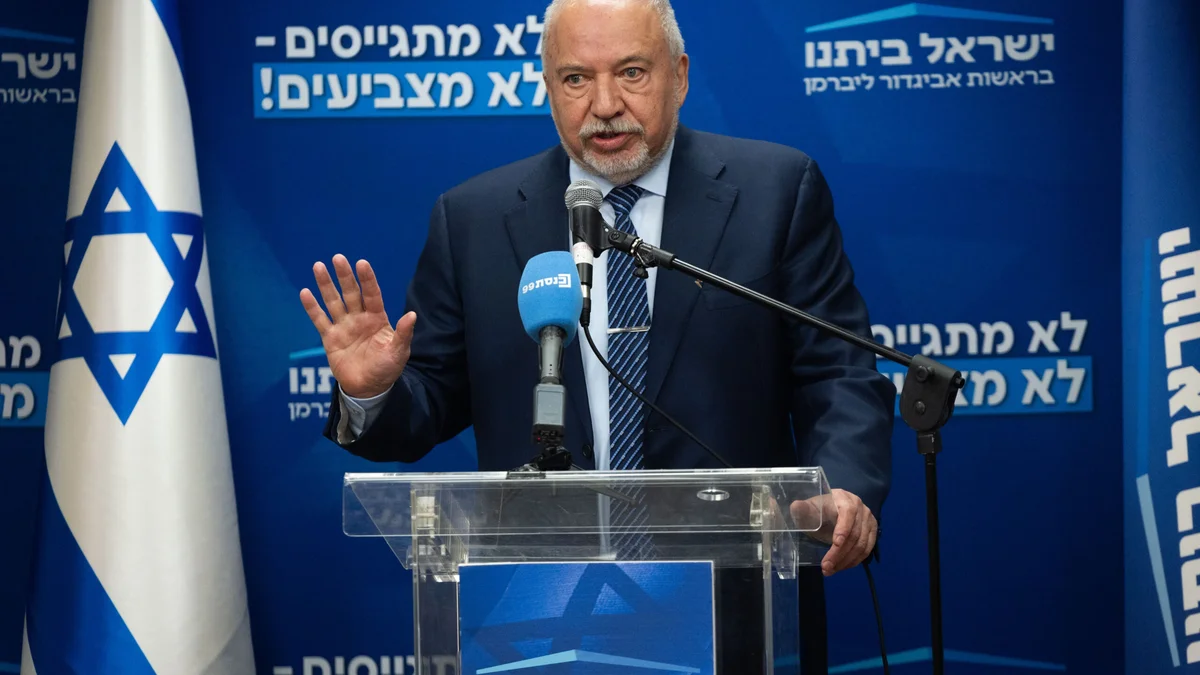
While some doors closed, Avigdor Lieberman, leader of "Yisrael Beytenu," chose to integrate prominent figures connected to the October 7 tragedy into realistic spots on his list.
Lieberman placed Rafi Ben Shitrit, who lost his son Alroy in the battles on October 7, in the second spot on the "Yisrael Beytenu" list. In the sixth spot, he placed Sharon Sharabi, whose brother Yossi Sharabi was abducted from Be'eri and murdered in captivity, and whose other brother, Eli Sharabi, was held hostage in Gaza for 491 days before being released.