Behind the Ballot: The Dedicated Workers Powering Israel’s Election Day
As Israel prepares for Knesset elections, polling station workers and inspectors share their motivations, challenges, and the vital dedication required to maintain democratic integrity.
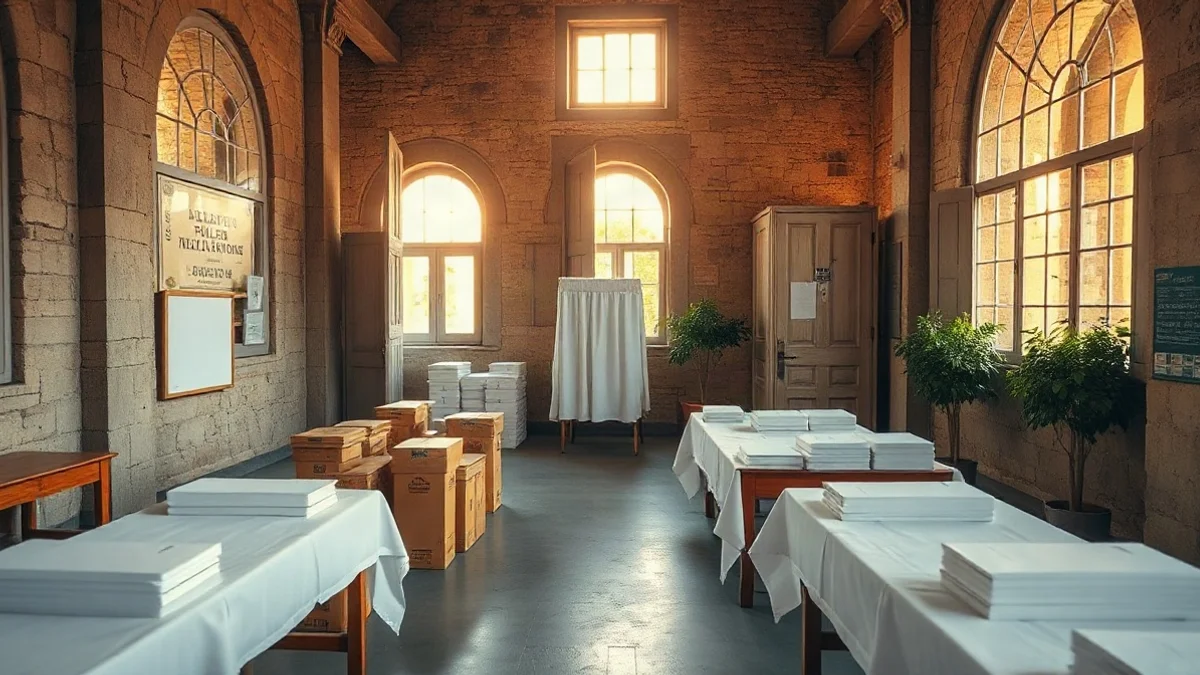
While millions of Israelis head to polling stations to exercise their democratic right before enjoying a national day off, others find themselves working. For several election cycles, these citizens have stepped up to polling stations not to vote, but to enable others to do so: welcoming voters, maintaining order, and ensuring the democratic process runs smoothly. For them, it is a way to earn money, but also a profound sense of mission, public responsibility, and a passion for the day Israeli democracy goes to work.
"I have been working as a polling station secretary regularly since the 2001 elections, when Ehud Barak ran against Ariel Sharon, and I've been hooked ever since. I do this role in every election cycle, including municipal elections," says Avi Yhezqali (46), a Jerusalem resident who will work as a polling station secretary in Rehovot. "I don't do it for the money. I did it in the past when pay was much lower. I think the heart of the democratic system is election day. Citizen trust is measured in the three minutes of voting.
What is the main challenge? "The polling station secretary is the professional official responsible for the ongoing, legal management of voting. You must stay focused, assertive, and professional all day. In one election, my grandmother arrived without an ID card. I couldn't let her in. I called my grandfather to bring it. I felt tested at that moment."
What does the role mean to you? "It is a mission. Citizens don't realize that behind those three minutes lie hard preparation and work. They must vote and influence."
3,000 Shekels a Day
Alongside secretaries, citizens can work as election purity inspectors, tasked with identifying and documenting irregularities, or as intake personnel. To be accepted, candidates undergo screening and training; party observers are recruited directly by parties. For the 26th Knesset elections, pay is set at about 3,000 shekels gross for a secretary and 2,200 shekels gross for an inspector.
Yura Silvitzky (47) has worked for 20 years as a secretary in Rishon LeZion. This year, for the first time, he will work as an inspector. "I was abroad when registration opened, so I took the inspector role. You observe all day, reporting disturbances. When the station closes, you film the counting process to ensure integrity."
Why start working in elections? "When I started, I was a student, so it was for money. It pays well, but it's grueling. You arrive at 6 AM and stay until 2 or 3 AM, returning to work the next day."
Proper Voting
"I have worked the last four consecutive elections and love it," says Dina Madar (70) from Tel Aviv, an election purity inspector. "I am a social person. I love meeting neighborhood residents, and as an organized person, I love when everything functions properly. Until now, I worked near home in Neve Tzedek."
Why work on election day? "Aside from the financial aspect, it is an interesting experience and a sense of mission. I want things orderly, without pressure, and with proper documentation during the count."
Danny Bar (70) worked as a secretary in the last two elections in Kfar Saba and Raanana, and will serve in Jaljulia next week. He cites values over money. "Election purity is the foundation of democracy."
Did you face problems? "In my first election, someone tried to influence voters improperly behind the curtain. I stood my ground, objected, and he left. Our job is to ensure fairness throughout a long day."