Knesset Elections: How Israeli Parties Select Candidates Ahead of Deadline
Israel's political parties face a Tuesday deadline to lock candidate lists for the 26th Knesset. Selection methods vary from democratic primaries in Likud to absolute rabbinical appointments in Shas.
On Tuesday at 22:00, Israel will reach a critical milestone in the campaign for the 26th Knesset elections, scheduled for October 27, 2026. At this hour, the candidate lists for all political parties will be officially locked. While every citizen's vote carries equal weight on election day, the processes leading up to the final lists vary dramatically across the political spectrum. Israeli election law does not mandate a uniform system, allowing each party to establish its own selection criteria in its bylaws.
Because Israel utilizes a closed-list proportional representation system, voters cast ballots for an entire party rather than individual candidates. Consequently, the internal selection process is the actual arena where the identities of the next members of parliament are decided.
Primaries vs. Leadership Control: Likud and The Democrats
The ruling Likud party remains the most prominent example of a primary-based system. Ahead of this election, 142,051 registered party members held voting rights. Candidates campaigned heavily to secure votes, with each voter allowed to select up to 12 names on the national ballot, alongside regional district races. However, the final order is heavily adjusted by representation guarantees (for women, youth, new immigrants, and non-Jewish sectors) and an unprecedented number of leader-designated spots.
Under the newly approved bylaws, Prime Minister Benjamin Netanyahu secured eight personal placements, alongside an additional spot reserved for Defense Minister Israel Katz. For context, Netanyahu held only two such spots in 2015 and five in 2022, signaling a shift toward centralized control at the expense of primary voters.
Conversely, "The Democrats"—the unified center-left alliance led by Yair Golan—conducted an entirely digital primary for its 112,376 registered members. Fifty-one candidates competed, with voters selecting six to eight names. To ensure balance, the party implemented a strict gender-zipper system (alternating male and female candidates) and reserved slots for Meretz representatives, kibbutz sectors, and minorities. Although Golan was authorized to reserve two spots in each tier of ten, he chose not to exercise this right to respect the democratic choice of the voters.
Elite Committees and Strategic Mergers
In Bezalel Smotrich's "Religious Zionism" party, the selection process is also termed a primary, but the voting body was restricted to approximately 170 central committee members. In their July vote, Minister Orit Strock secured the top spot, followed by Simcha Rothman and Zvi Sukkot. Smotrich himself automatically heads the list. The internal ranking was subsequently altered by a joint-run agreement with Moshe Feiglin's Zehut party, which secured the second spot and pushed other candidates down.
The "BeYachad" list, a joint slate formed by Naftali Bennett (leading "Bennett 2026") and Yair Lapid ("Yesh Atid"), represents a dual-track model.
Within Bennett's faction, candidate selection is entirely centralized under his leadership. Bennett personally finalized his slate, placing Keren Terner Eyal, Liran Avisar Ben-Horin, Michal Hirsch Negri, and Eitan Ginzburg in key positions.
In Yesh Atid, the list is theoretically compiled by a small candidate selection committee appointed by the chairman, with Lapid retaining veto power.
The final unified list was ultimately shaped by direct negotiations between Bennett and Lapid, with Yesh Atid receiving approximately 40% of the top-tier slots, and a more equal split in the second tier.
Leadership Slates and Professional Resumes
In Gadi Eisenkot's "Yashar!" party, candidate selection is entirely centralized under the founder. Eisenkot has introduced new members individually over recent weeks without any internal vote. The list was further adjusted following a political merger with Chili Tropper's faction, demonstrating how strategic alliances reshape leadership-driven parties.
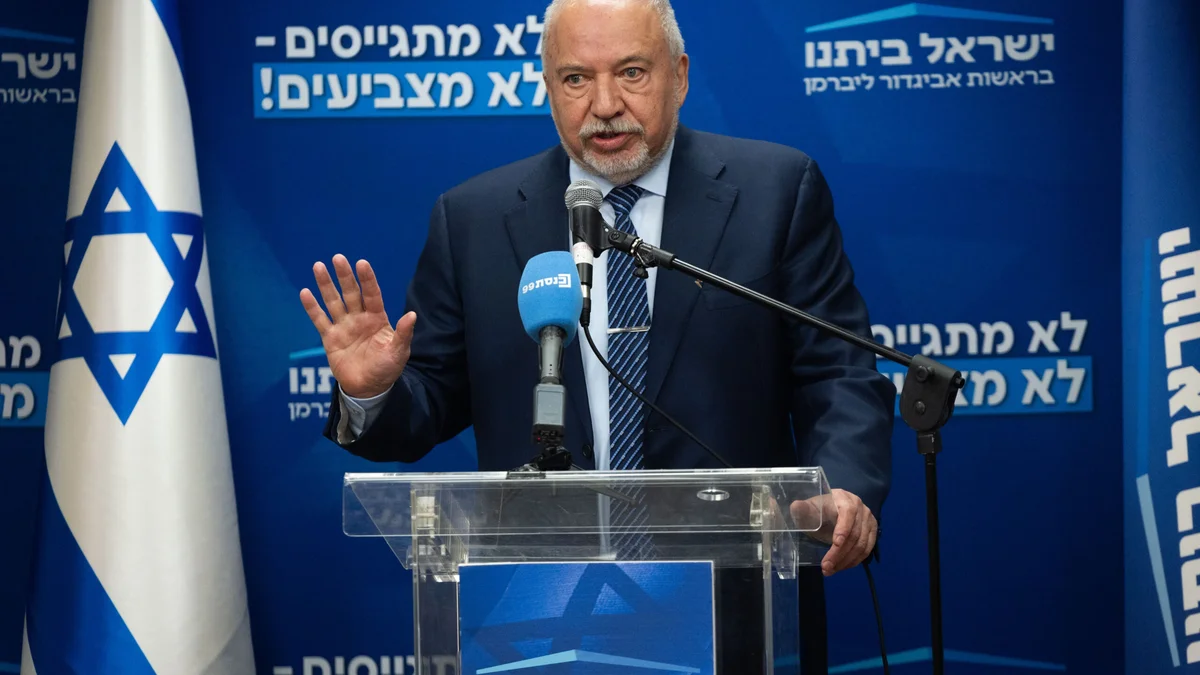
Avigdor Lieberman's "Yisrael Beytenu" employs a hybrid model. The party does not hold primaries; instead, interested members submit professional resumes to a permanent committee and pay a 500 NIS fee. While the committee drafts the list, Lieberman exercises decisive influence over the final composition and retains specific statutory powers to bypass standard candidacy requirements.
Ultra-Orthodox Sectors: Rabbinical Authority
In the Haredi parties, democratic procedures are entirely replaced by spiritual authority:
-
Shas: The Council of Torah Sages serves as the supreme decision-making body. While party leader Aryeh Deri wields significant influence over the recommendations, the final list is presented as a rabbinical decree. Candidates campaign internally to gain the trust of the leadership and the blessing of the rabbis.
-
United Torah Judaism: This joint list comprises the Lithuanian "Degel HaTorah" and the Hasidic "Agudat Yisrael." In Degel HaTorah, spiritual leader Rabbi Dov Lando recently made the dramatic decision to remove veteran lawmakers Moshe Gafni and Uri Maklev from the Knesset slate as part of a leadership renewal. In Agudat Yisrael, the list is shaped by intense negotiations between competing Hasidic courts (including Gur, Vizhnitz, and Belz) under the guidance of the Council of Great Torah Sages.
Otzma Yehudit and Arab Factions
In "Otzma Yehudit," Itamar Ben Gvir retains absolute control over the slate. This was highlighted by the direct placement of former Likud MK Tally Gotliv in the second spot, followed by Yitzhak Wasserlauf in third, and Limor Sonn Mir-Melech in fifth. Consequently, veteran MK Tzvika Foghel withdrew his candidacy after being pushed to an unrealistic spot.
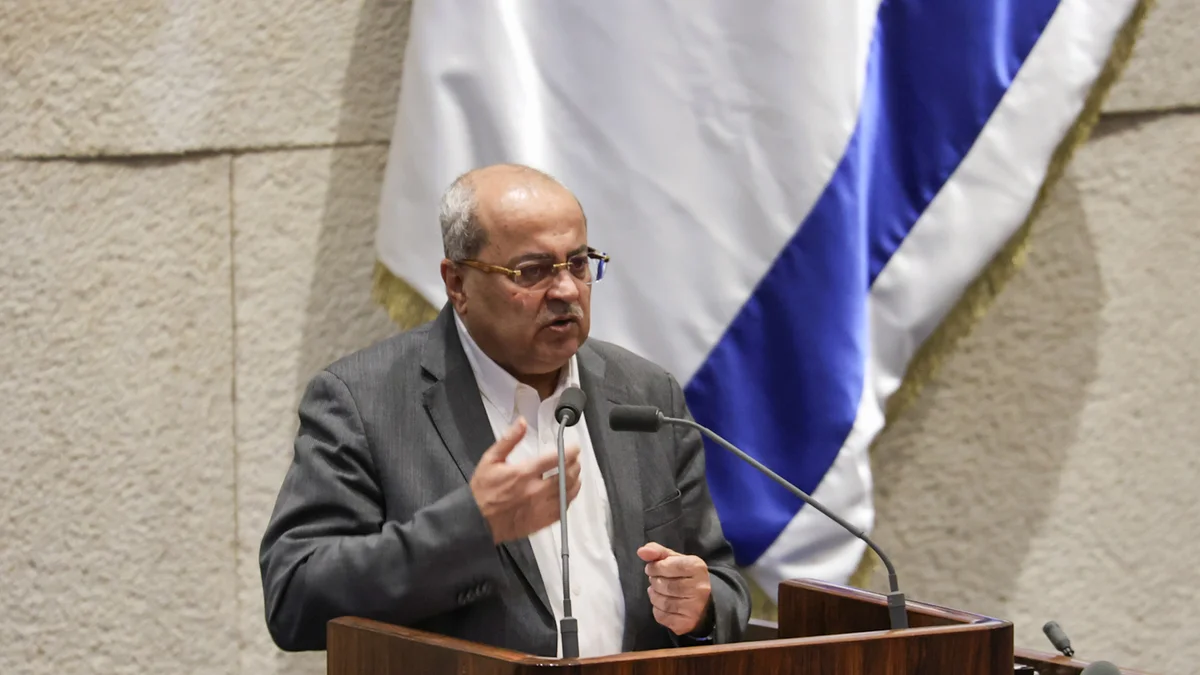
Among Arab parties, Hadash and Balad utilize internal delegate conferences. Hadash's 966 council members elected Dr. Yousef Jabareen to head their list, while Balad's conference re-elected Sami Abu Shehadeh. However, the subsequent re-establishment of the Joint List with Ahmad Tibi's Ta'al led to a renegotiated rotation of spots. Mansour Abbas's Ra'am party held internal elections at its general assembly with geographic representation, but later placed Yoav Segalitz in the second spot via a political agreement.
New Factions: Founders as Selection Committees
In newly established parties, such as Ofer Winter's "Amcha Yisrael" (featuring Yoseph Haddad and Natali Shem-Tov) or the alliance between Yoaz Hendel and Yaron Zelecha, the process is straightforward. Lacking established central committees or primary systems, the founders act as the sole selection authority, negotiating placements directly with merging political partners.